 Preview
 Send
Send Share
Share
 Details

 Download
 Similars
 X-Ray
X-Ray Diaporama
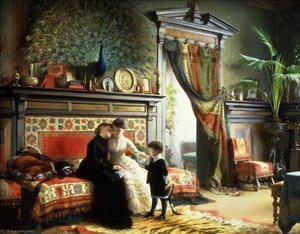
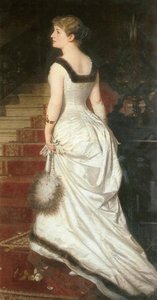
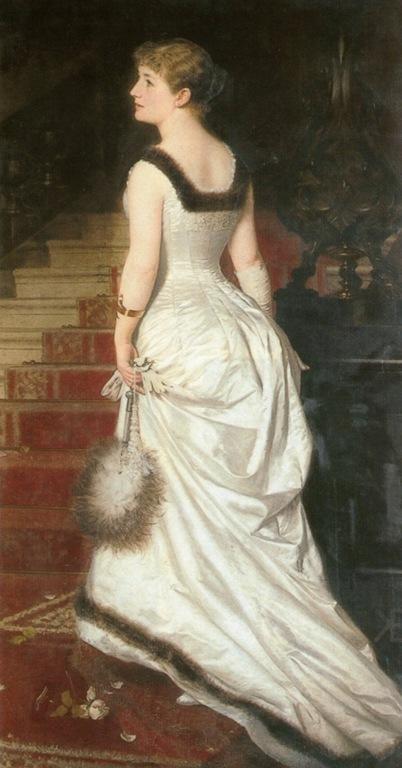
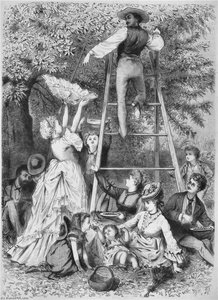
Elegant woman in white

 Read More
Hand Made Oil Reproduction
Hand-painted oil on canvas in your size and frame, made to order by our artists. ( Buy Print Buy Image)




































Pick from our preset sizes that match the artwork's original proportions.

You may enter your own dimensions to fit a specific frame or space. If your selected size does not match the original image's proportions, we will either crop the artwork or extend the painting with additional hand-painted elements. A digital mockup will be sent for your approval before production begins.
Please note that the on-screen preview does not reflect the actual cropping or extension. Only the mockup will accurately show the final composition.
While custom sizes are available, we recommend selecting a dimension from the predefined list to preserve the original proportions.
After order, ArtsDot.com team will email client for instructions and provide a mockup preview
Worldwide Delivery () in 3/4 weeks instead of standard 5 weeks. (17 August). No compromise on quality.

Free Worldwide Express Shipping

High-Quality Linen Canvas

Full Shipping Insurance

Customs Tax Refund Guarantee

True Color Matching Guarantee

60-Day Return Policy (Defects Only)

100% Money-Back Guarantee

Bulk Discount Offer
 Glass option is only available in size under 110 CM

Elegant woman in white
Reproduction Medium
Reproduction Size
-


Total Price
$ 263
Related Artworks
Artist Biography
Knut Alfred Ekwall (1843 - 1912): A Swedish Painter of Genre and Fairy Tales
Knut Alfred Ekwall (born April 3, 1843, Säby Parish (now Tranås), Småland – died April 16, 1912, Tranås) was a Swedish painter and illustrator who achieved considerable renown for his depictions of everyday life—particularly scenes featuring women and children—and for his masterful interpretations of Scandinavian folklore.
Ekwall’s artistic journey began in Säby, where he received an early education fostered by his father, Nils Fredrik Ekvall, a bailiff for the Crown Enforcement Authority. Recognizing his talent, Marcus Larson encouraged him to pursue painting professionally, establishing a studio that tragically burned down but nonetheless allowed Ekwall to study with Ludwig Knaus in Berlin.
Knaus’s Düsseldorf School influenced Ekwall profoundly, emphasizing allegorical narratives and romantic landscapes imbued with meticulous detail and subdued color palettes. This stylistic approach became a hallmark of Ekwall's oeuvre, reflecting his fascination with storytelling and capturing the essence of human experience.
Early Life and Artistic Training
Ekwall’s formative years were marked by intense artistic dedication. He enrolled at the Royal Swedish Academy of Fine Arts in Stockholm between 1860 and 1866, focusing primarily on woodcutting—a technique that would become central to his visual vocabulary. This training solidified his foundational skills and prepared him for a career dedicated to translating literary narratives into captivating images.
His decision to study abroad further broadened his artistic horizons. Spending time in Munich and Leipzig allowed him to immerse himself in diverse artistic traditions and hone his craft under the guidance of prominent mentors. Notably, he studied with Ludwig Knaus again, deepening his understanding of Düsseldorf School aesthetics.
Notable Works and Artistic Style
Ekwall’s prolific output encompassed a wide range of subjects—from portraits to floral compositions to depictions of children—but he is best remembered for his illustrations of Frithiofs Saga by Esaias Tegnér. This epic poem, recounting tales of Viking heroism and mythology, demanded meticulous attention to detail and emotional resonance, qualities Ekwall consistently achieved.
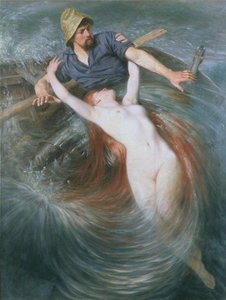
His series “Die Gartenlaube” (“The Garden Hearth”), featuring scenes from rural life, showcased his ability to convey atmosphere and emotion with remarkable subtlety. Furthermore, Ekwall’s work on “The Fisherman and the Siren,” a retelling of Homer's Odyssey, exemplifies his masterful blending of narrative storytelling and artistic technique.
Legacy and Recognition
Knut Ekwall’s contribution to Swedish art is undeniable. His paintings reside in prestigious institutions such as Nationalmuseum and the Nordiska museet, ensuring that his vision continues to inspire audiences today. Beyond his artistic achievements, Ekwall's influence extended into the realm of pedagogy—he established the Ekwallska Kvintetten, a musical ensemble comprised of his children, fostering creativity and collaboration within his family.
His sister, Emma Ekwall, also pursued painting with distinction, demonstrating the enduring impact of their shared artistic passion. Ekwall’s brothers, Gustaf and Hugo, followed suit in metal engraving—a testament to the familial commitment to craftsmanship and artistic expression that characterized their lives.
Further Exploration
For more detailed information about Knut Ekwall's life and work, consult resources such as:
- Lexikonett Amanda: https://lexikonettamanda.se/knut-ekwall/
- Swedish Biographical Dictionary: https://www.swedishbiographicaldictionary.com/knut-alfred-ekwall/
- Nordiska museet: https://www.nordiskamuseet.se/en/artists/knut-ekwall/
knut ekwall
1843 - 1912
Quick Facts
- Artistic Movement Or Style: Genre painting
- Artists Or Movements Influenced By This Artist: ['Düsseldorf school']
- Artists Who Influenced This Artist: ['Ludwig Knaus']
- Date Of Birth: April 3, 1843
- Date Of Death: April 16, 1912
- Full Name: Knut Alfred Ekwall
- Nationality: Swedish
- Notable Artworks:
- In the Garden
- Ernst Keil's Nachfolger
- Place Of Birth: Säby Parish (now Tranås), Småland