 Preview
 Send
Send Share
Share
 Details

 Download
 Similars
 X-Ray
X-Ray Diaporama
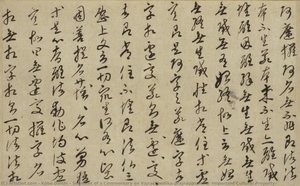
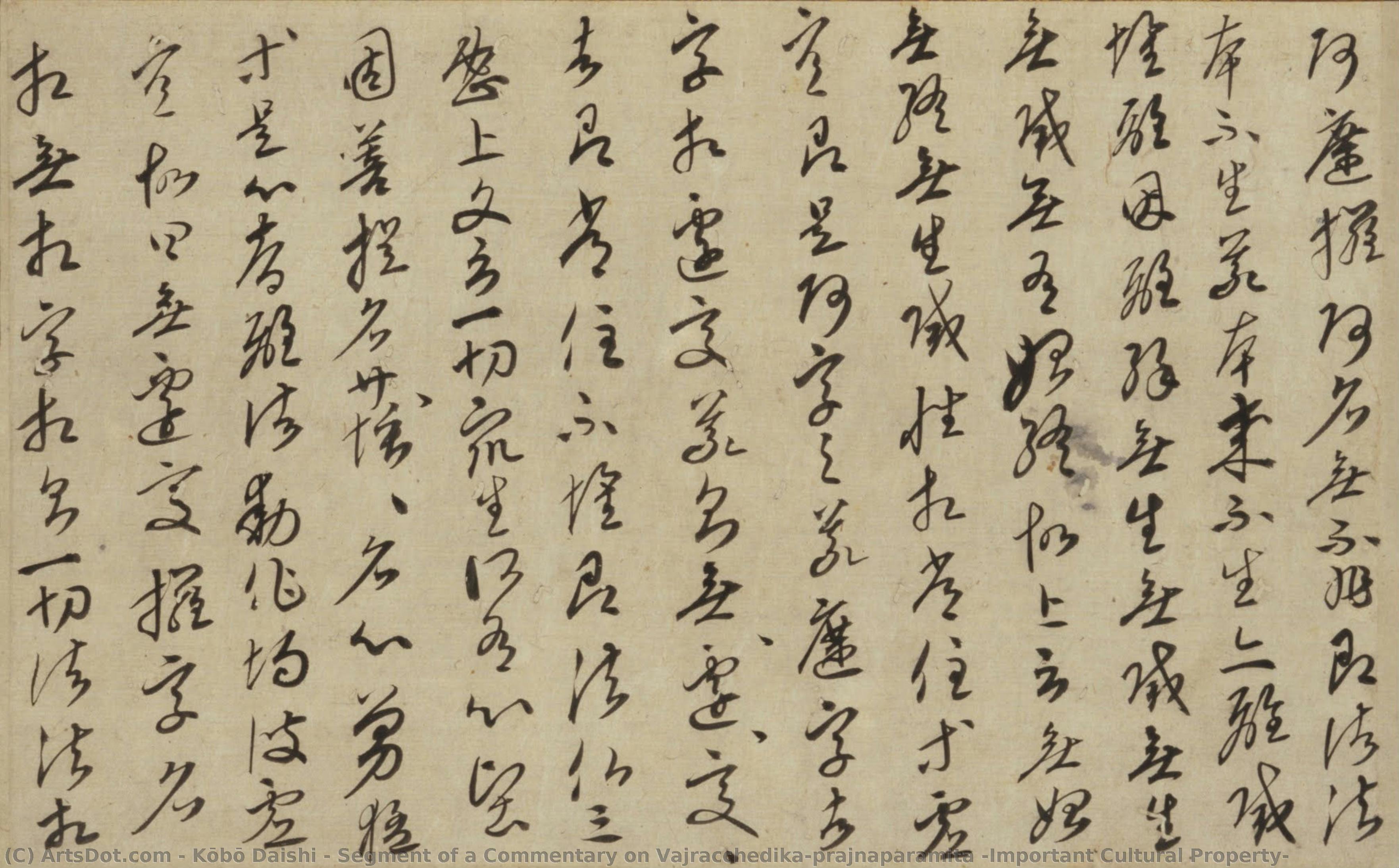
Segment of a Commentary on Vajracchedika-prajnaparamita (Important Cultural Property)
 43.0 x 26.0 cm
 Fukuoka Art Museum
 Read More
Giclée / Art Print
Museum-quality giclée or canvas print with fast production and flexible finish options. ( Buy Hand Made Painting Buy Image)




































Pick from our preset sizes that match the artwork's original proportions.

You may enter your own dimensions to fit a specific frame or space. If your selected size does not match the original image's proportions, we will either crop the artwork or extend the image with a mirrored or solid-fill edge. A digital mockup will be sent for your approval before production begins.
Please note that the on-screen preview does not reflect the actual cropping or extension. Only the mockup will accurately show the final composition.
While custom sizes are available, we recommend selecting a dimension from the predefined list to preserve the original proportions.
Worldwide Delivery () in 2 weeks instead of standard 4/5 weeks. (23 August)

Free Worldwide Express Shipping

High-Quality Linen Canvas

Full Shipping Insurance

Customs Tax Refund Guarantee

True Color Matching Guarantee

60-Day Return Policy (Defects Only)

100% Money-Back Guarantee

Bulk Discount Offer
 Glass option is only available in size under 110 CM

Segment of a Commentary on Vajracchedika-prajnaparamita (Important Cultural Property)
Giclée / Art Print
Reproduction Size
-


Total Price
$ 63
Collectible Description
Related Artworks









Artist Biography
The Ascetic Visionary: Kōbō Daishi and the Birth of Shingon Buddhism
Kūkai, revered as Kōbō Daishi – “Great Master of the Dharma” – stands as a monumental figure in Japanese religious history. Born in 774 in Sanuki province (modern-day Kagawa Prefecture), his life was not one predetermined by monastic seclusion but rather a journey of intellectual curiosity and spiritual seeking that ultimately reshaped the landscape of Esoteric Buddhism in Japan. From an aristocratic family experiencing decline, young Mao, as he was originally named, initially pursued classical Confucian studies, preparing for a career within the imperial bureaucracy. However, this path proved insufficient to satisfy his growing thirst for deeper understanding, leading him towards the burgeoning world of Buddhist thought. This early exposure to Chinese learning would prove crucial, not only in shaping his intellectual framework but also in facilitating his later travels and absorption of Tangmi (Chinese Vajrayana Buddhism).- Early Influences & The Call to China: Kūkai’s initial fascination with Buddhism wasn't immediate. It was a gradual awakening, spurred by encounters with various Buddhist teachings and the realization that conventional wisdom offered limited answers to his profound questions about existence. His decision to join a government-sponsored mission to China in 804 marked a pivotal turning point. While many scholars traveled for political or economic gain, Kūkai’s purpose was purely spiritual: to immerse himself in the esoteric traditions of Tang Dynasty Buddhism and bring that knowledge back to Japan.
- The Tangmi Revelation: The two years Kūkai spent in China were transformative. He studied under Huiguo, a master of Vajrayana practices, absorbing the complex rituals, mantras, mudras (symbolic hand gestures), and mandalas that formed the core of this esoteric tradition. This wasn’t merely an academic pursuit; it was a deep dive into a system designed to accelerate enlightenment through direct experience.
Founding Shingon: A Unique Japanese Expression
Upon his return to Japan, Kūkai faced the challenge of establishing a new school of thought amidst existing Buddhist sects. He didn’t simply transplant Tangmi wholesale; instead, he synthesized it with indigenous Japanese beliefs and artistic sensibilities, creating Shingon Buddhism – “True Word” Buddhism. Central to Shingon is the concept of achieving enlightenment in this lifetime through the power of mantras, mandalas, and ritual practices. Kūkai believed that the universe was permeated by a network of interconnected energies, and that through precise recitation and visualization, practitioners could tap into these energies and realize their inherent Buddha-nature. He skillfully navigated the complex political landscape, gaining patronage from Emperor Saga and establishing temples throughout Japan.- The Role of Imperial Patronage: Kūkai’s ability to secure support from Emperor Saga was instrumental in Shingon's growth. The emperor recognized the potential benefits of a unified religious practice and granted Kūkai significant resources, allowing him to build temples and disseminate his teachings.
- Integration with Indigenous Beliefs: Unlike some other Buddhist schools that sought to replace existing traditions, Shingon incorporated elements of Shinto and local folklore. This inclusivity made it more accessible to the Japanese population and fostered a unique syncretism.
Beyond Ritual: Art, Literature & Kana Syllabary
Kōbō Daishi was not solely a religious leader; he was also a prolific artist, poet, and scholar. His calligraphy is renowned for its expressive power and spiritual depth, often incorporating intricate mandalas that served as visual representations of the cosmos. He authored numerous texts on Buddhist philosophy and practice, solidifying Shingon’s doctrinal foundations. Perhaps surprisingly, Kūkai is also credited with playing a significant role in the development of the kana syllabary – the phonetic writing system used for native Japanese words. The *Iroha* poem, traditionally attributed to him, provided a systematic ordering of kana characters, laying the groundwork for modern Japanese writing.- Mandalas as Cosmic Maps: Kūkai’s mandalas weren't merely decorative; they were meticulously constructed representations of the universe and the path to enlightenment. Each element held symbolic meaning, guiding practitioners through complex visualizations.
- The *Iroha* Poem & Linguistic Innovation: While the exact extent of Kūkai’s involvement remains debated, the *Iroha* poem is widely considered a crucial step in the development of kana. Its systematic arrangement facilitated literacy and contributed to the flourishing of Japanese literature.
Mount Kōya & Enduring Legacy
In his later years, Kūkai chose Mount Kōya as his primary residence and established it as the central monastic complex for Shingon Buddhism. He spent his final days there, deeply immersed in meditation and teaching until his death in 835. Even after his passing, Kōbō Daishi continued to be revered by his followers, who believe he entered eternal samadhi – a state of profound meditative absorption. Today, Mount Kōya remains the most important center for Shingon Buddhism, attracting pilgrims from around the world. His teachings continue to inspire and offer a path towards enlightenment through direct experience, artistic expression, and a deep connection with the universe. Odaishi-sama, as he is affectionately known, embodies not just a religious founder but a cultural icon whose influence permeates Japanese art, literature, and spirituality even centuries later.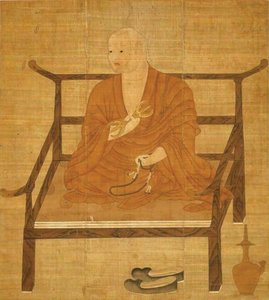
kōbō daishi
Japan
Quick Facts
- Artistic Movement Or Style: Shingon Buddhism
- Artists Or Movements Influenced By This Artist: ['Shingon Buddhism']
- Artists Who Influenced This Artist: ['Huiguo']
- Date Of Birth: 774 CE
- Date Of Death: 835 CE
- Full Name: Kūkai
- Nationality: Japanese
- Place Of Birth: Zentsuji, Japan