 Preview
 Send
Send Share
Share
 Details

 Download
 Similars
 X-Ray
X-Ray Diaporama
 Stats
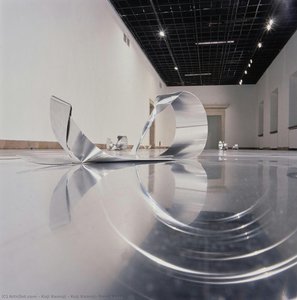
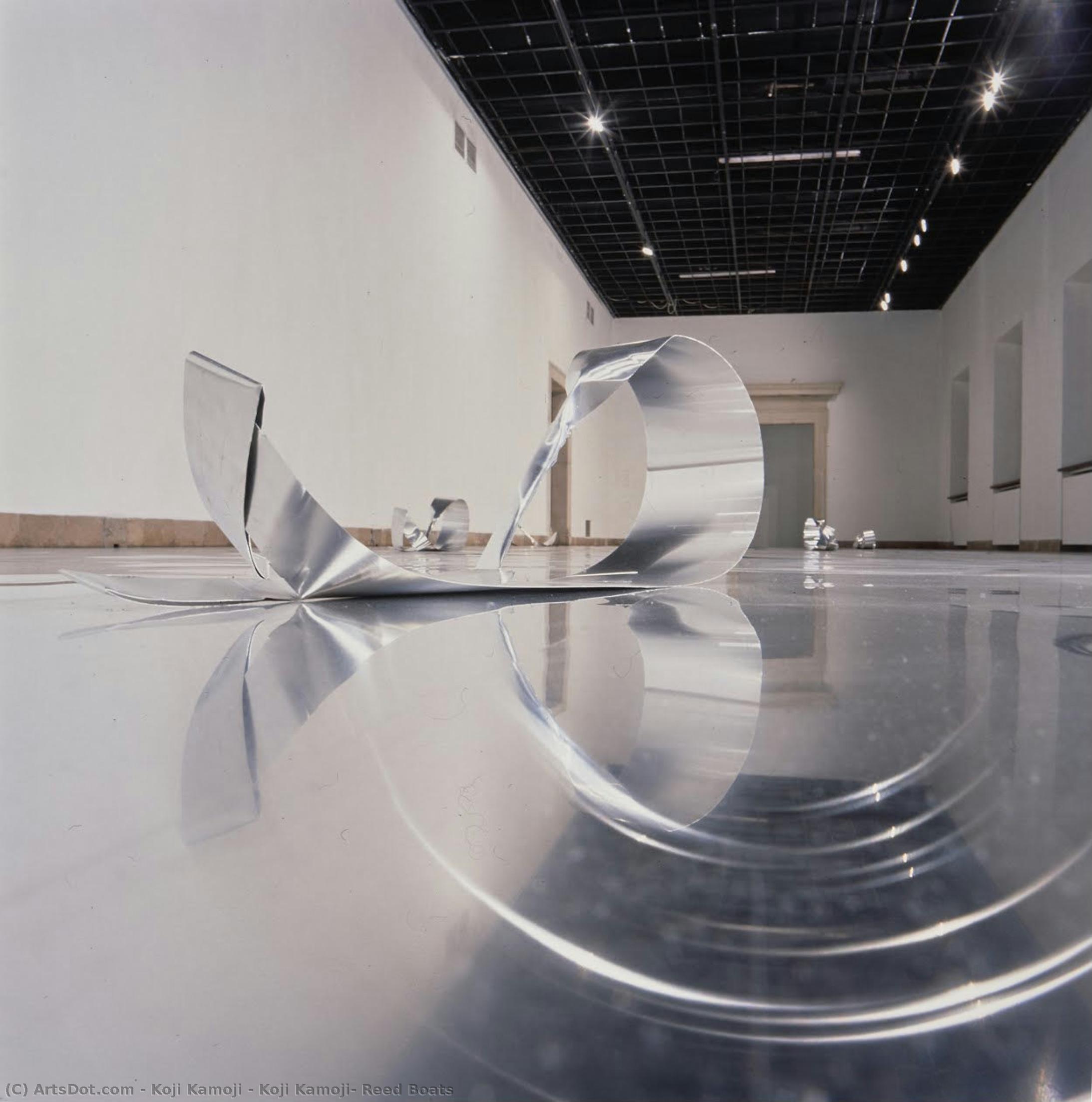
StatsKoji Kamoji, Reed Boats


 Read More
Hand Made Oil Reproduction
Hand-painted oil on canvas in your size and frame, made to order by our artists. ( Switch to Print Switch to Digital Image)




































Pick from our preset sizes that match the artwork's original proportions.

You may enter your own dimensions to fit a specific frame or space. If your selected size does not match the original image's proportions, we will either crop the artwork or extend the painting with additional hand-painted elements. A digital mockup will be sent for your approval before production begins.
Please note that the on-screen preview does not reflect the actual cropping or extension. Only the mockup will accurately show the final composition.
While custom sizes are available, we recommend selecting a dimension from the predefined list to preserve the original proportions.
After order, ArtsDot.com team will email client for instructions and provide a mockup preview
Worldwide Delivery () in 3/4 weeks instead of standard 5 weeks. (8 September). No compromise on quality.

Free Worldwide Express Shipping

High-Quality Linen Canvas

Full Shipping Insurance

Customs Tax Refund Guarantee

True Color Matching Guarantee

100-Day Return Policy (Defects Only)

100% Money-Back Guarantee

Bulk Discount Offer
 Glass option is only available in size under 110 CM

Koji Kamoji, Reed Boats
Reproduction Medium
Reproduction Size
-


Total Price
$ 263
Related Artworks






![Construction En Laiton [brass Construction] — Max Bill, Concrete Art](/media/artworks/images-thumb/92/97/929703eaa719ff8143620abca4a78258.jpg)
Artist Biography
A Life Between Worlds: The Art of Koji Kamoji
Koji Kamoji, born in Tokyo in 1935, embodies a fascinating artistic journey shaped by cultural exchange and a profound search for essence. His story isn’t simply that of a Japanese artist; it's the tale of an individual who found a second home – and a unique artistic voice – in Poland, bridging Eastern philosophy with the currents of postwar European modernism. Kamoji’s path diverged from the conventional after graduating from the Musashino Art University in 1958, spurred by family ties to Polish culture through his uncle Ryōchū Umeda, a translator of Polish literature who had fostered a deep appreciation for the country and its artistic spirit. This connection proved pivotal when Kamoji embarked on a transformative sea voyage to Poland in 1959, an experience that would indelibly mark his aesthetic trajectory. The journey itself—the vastness of the ocean, the elemental forces of water and sky—became deeply ingrained in his sensibility, informing the minimalist forms and contemplative mood that characterize his work.Early Influences and Artistic Development
Arriving in Warsaw, Kamoji enrolled at the Academy of Fine Arts, studying under Professor Artur Nacht-Samborski and graduating in 1966. His early paintings were expressive, characterized by vibrant colors and textured surfaces, yet even then a nascent desire for simplification was emerging. The tragic suicide of a close friend before his departure from Japan cast a long shadow, subtly influencing the themes of transience and existential questioning that would permeate his oeuvre. This personal loss, coupled with the immersive experience of crossing continents, fueled a search for artistic expression beyond mere representation. His initial works began to distill into more restrained compositions, reflecting an increasing focus on form and color—a move towards geometric abstraction. The pivotal year of 1967 marked Kamoji’s debut at the Foksal Gallery in Warsaw, establishing a long-standing relationship with this influential institution that would become central to his career and the development of post-war Polish modernism.The Language of Minimalism: Painting, Objects, and Installations
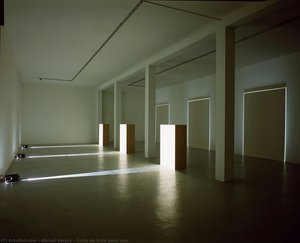
Kamoji's artistic vocabulary evolved throughout the 1960s and 70s, moving beyond traditional painting into three-dimensional objects and immersive installations. He became known for his “punctured paintings”—reliefs of raw wood, often partially coated in white paint, featuring carefully placed holes that alluded to emptiness and void. These weren’t merely formal exercises; they were explorations of space, light, and the very nature of perception. His series *For a Temple Wall* exemplifies this period, presenting flat boxes hung on walls or laid on floors—subtle interventions that invited contemplation rather than direct visual engagement. Later installations, such as *Two Poles* (1972) with stones and framed white paintings evoking gardens, and *Draught* (1975), utilizing perforated Japanese paper to symbolize time and the ephemeral, demonstrated a growing interest in site-specificity and the integration of everyday objects into his artistic practice. He sought to create works that resonated with both Eastern aesthetics—particularly Zen Buddhism’s emphasis on simplicity and intuition—and Western conceptual art's focus on ideas over material form.Bridging Cultures: A Polish Artist Rooted in Japan
Despite his Japanese origins, Kamoji has consistently identified as a Polish artist after decades of living and working in Warsaw. This self-identification speaks to the profound impact Poland had on his artistic development and personal identity. His work often serves as a dialogue between these two cultures, exploring universal themes through a unique lens informed by both traditions. He doesn’t simply *represent* Japanese culture within a Polish context; rather, he synthesizes elements from both worlds—the precision of Western abstraction with the spiritual intensity of Eastern philosophy. Kamoji's conceptual approach, shaped by this intersectionality, allowed him to become an integral part of the Polish art scene, influencing generations of artists and contributing significantly to the country’s post-war artistic landscape. His 1986 manifesto *Reflections on the Meaning of Art* articulates his core principles: a pursuit of transparency, simplicity, and capturing the “spirit of objects” without unnecessary embellishment.Legacy and Recognition
Koji Kamoji's contributions to contemporary art have been widely recognized, culminating in numerous exhibitions at prestigious galleries including Starmach Gallery, Zachęta National Gallery of Art, Foksal Gallery, and Centre for Contemporary Art at Ujazdowski Castle. He received the C. K. Norwid Critics’ Award in 1975, solidifying his position as a leading figure in Polish art. His works are held in prominent museum collections throughout Poland, ensuring his lasting impact on the national cultural heritage. More recently, exhibitions like *Koji Kamoji. Don't Let the Unnecessary Overshadow the Whole* at WATARI-UM in Tokyo (2025) have brought renewed attention to his oeuvre, offering a retrospective glimpse into six decades of artistic exploration. Kamoji’s art continues to resonate with audiences worldwide, inviting viewers to contemplate the fundamental questions of existence, space, and the delicate balance between simplicity and profound meaning. His journey—a life lived between worlds—stands as a testament to the power of cultural exchange and the enduring search for artistic truth.
koji kamoji
1935 - , Japan
Quick Facts
- Artistic Movement Or Style: Contemporary Art, Minimalism
- Artists Who Influenced This Artist:
- Saburo Aso
- Takeo Yamaguchi
- Artur Nacht-Samborski
- Date Of Birth: 1935
- Full Name: Koji Kamoji
- Nationality: Japanese/Polish
- Notable Artworks:
- Two Poles
- For a Temple Wall
- Still Life
- Sky's Bottom
- Prayer to Being
- Place Of Birth: Tokyo, Japan