

 Preview
 Send
Send Share
Share
 Details

 Download
 Similars
 X-Ray
X-Ray Diaporama
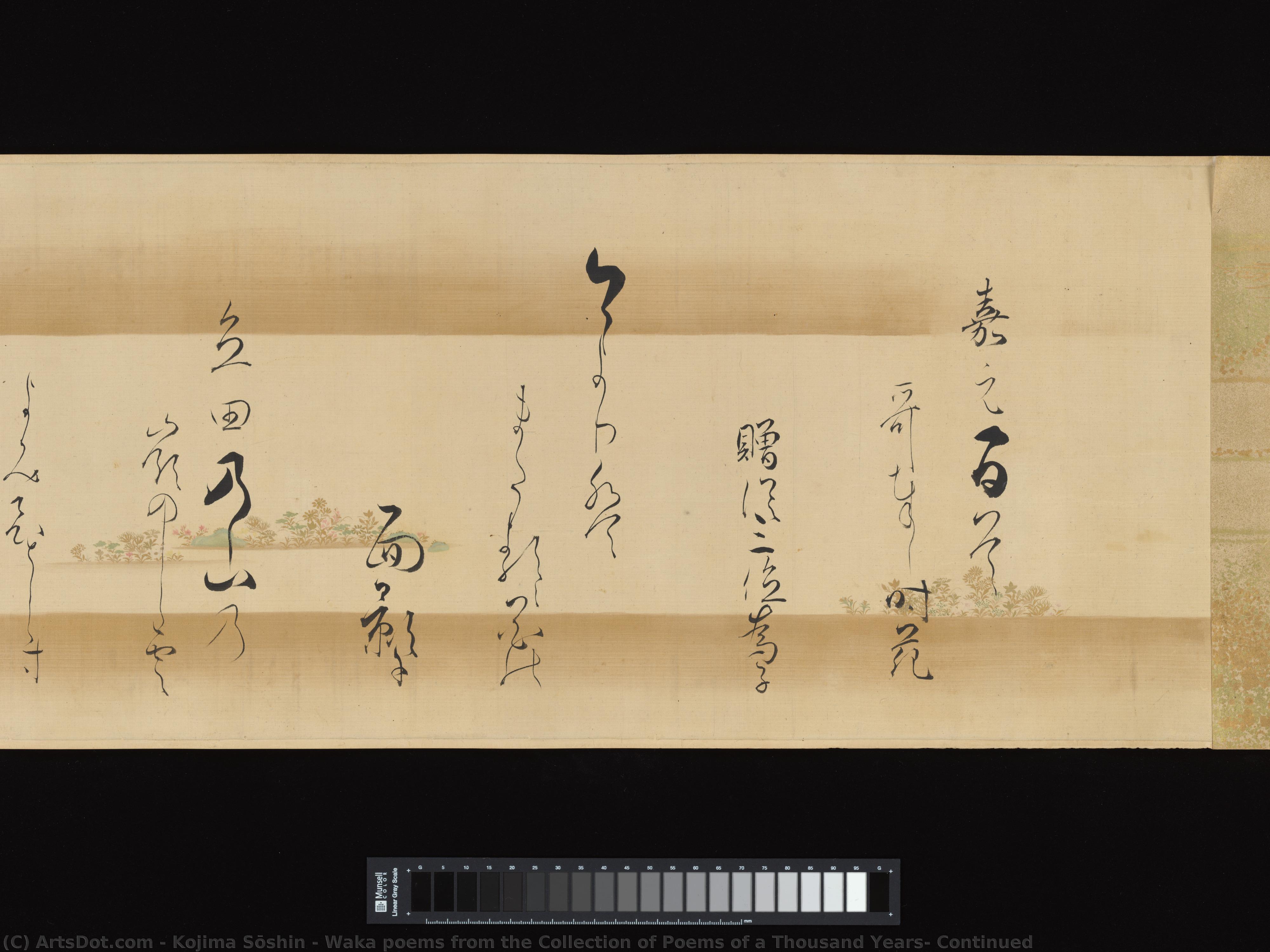
Waka poems from the Collection of Poems of a Thousand Years, Continued
 1651
1651 29.0 x 923.0 cm
 Read More
Purchase a high-resolution, enhanced digital image, far superior to the online preview.
Each file is meticulously prepared by our in-house specialists using advanced tools and expert manual retouching. We ensure every image has exceptional clarity, precise color accuracy, and fine detail.
The final file is delivered via email within 72 hours, optimized for immediate use in professional, editorial, and print environments. This is the same quality trusted by top-tier design studios, publishers, and galleries.
Digital Image
Download a high-resolution file for personal display, printing, and creative projects. ( Buy Print Buy Hand Made Painting)
Included in Every Digital Image Order
Expert Digital Delivery, Guaranteed
When you choose ArtsDot.com, you're not just getting an image - you're receiving a professionally enhanced digital artwork, crafted with precision and backed by a satisfaction guarantee. Here's everything that comes with your order, automatically:

Fast Email Delivery
Your high-resolution digital image file will be emailed to you within 72 hours of ordering - ready for immediate use.

AI-Enhanced Digital File
Your artwork is professionally optimized using advanced AI tools and manual editing, ensuring maximum detail, clarity, and color accuracy.

Free Lifetime Re-Delivery
Accidentally deleted or lost your file? No worries - we'll resend it to you anytime, free of charge.

No Import Fees - Ever
Enjoy your artwork instantly with zero customs, duties, or delivery fees - digital downloads are always tax-free.

Color Accuracy Guarantee
We ensure your digital image reflects the original colors as closely as possible using professional tools and color management.

60-Day Satisfaction Guarantee
If you're not satisfied with your digital image, we'll revise it or refund 100% within 60 days - no questions asked.

100% Money-Back Guarantee
Not satisfied? Get a full refund within 60 days of receiving your digital file - no questions asked.

Bulk Order Discounts
Buy 3 images, save 10% - Buy 5, save 15% - Buy 10+, save 20%. Great for creative projects, galleries, and agencies.
Related Artworks









Artist Biography
Kojima Sōshin: A Master of Flow and Echoes
Kojima Sōshin (小島宗真), a name now deeply respected within the annals of Japanese art history, was more than simply a calligrapher; he was a weaver of atmosphere, a conduit for poetic expression, and a student of both ancient Chinese aesthetics and the evolving sensibilities of his time. Born in Japan – details of his early life remain somewhat elusive, though he is known to have been nurtured within the vibrant cultural landscape of Kyoto during the Momoyama period (late sixteenth and early seventeenth centuries) – Sōshin’s legacy rests upon a foundation of rigorous training and an unmistakable artistic voice. He emerged as one of the great calligraphers following in the footsteps of luminaries like Hon’ami Kōetsu, Karasumaru Mitsuhiro, and others who shaped the artistic currents of their era, establishing himself through his distinctive style characterized by flowing kana (Japanese syllabic characters) interwoven with kanji (Chinese characters), often accompanied by deeply resonant poetic texts. His work was immediately recognizable by its signature and two seals, subtle markers of authenticity and personal connection to each piece.Early Influences and Artistic Development
Sōshin’s artistic journey began under the tutelage of Hon’ami Kōetsu, a pivotal figure in Momoyama art known for his innovative approach to design and his patronage of numerous artists. This formative period instilled within him a deep appreciation for balance, harmony, and the integration of diverse artistic disciplines – a hallmark of the era. His style was profoundly influenced by *suiboku ga*, a Chinese ink brush painting technique that emerged during the Tang Dynasty (618–907 CE). *Suiboku ga* relies on the skillful manipulation of black ink in varying concentrations, creating a monochrome palette rich with texture and depth. This foundational understanding informed Sōshin’s approach to calligraphy, where he masterfully employed variations in brush pressure and ink flow to evoke subtle shifts in tone and mood. Furthermore, his work reflects the impact of *bunjinga*, a style of Japanese painting that flourished during the Edo period (1603-1868). Unlike the meticulous techniques emphasized by earlier schools, *bunjinga* prioritized individual expression and personal interpretation, allowing for greater emotional resonance and a more intimate connection between artist and subject. This emphasis on subjective experience is clearly evident in Sōshin’s work, particularly his poetic texts which seem to breathe with emotion.Signature Style and Notable Works
Sōshin's artistic style was immediately recognizable by its elegant fluidity and the careful balance between traditional Japanese aesthetics and Chinese influences. He frequently combined kana and kanji in a way that created a dynamic visual rhythm, drawing upon the inherent beauty of both scripts. His compositions were often characterized by a sense of spaciousness and tranquility, achieved through the strategic use of negative space and subtle variations in ink density. A prime example of this style is his “soeki nari” tea bowl, a remarkable piece of *raku ware* – a celebrated ceramic style of the Momoyama period known for its distinctive crackled glaze. This bowl exemplifies Sōshin’s ability to imbue an everyday object with artistic significance and emotional depth. Another significant work is "Dragon in the Clouds," currently housed at the Fukuoka Art Museum in Kyoto, a masterpiece that showcases his technical skill and poetic sensibility. The piece's dynamic composition and evocative imagery demonstrate Sōshin’s mastery of capturing movement and atmosphere through calligraphy.Legacy and Recognition
Kojima Sōshin’s influence extends far beyond the individual works he created. He was a respected member of the Japan Botanical Art Association, demonstrating his commitment to artistic exploration across various mediums. His dedication to his craft led to numerous exhibitions in both Japan and China, receiving widespread acclaim for his unique vision and technical proficiency. These exhibitions, including “The Edo Period: Art and Culture in Japan, 1603-1868” at the Museum of Modern Art, Japan, served as a testament to his enduring legacy. His work continues to inspire artists today, solidifying his place as a pivotal figure in Japanese art history.Continuing Influence
Sōshin’s artistic principles and techniques have resonated through generations of calligraphers and artists. His exploration of the interplay between kana and kanji, combined with his deep understanding of *suiboku ga* and *bunjinga*, established a distinctive style that remains highly valued for its elegance, subtlety, and emotional depth. His dedication to watercolor pencil artwork further broadened his artistic horizons, showcasing his versatility and commitment to pushing the boundaries of traditional techniques. The echoes of Sōshin’s work can be found in contemporary calligraphy and painting, demonstrating the lasting impact of this remarkable artist on the Japanese art world.
kojima sōshin
Japan
Quick Facts
- Artistic Movement Or Style: Momoyama calligraphy, Suiboku ga, Bunjinga
- Artists Or Movements Influenced By This Artist: ['Suihogaku']
- Artists Who Influenced This Artist: ['Hon’ami Kōetsu']
- Date Of Death: Living
- Full Name: Kojima Sōshin
- Nationality: Japanese
- Notable Artworks:
- Soeki nari
- Dragon in the clouds
- Place Of Birth: Japan

