

 Preview
 Send
Send Share
Share
 Details

 Download
 Similars
 X-Ray
X-Ray Diaporama
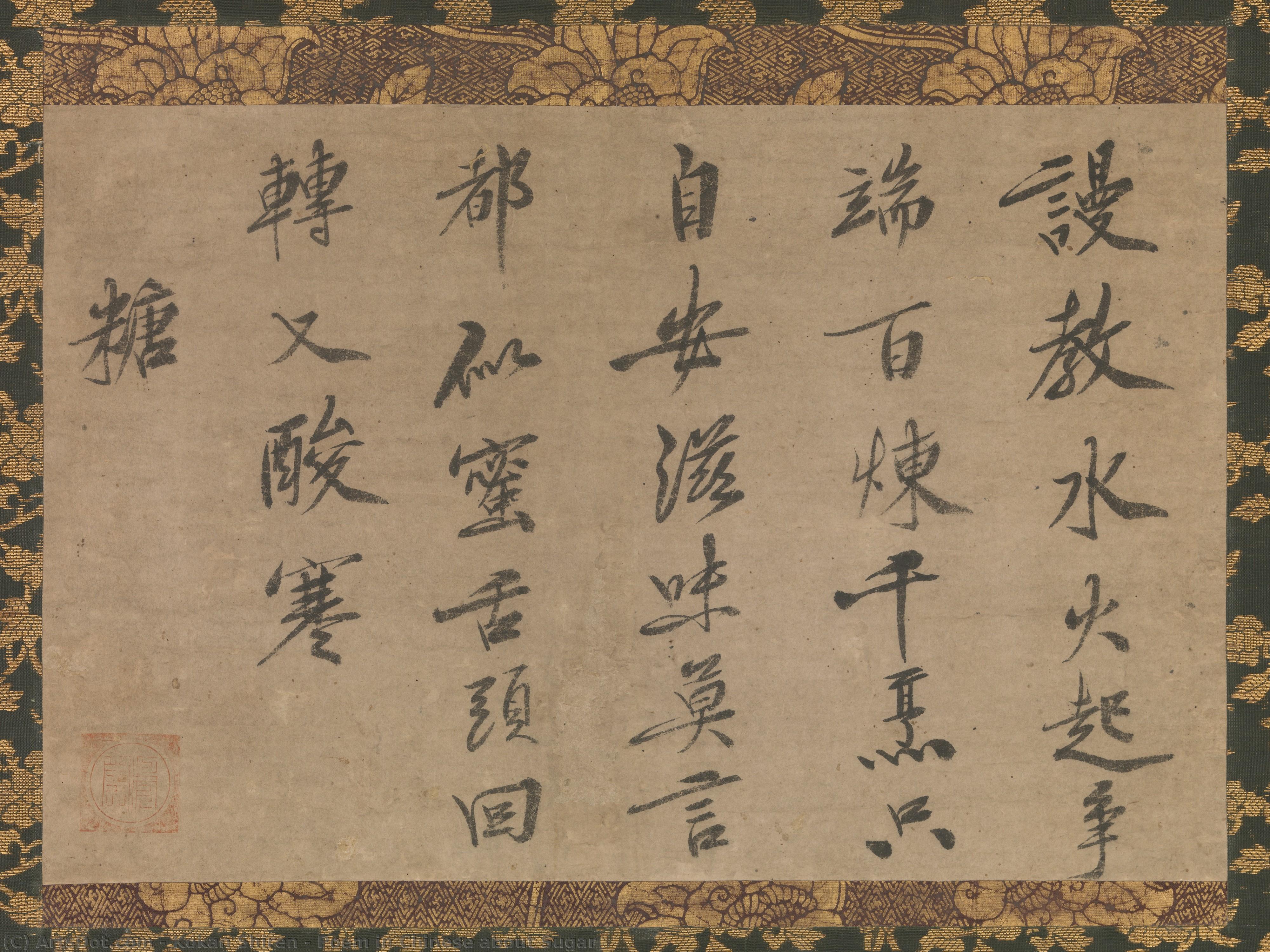
Poem in Chinese about Sugar
 301
301 31.0cm x 47.0cm
 Read More
Purchase a high-resolution, enhanced digital image, far superior to the online preview.
Each file is meticulously prepared by our in-house specialists using advanced tools and expert manual retouching. We ensure every image has exceptional clarity, precise color accuracy, and fine detail.
The final file is delivered via email within 72 hours, optimized for immediate use in professional, editorial, and print environments. This is the same quality trusted by top-tier design studios, publishers, and galleries.
Digital Image
Download a high-resolution file for personal display, printing, and creative projects. ( Buy Print Buy Hand Made Painting)
Included in Every Digital Image Order
Expert Digital Delivery, Guaranteed
When you choose ArtsDot.com, you're not just getting an image - you're receiving a professionally enhanced digital artwork, crafted with precision and backed by a satisfaction guarantee. Here's everything that comes with your order, automatically:

Fast Email Delivery
Your high-resolution digital image file will be emailed to you within 72 hours of ordering - ready for immediate use.

AI-Enhanced Digital File
Your artwork is professionally optimized using advanced AI tools and manual editing, ensuring maximum detail, clarity, and color accuracy.

Free Lifetime Re-Delivery
Accidentally deleted or lost your file? No worries - we'll resend it to you anytime, free of charge.

No Import Fees - Ever
Enjoy your artwork instantly with zero customs, duties, or delivery fees - digital downloads are always tax-free.

Color Accuracy Guarantee
We ensure your digital image reflects the original colors as closely as possible using professional tools and color management.

60-Day Satisfaction Guarantee
If you're not satisfied with your digital image, we'll revise it or refund 100% within 60 days - no questions asked.

100% Money-Back Guarantee
Not satisfied? Get a full refund within 60 days of receiving your digital file - no questions asked.

Bulk Order Discounts
Buy 3 images, save 10% - Buy 5, save 15% - Buy 10+, save 20%. Great for creative projects, galleries, and agencies.
Collectible Description
Related Artworks







Artist Biography
The Zen Poet and Historian: Kokan Shiren’s Legacy
Kokan Shiren (虎関師錬; 9 May 1278 – 11 August 1347), a pivotal figure in 14th-century Japan, stands as a unique confluence of artistic expression, philosophical depth, and historical scholarship. Born into an aristocratic family in Kyoto—his lineage tracing back to the Minamoto clan—Shiren’s life was one of profound transformation, marked by a journey from palace service to monastic seclusion and ultimately, to the creation of enduring works that continue to resonate today. His story is not merely that of a Buddhist monk; it's a testament to the synthesis of Chinese learning with Japanese sensibility, embodied in his poetry, calligraphy, and groundbreaking historical account. Shiren’s influence extends far beyond his own lifetime, shaping the landscape of Gozan bungaku (the Literature of the Five Mountains) and leaving an indelible mark on the development of Japanese Zen aesthetics.Early Life and Monastic Training
Kokan's early years were shaped by a privileged upbringing, yet also imbued with a nascent spiritual curiosity. At the tender age of eight, he was entrusted to the care of Buddhist priest Hōkaku at Mount Hiei, a renowned center for Zen practice. This initial exposure to monastic life provided him with a foundational understanding of Buddhist principles and the contemplative arts. However, Shiren’s intellectual thirst quickly propelled him beyond rote learning, leading him to pursue advanced studies in China—a pivotal experience that would profoundly shape his artistic vision and philosophical outlook. He spent years immersed in Chinese culture, mastering calligraphy under the esteemed master Huang Shangu, absorbing the nuances of Song dynasty poetry, and engaging with the complex philosophies underpinning Zen Buddhism. This period wasn’t merely about acquiring knowledge; it was a process of internal transformation, forging a unique synthesis between Japanese and Chinese traditions. His time at Nanzenji monastery further solidified his commitment to Zen practice, allowing him to hone his skills as a calligrapher and poet under the guidance of Kian.The Genko Shakusho: A Historical Landmark
Shiren’s most enduring legacy rests in the *Genko Shakusho* (元亨釈書), a thirty-chapter Buddhist history completed in 1322. This monumental work represents an unprecedented undertaking—the first comprehensive account of Buddhism in Japan to be compiled by a native scholar. Driven by a sense of urgency, Shiren was reportedly spurred into writing the *Genko Shakusho* after hearing a Chinese monk express surprise that such a detailed history did not exist within Japan itself. The *Genko Shakusho* is more than just a historical record; it’s a testament to Shiren's intellectual rigor and his deep engagement with Buddhist thought. It draws upon a vast array of sources, including Chinese chronicles and Indian texts, meticulously weaving together diverse strands of Buddhist history into a cohesive narrative. The work reflects Shiren’s own Zen perspective, emphasizing the importance of practice over mere doctrinal adherence.Poetry and Calligraphy: A Fusion of Disciplines
Beyond his historical scholarship, Kokan Shiren was a celebrated poet and calligrapher, deeply influenced by Chinese aesthetics. His poetry, often written in Chinese, is characterized by its elegant simplicity, profound insights into the nature of existence, and subtle use of imagery. He frequently explored themes of impermanence, emptiness, and the interconnectedness of all things—core tenets of Zen Buddhism. His calligraphy, too, reflects this synthesis, demonstrating a mastery of brushwork informed by his Chinese training while retaining a distinctly Japanese sensibility. A notable example is “Poem in Chinese about Sugar,” a seven-character quatrain that exemplifies Shiren’s ability to distill complex philosophical ideas into concise and evocative verse. The piece, now housed at the Metropolitan Museum of Art, reveals a debt to his master Yishan Yining in its crisp brushwork and rightward leaning tendency. His work also included *Jubun-in-ryaku*, an eighteen-volume collection of rhymed verses, showcasing his innovative approach to poetic form.Legacy and Influence
Kokan Shiren’s impact on Japanese culture is profound and multifaceted. He played a crucial role in the development of Gozan bungaku (the Literature of the Five Mountains), a rich tradition of poetry and prose produced by Buddhist monks residing in mountain temples during the Kamakura period. His work served as an inspiration for subsequent generations of poets and calligraphers, shaping the aesthetic sensibilities of the era. Furthermore, the *Genko Shakusho* remains a vital historical document, providing invaluable insights into the early history of Buddhism in Japan. His approach to miniature landscape gardens—as articulated in his rhymeprose essay—demonstrated an understanding of how art could be used to evoke spiritual experience and offer a pathway to enlightenment. Kokan Shiren’s life exemplifies the harmonious integration of intellectual curiosity, artistic talent, and spiritual devotion – a rare and enduring achievement that continues to inspire contemplation today.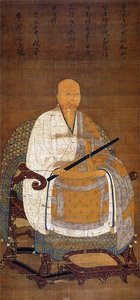
kokan shiren
1278 - 1346 , Japan
Quick Facts
- Artistic Movement Or Style: Rinzai Zen, Gozan Bungaku
- Artists Or Movements Influenced By This Artist: ['Huang Shangu']
- Artists Who Influenced This Artist: ['Yishan Yining']
- Date Of Birth: May 9, 1278
- Date Of Death: August 11, 1347
- Full Name: Kokan Shiren (虎関師錬)
- Nationality: Japanese
- Notable Artworks:
- Genko Shakusho
- Rhymeprose on a Miniature Landscape Garden
- Place Of Birth: Kyoto, Japan

