 Preview
 Send
Send Share
Share
 Details

 Download
 Similars
 X-Ray
X-Ray Diaporama
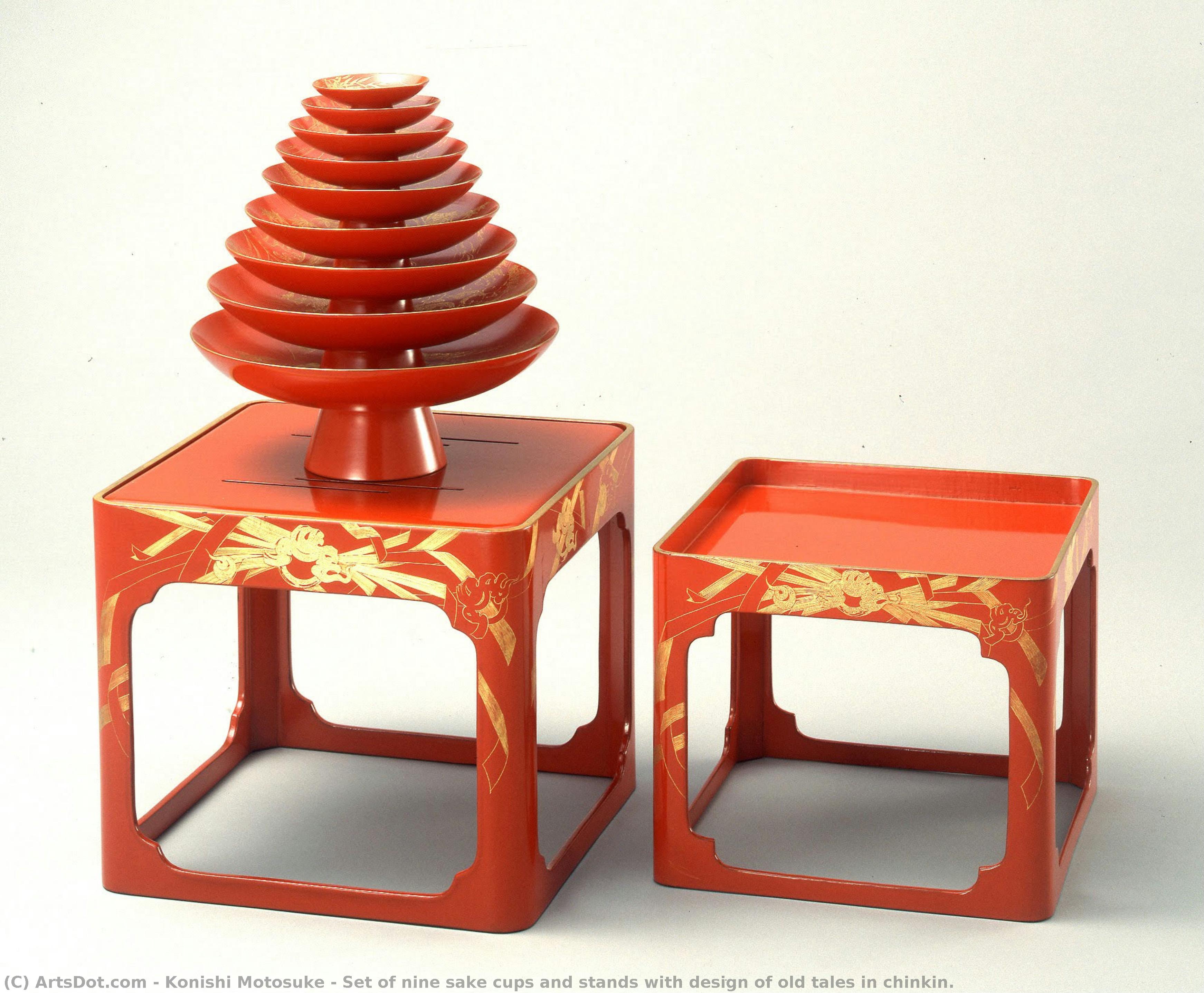
Set of nine sake cups and stands with design of old tales in chinkin.


 Read More
Hand Made Oil Reproduction
Hand-painted oil on canvas in your size and frame, made to order by our artists. ( Buy Print Buy Image)




































Pick from our preset sizes that match the artwork's original proportions.

You may enter your own dimensions to fit a specific frame or space. If your selected size does not match the original image's proportions, we will either crop the artwork or extend the painting with additional hand-painted elements. A digital mockup will be sent for your approval before production begins.
Please note that the on-screen preview does not reflect the actual cropping or extension. Only the mockup will accurately show the final composition.
While custom sizes are available, we recommend selecting a dimension from the predefined list to preserve the original proportions.
After order, ArtsDot.com team will email client for instructions and provide a mockup preview
Worldwide Delivery () in 3/4 weeks instead of standard 5 weeks. (4 September). No compromise on quality.

Free Worldwide Express Shipping

High-Quality Linen Canvas

Full Shipping Insurance

Customs Tax Refund Guarantee

True Color Matching Guarantee

60-Day Return Policy (Defects Only)

100% Money-Back Guarantee

Bulk Discount Offer
 Glass option is only available in size under 110 CM

Set of nine sake cups and stands with design of old tales in chinkin.
Reproduction Medium
Reproduction Size
-


Total Price
$ 263
Related Artworks









Artist Biography
The Gilded Legacy of Konishi Motosuke
In the quiet, disciplined world of Japanese lacquerware, few names resonate with the luminous precision of Konishi Motosuke. Born in Hiroshima in 1890, Motosuke emerged not merely as a skilled artisan but as a profound custodian of tradition, a man whose hands bridged the gap between ancient folklore and metallurgical mastery. His life’s work was dedicated to the elevation of chinkin, an exquisite and painstaking technique that transforms dark, lustrous lacquer into a shimmering canvas of gold and silver. To observe a piece by Motosuke is to witness a meditative dialogue between light and shadow, where every carved line tells a story of patience and cultural devotion.
While the specific details of his early years remain shrouded in the soft mists of history, it is widely understood that the vibrant, craft-oriented atmosphere of Hiroshima provided his foundational inspiration. Growing up in a city steeped in the reverence for meticulous handiwork, Motosuke likely developed an early intimacy with the transformative power of materials. This upbringing instilled in him the essential virtues of precision and endurance—qualities that would later define his approach to the chinkin process. He did not merely apply decoration; he sought to breathe life into the very substance of the lacquer, treating each surface as a sacred space for storytelling.
The Alchemy of Chinkin Technique
The artistry of Konishi Motosuke lies in the complex, multi-layered discipline of chinkin. Unlike simpler forms of gilding, chinkin requires an artist to act simultaneously as a sculptor and a jeweler. The process begins with the delicate transfer of a design onto a prepared lacquer surface, often drawing from the rich wellspring of Japanese mythology and ancient legends. Once the pattern is set, the artisan must meticulously carve intricate grooves into the hardened lacquer, creating a recessed landscape that awaits its metallic soul.
The true magic occurs during the inlay phase, where thin, ethereal sheets of gold and silver leaf are pressed into these carved channels. This delicate operation demands an intuitive grasp of how precious metals interact with organic resins. When executed with Motosuke’s level of mastery, the result is a surface that appears to glow from within, as if the light itself were trapped beneath the lacquer. His ability to manipulate these materials allowed him to capture the ephemeral beauty of nature and the dramatic tension of old tales, turning functional objects into profound works of fine art.
A Testament to Tradition and Folklore
The historical significance of Motosuke’s oeuvre is perhaps most vibrantly realized in his celebrated collections that serve as vessels for Japan's oral traditions. His magnum opus, a breathtaking set of nine sake cups and stands, serves as a definitive example of his ability to weave narrative into physical form. These pieces do not merely depict scenes from "Old Tales"; they embody them. Through the shimmering contrast of silver and gold against deep lacquer, he resurrected characters and legends, ensuring that the cultural memory of Japan remained tactile and visually arresting.
Throughout his career, which spanned until his passing in 1963, Motosuke’s influence helped preserve the prestige of Japanese lacquerware during a period of rapid modernization. His work stands as a testament to several enduring artistic values:
- Cultural Preservation: By utilizing classical motifs from folklore, he ensured that ancient Japanese narratives remained central to the decorative arts.
- Technical Excellence: He pushed the boundaries of chinkin, demonstrating that the technique could achieve a level of detail and luminosity previously thought impossible.
- Material Mastery: His profound understanding of the relationship between metal, carving, and resin set a standard for subsequent generations of lacquer artists.
Today, the legacy of Konishi Motosuke continues to inspire collectors and historians alike. He remains a pivotal figure whose work transcends simple craftsmanship, offering instead a window into the soul of Japanese aesthetics—a world where every glint of gold is an echo of a story told long ago.
konishi motosuke
1890 - 1963 , Japan
Quick Facts
- Artistic Movement Or Style: Chinkin technique
- Artists Or Movements Influenced By This Artist: ['Kunishi Motosuke']
- Date Of Birth: 1890
- Full Name: Konishi Motosuke
- Nationality: Japanese
- Notable Artworks: ['Set of nine sake cups and stands with design of old tales in chinkin.']
- Place Of Birth: Hiroshima, Japan