

 Send
Send Share
Share
 Details

 Download
 Similars
 Diaporama
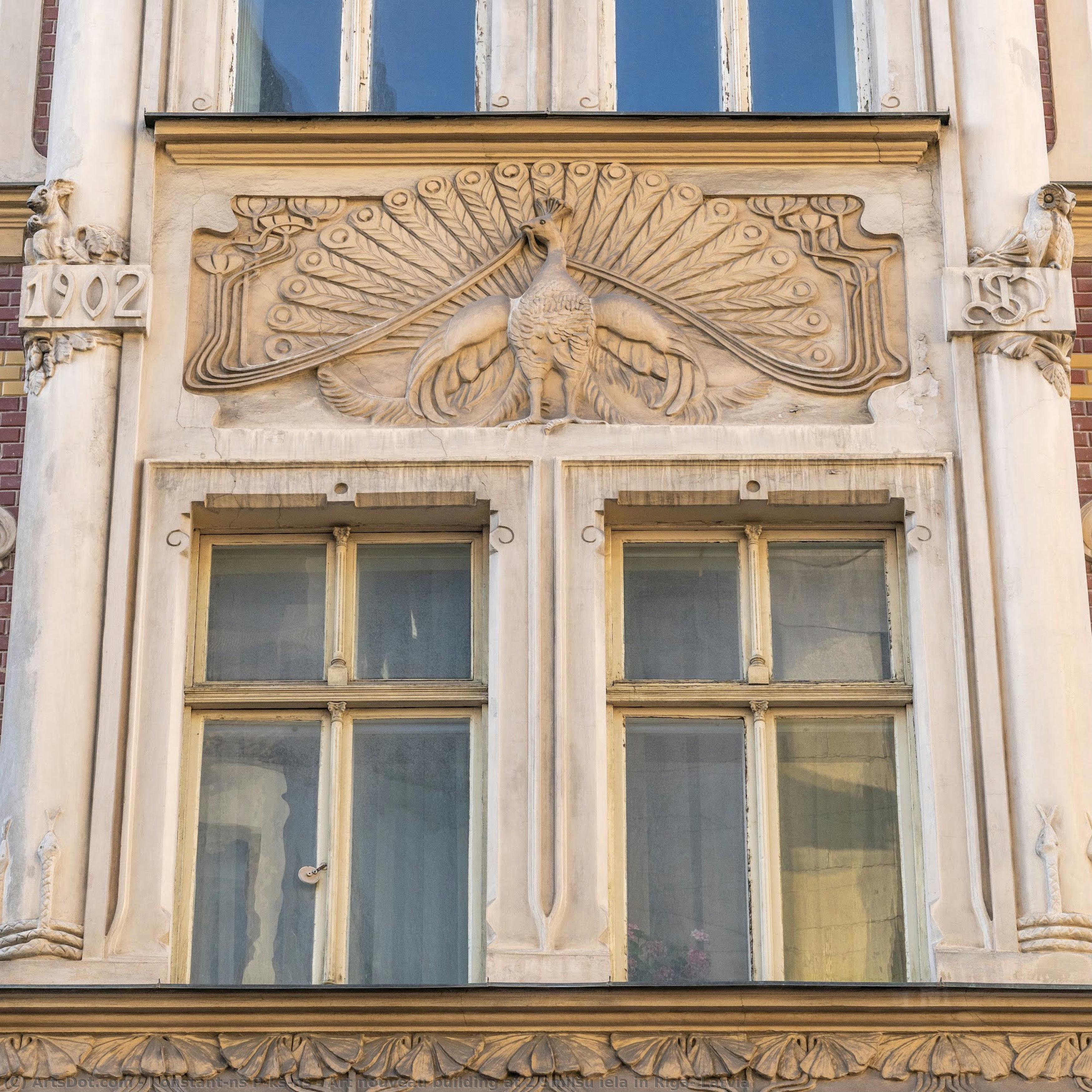
Art nouveau building at 2 Smilšu iela in Riga, Latvia


 Read More
Purchase a high-resolution, enhanced digital image, far superior to the online preview.
Each file is meticulously prepared by our in-house specialists using advanced tools and expert manual retouching. We ensure every image has exceptional clarity, precise color accuracy, and fine detail.
The final file is delivered via email within 72 hours, optimized for immediate use in professional, editorial, and print environments. This is the same quality trusted by top-tier design studios, publishers, and galleries.
Digital Image
Download a high-resolution file for personal display, printing, and creative projects. ( Buy Print Buy Hand Made Painting)
Included in Every Digital Image Order
Expert Digital Delivery, Guaranteed
When you choose ArtsDot.com, you're not just getting an image - you're receiving a professionally enhanced digital artwork, crafted with precision and backed by a satisfaction guarantee. Here's everything that comes with your order, automatically:

Fast Email Delivery
Your high-resolution digital image file will be emailed to you within 72 hours of ordering - ready for immediate use.

AI-Enhanced Digital File
Your artwork is professionally optimized using advanced AI tools and manual editing, ensuring maximum detail, clarity, and color accuracy.

Free Lifetime Re-Delivery
Accidentally deleted or lost your file? No worries - we'll resend it to you anytime, free of charge.

No Import Fees - Ever
Enjoy your artwork instantly with zero customs, duties, or delivery fees - digital downloads are always tax-free.

Color Accuracy Guarantee
We ensure your digital image reflects the original colors as closely as possible using professional tools and color management.

60-Day Satisfaction Guarantee
If you're not satisfied with your digital image, we'll revise it or refund 100% within 60 days - no questions asked.

100% Money-Back Guarantee
Not satisfied? Get a full refund within 60 days of receiving your digital file - no questions asked.

Bulk Order Discounts
Buy 3 images, save 10% - Buy 5, save 15% - Buy 10+, save 20%. Great for creative projects, galleries, and agencies.
The Soul of Riga in Stone
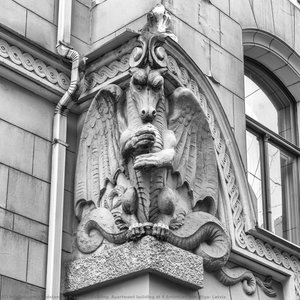
In the heart of Riga, where the streets whisper tales of a bygone era, stands a testament to the architectural brilliance of Konstantīns Pēkšēns. The facade at 2 Smilšu iela is not merely a structure of stone and mortar; it is a living canvas of the Art Nouveau movement. To gaze upon this building is to witness a moment in time when architecture transcended utility to become pure poetry. The centerpiece of this architectural masterpiece is an exquisite relief carving of a peacock, its plumage unfurged in a breathtaking display of stylized naturalism. This detail serves as a window into the late 19th and early 20th-century obsession with organic forms, where the rigid lines of urban life were softened by the flowing, rhythmic curves of the natural world.
The technique employed in this relief is a masterclass in subtractive sculpture, where the architect’s vision was carved directly into the building's skin. The stone surface, though weathered by time, retains a profound sense of texture and depth. Each feather of the peacock is meticulously rendered, creating a play of light and shadow that shifts as the sun moves across the Latvian sky. The muted palette of beige and cream tones lends the piece an air of timeless elegance, making it a perfect subject for those who appreciate the subtle grandeur of historical textures. For the discerning collector or interior designer, this motif offers a sophisticated focal point, bringing a sense of classical prestige and rhythmic movement to any curated space.
Symbolism and the Art Nouveau Spirit
Beyond its aesthetic splendor, the peacock relief carries deep symbolic weight. In the lexicon of Art Nouveau, the peacock is a potent emblem of beauty, immortality, and pride. Its "thousand eyes" within the tail feathers were often interpreted as symbols of vigilance and cosmic awareness. By integrating such a powerful icon into the urban fabric, Pēkšēns infused the city with a sense of spiritual vitality. The way the bird’s sinuous lines interact with the geometric moldings of the windows creates a harmonious tension between the wildness of nature and the order of human design. This balance is what makes the piece so emotionally resonant; it evokes a feeling of nostalgic wonder, inviting the viewer to reconnect with the ornamental richness that defined the golden age of Riga.
Owning or displaying a high-quality reproduction of this architectural marvel allows one to capture the essence of Latvian heritage. Whether integrated into a modern minimalist setting to provide a historical anchor or placed within a classical interior to enhance its opulence, the image of the Smilšu iela peacock serves as an enduring inspiration. It is more than a decorative element; it is a fragment of history, a celebration of craftsmanship, and a tribute to the architect who helped shape the very soul of Riga.
Related Artworks
Artist Biography
Konstantīns Pēkšēns: Architect of Riga’s Soul
Konstantīns Pēkšēns, born in Mazsalacas Municipality, Latvia, in 1859, stands as one of the most profoundly influential architects in Latvian history. Often considered the second generation following Jānis Baumanis, he shaped not just buildings but the very character and urban landscape of Riga and beyond. His legacy is woven into the fabric of countless Latvian cities and towns, with Riga boasting over 250 multi-story brick structures and a wealth of beautifully crafted wooden houses all bearing his distinctive mark. Pēkšēns’ work represents a pivotal moment in Latvian architectural identity, blending functional design with an exquisite sensitivity to ornamentation and symbolism—a hallmark of the Art Nouveau movement.Early Life and Training
Pēkšēns's early life was rooted in the rural countryside near Mazsalaca, but his ambition led him to Riga in 1896, where he joined his family. He began his architectural studies at the Riga Polytechnical Institute in 1875, initially pursuing a path in engineering before transitioning to architecture in 1880. His time at the institute was marked by active participation in student life, including membership in the prestigious *Selonija* fraternity and involvement in sports—reflecting a well-rounded personality that would later inform his approach to design. He graduated in 1885 and quickly established himself as an apprentice under Jānis Baumanis, one of Latvia’s most celebrated architects, gaining invaluable experience within the office of a master. This formative period instilled in him a deep understanding of classical principles while simultaneously exposing him to innovative approaches to building design.The Rise of an Architectural Star
Pēkšēns formally opened his own architectural practice in 1889, quickly establishing himself as a respected figure within the Latvian architectural community. He played a crucial role in revitalizing the Riga Architects Society, which had dissolved earlier, and actively engaged with civic organizations such as the Riga Latvian Society and various credit institutions. His influence extended beyond purely professional circles; he served on the Riga City Council from 1909, demonstrating his commitment to shaping the city’s future. His diverse experience—from construction management to public service—allowed him to contribute significantly to debates surrounding post-World War I reconstruction efforts in Riga. Notably, Pēkšēns's company also excelled in plumbing works, becoming a leading provider of central heating systems for the city prior to the war, showcasing his broad skillset and entrepreneurial spirit.Art Nouveau Masterpieces: A Celebration of Form and Ornament
Pēkšēns’s career truly flourished during the Art Nouveau era (roughly 1890-1914), a period characterized by its emphasis on organic forms, intricate ornamentation, and a rejection of industrial mass production. His buildings are renowned for their exquisite detailing, incorporating elements inspired by nature—particularly the peacock, which became a recurring motif in his designs. The house at 6 Strēlnieku Street is perhaps the most iconic example, featuring stunning stone reliefs depicting peacocks that adorn the facades. The “Miss Riga” sculpture, a particularly striking hermas figure, stands as a testament to Pēkšēns’s artistic vision and his ability to transform architectural elements into works of art. Other notable Art Nouveau buildings include those at 13 Kaļķu Street and 2 Smilšu Street, each showcasing unique decorative schemes and reflecting the artist's meticulous attention to detail. His designs prioritized a rational approach to Art Nouveau—beauty derived not from superficial embellishments but from the harmonious integration of form and function.Key Architectural Achievements & Legacy
Throughout his career, Pēkšēns was involved in numerous competitions and design projects, often collaborating with other prominent architects such as Eižens Laube, Arthur Moedlinger, and Aleksandrs Vanags. His contributions to Riga’s urban fabric are immense, encompassing residential buildings, apartment houses, commercial structures, and public spaces. The 14 Tērbatas Street bank building, the 46 Brīvības Street house, and the 14 Ausekļa Street apartment block are just a few examples of his enduring impact. Konstantīns Pēkšēns’s work is not merely about constructing buildings; it's about creating spaces that reflect Latvian identity, celebrate artistic expression, and enhance the quality of life for its inhabitants. His legacy continues to inspire architects and urban planners today, solidifying his place as a true visionary in Latvian architectural history.A Final Journey
Konstantīns Pēkšēns passed away on June 23, 1928, in Bad Kissingen, Germany, while seeking treatment for declining health. His death was deeply felt throughout Latvia, and he was laid to rest at the Forest Cemetery in Riga. His life’s work—a testament to his skill, creativity, and dedication—remains a vibrant part of Latvia's cultural heritage, visible in the beautiful buildings that grace its cities and towns.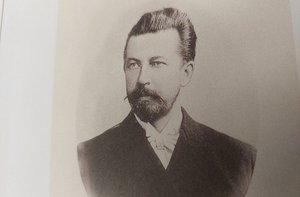
Konstantīns Pēkšēns
1859 - 1928 , Latvia
Quick Facts
- Artistic Movement Or Style: Art Nouveau
- Artists Or Movements Influenced By This Artist: ['Latvian architecture']
- Artists Who Influenced This Artist: ['Jānis Baumanis']
- Date Of Birth: 1859, Mazsalaca, Latvia
- Date Of Death: 1928
- Full Name: Konstantīns Pēkšēns
- Nationality: Latvian
- Notable Artworks:
- 2 Smilšu iela building
- Riga apartment buildings
- Place Of Birth: Mazsalaca Municipality, Latvia

