 Preview
 Send
Send Share
Share
 Details

 Download
 Similars
 X-Ray
X-Ray Diaporama
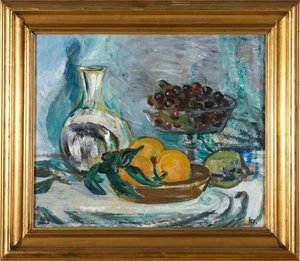
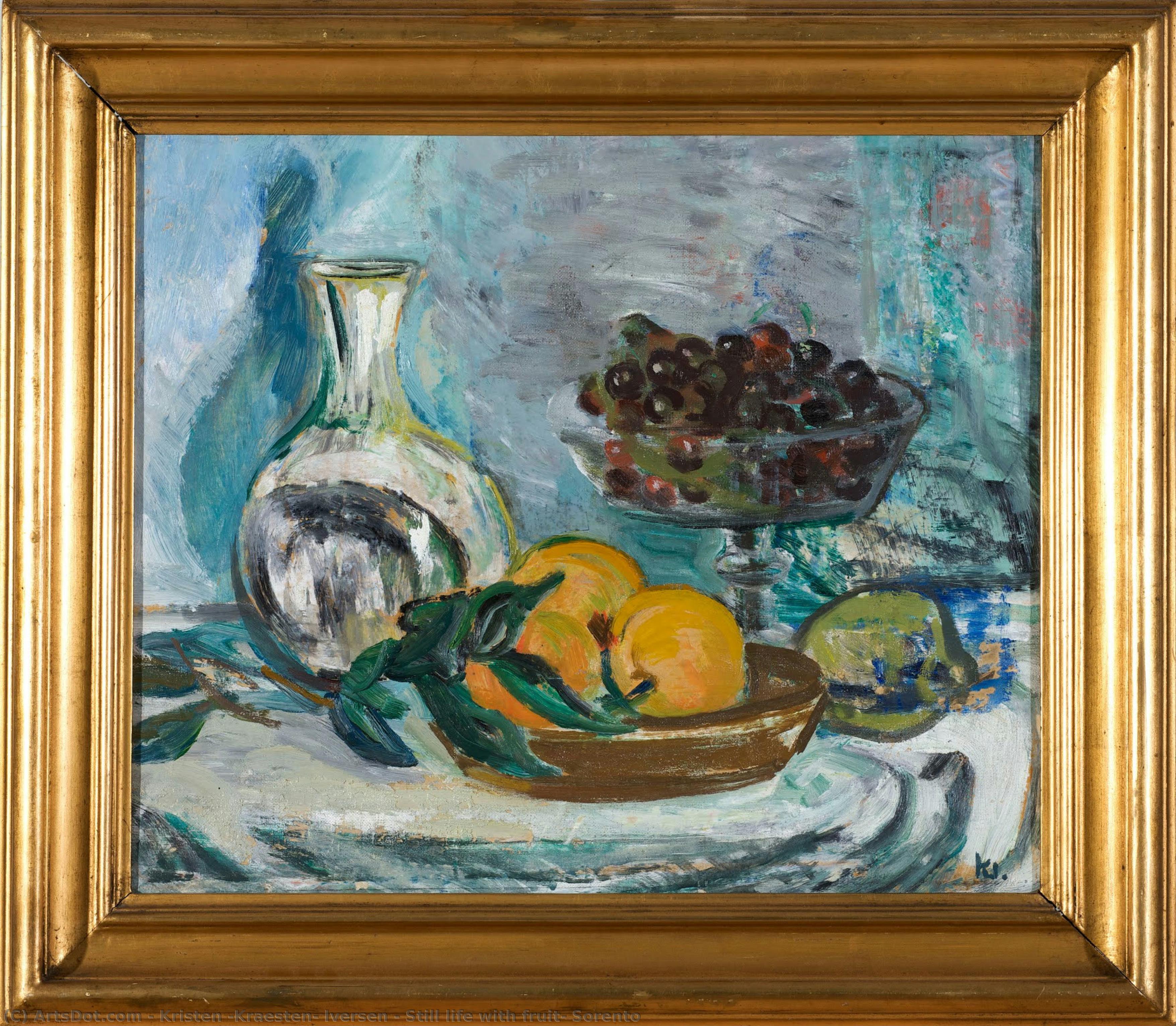
Still life with fruit, Sorento
 Oil
Oil- WallArt
- Still Life
 1927
1927- Modern
 49.0 x 41.0 cm
 Bornholm Art Museum
 Read More
Hand Made Oil Reproduction
Hand-painted oil on canvas in your size and frame, made to order by our artists. ( Buy Print Buy Image)




P118B $10

P118H $10

P118W $10

P438Z $10

P508JH $12

P508YH $12

P805H $10

P805Z $10

P919BZ $10

P919G $10

P919XJ $10

P959ZH $10

P968JZ $12

W106C $8

W218G $10

W218JH $8

W218Y $10

W307PJ $10

W316G $10

W316PJ $8

W316Y $10

W398PJ $8

W4111J $10

W500HY $15

W500JH $15

W692G $12

W849H $8

W940BG $15

W953PJ $8




Pick from our preset sizes that match the artwork's original proportions.

You may enter your own dimensions to fit a specific frame or space. If your selected size does not match the original image's proportions, we will either crop the artwork or extend the painting with additional hand-painted elements. A digital mockup will be sent for your approval before production begins.
Please note that the on-screen preview does not reflect the actual cropping or extension. Only the mockup will accurately show the final composition.
While custom sizes are available, we recommend selecting a dimension from the predefined list to preserve the original proportions.
After order, ArtsDot.com team will email client for instructions and provide a mockup preview
Worldwide Delivery () in 3/4 weeks instead of standard 5 weeks. (24 August). No compromise on quality.

Free Worldwide Express Shipping

High-Quality Linen Canvas

Full Shipping Insurance

Customs Tax Refund Guarantee

True Color Matching Guarantee

60-Day Return Policy (Defects Only)

100% Money-Back Guarantee

Bulk Discount Offer
 Glass option is only available in size under 110 CM

Still life with fruit, Sorento
Reproduction Medium
Reproduction Size
-


Total Price
$ 263
Artwork Description
A Symphony of Light and Abundance
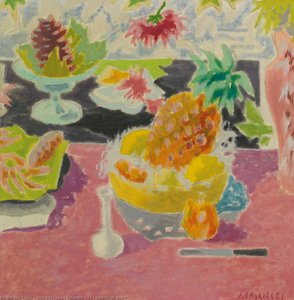
In the quiet intimacy of Still life with fruit, Sorento, we are invited into a moment of timeless repose, where the simple bounty of nature is elevated to a poetic meditation on color and form. Painted in 1927 by the Danish master Kristen “Kraesten” Iversen, this exquisite oil painting captures more than just a collection of fruit; it captures the very essence of vitality. The composition is a masterful arrangement of textures, where the velvety skin of deep purple grapes, the bright, sun-kissed zest of oranges, and the firm, polished surfaces of apples dance together across the canvas. Each element is placed with a deliberate, rhythmic grace, guiding the viewer's eye from the heavy, grounded weight of the fruit in the foreground to the delicate, ethereal presence of the vase resting softly in the background.
The technique employed by Iversen reveals his profound connection to the manipulation of light—a hallmark of his celebrated career. Through subtle gradations of tone and a sophisticated use of chiaroscuro, he breathes life into the organic shapes, creating a sense of three-dimensional volume that feels almost tactile. The way the light catches the curve of an orange or reflects off the surface of a ripening apple suggests a warm, Mediterranean glow, perhaps a nod to the evocative title. This interplay of shadow and luminosity does not merely illuminate the subject; it creates an atmosphere of warmth and domestic tranquility, making the painting feel less like a static object and more like a living, breathing corner of a sun-drenched room.
The Art of the Everyday: Symbolism and Legacy
Beyond its visual splendor, this still life carries a profound emotional resonance that speaks to the universal human appreciation for abundance and the fleeting beauty of nature. In the tradition of classical still life painting, the arrangement of fruit often serves as a memento mori—a gentle reminder of the cycle of life—yet Iversen imbues this particular piece with an overwhelming sense of optimism. There is no decay here, only the peak of ripeness and the vibrant energy of life at its most succulent. For the collector or interior designer, this work offers a sophisticated balance; it possesses the intellectual depth of early 20th-century Danish modernism while maintaining a decorative elegance that can anchor a room with grace and warmth.
Integrating a high-quality reproduction of this masterpiece into a contemporary space allows for a dialogue between history and modernity. Whether placed in a minimalist gallery-style setting or a richly textured classical interior, Still life with fruit, Sorento acts as a focal point of organic beauty. It invites contemplation, encouraging anyone who gazes upon it to pause and find splendor in the simple, the seasonal, and the light. To possess such a piece is to hold a fragment of Iversen’s luminous world, bringing the storied light of his artistic journey into the heart of the modern home.
Related Artworks
Artist Biography
A Life Immersed in Light: The Art of Kristen “Kraesten” Iversen
Kristen “Kræsten” Iversen, born in the quiet Danish parish of Holsted in 1886, was an artist whose life became inextricably linked with the exploration and manipulation of light. He wasn’t merely a painter; he was a weaver of atmospheres, a master of both canvas and glass who left an indelible mark on Denmark's artistic landscape. His journey began with formal training at the Copenhagen Technical College between 1904 and 1905, laying the groundwork for a career that would see him embrace diverse mediums – oils, frescos, watercolours, mosaics, and most notably, stained glass. Early exhibitions at the Artists’ Autumn Exhibition from 1910 to 1918 showcased a developing talent, but it was his first encounter with the island of Bornholm in 1920 that truly ignited his artistic vision.The Influence of Bornholm and the Royal Commissions
Bornholm, with its unique natural colours and distinctive light quality, proved transformative for Iversen. The island’s landscapes weren't simply subjects to be depicted; they were sources of inspiration, a palette from which he drew an increasingly vibrant and nuanced understanding of colour and form. This newfound aesthetic direction propelled him into a period of significant recognition. In 1923, he was awarded the prestigious Eckersberg Medal, acknowledging his growing mastery. However, it was the commission to create the large painted ceiling decoration in the royal hall at Christiansborg Palace between 1927 and 1931 that cemented his position as a leading artist of his time. This monumental undertaking demanded not only technical skill but also an ability to translate grandeur and history into visual form – challenges Iversen met with remarkable success, establishing a style characterized by both classical precision and a distinctly modern sensibility.Beyond the Canvas: A Pioneer in Stained Glass
While celebrated for his paintings, Kristen Iversen’s legacy extends far beyond the traditional canvas. He became a true pioneer in the art of stained glass, transforming this often-overlooked medium into a powerful form of artistic expression. His first foray into glasswork came with windows for Risskov Church, but it was his subsequent designs – including those for the North Chapel at Fårevejle Church and the Danish church in Buenos Aires – that truly showcased his innovative approach. Iversen didn’t simply fill spaces with coloured glass; he crafted luminous narratives, using light itself as a primary element of design. He understood how to manipulate colour, texture, and form to create windows that were not merely decorative but deeply evocative, imbued with spiritual resonance and artistic depth. His work on churches like Sankt Nicolai Church in Svendborg further demonstrated his ability to seamlessly integrate art into architectural spaces, creating environments that were both beautiful and profoundly moving.A Professor and Director: Shaping a Generation of Artists
Iversen’s influence wasn't limited to his own creations; he also dedicated himself to nurturing the next generation of artists. In 1930, he accepted a professorship at the Royal Danish Academy of Fine Arts, a position he held until his death in 1955. He later served as director of the academy from 1949–1952, guiding countless students and shaping the direction of Danish art for decades to come. His teaching philosophy likely emphasized the importance of observation, experimentation, and a deep understanding of both historical traditions and contemporary trends. He was knighted with the Order of the Dannebrog in 1932, a testament to his significant contributions to Danish culture.A Lasting Legacy: The Enduring Power of Light
Kristen “Kræsten” Iversen’s death in Copenhagen in 1955 marked the end of a remarkable artistic journey. He left behind a body of work that is as diverse as it is compelling, encompassing paintings, frescos, mosaics, and stunning stained-glass windows. He was exceptionally diversified in his art work which covered oils, frescos, watercolours, mosaics and glass painting. His landscapes, imbued with the light of Bornholm, continue to captivate viewers with their vibrant colours and atmospheric depth. But perhaps it is his pioneering work in stained glass that truly defines his legacy – a testament to his ability to transform a traditional medium into a powerful form of artistic expression. Iversen’s art remains a potent reminder of the enduring power of light, colour, and imagination, continuing to inspire artists and audiences alike.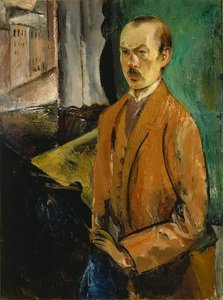
kristen "kraesten" iversen
1886 - 1955 , Denmark
Quick Facts
- Artistic Movement Or Style: Bornholm School
- Artists Or Movements Influenced By This Artist: ['']
- Artists Who Influenced This Artist: ['']
- Date Of Birth: January 26, 1886
- Date Of Death: August 9, 1955
- Full Name: Kristen "Kraesten" Iversen
- Nationality: Danish
- Notable Artworks:
- Still life with fruit, Sorento
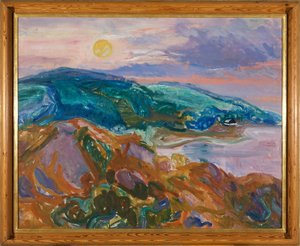
- Misty sun over the bay of Ypnasted
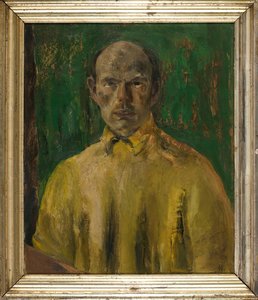
- Self portrait in yellow coat
- Place Of Birth: Holstebro, Denmark
Related Articles
The Bountiful Still Life: Symbolism & Artistic Representation of Fruit Across Art History
Explore the rich history of still life painting & the symbolism of fruit across art movements. Discover masterpieces from Caravaggio to Cézanne with ArtsDot – expert guidance & museum-quality reproductions.
Earthy Hues & Masterpieces: Top 10 Paintings with 'Mushroom' Tones |
Explore 10 iconic paintings with captivating 'mushroom' tones! Discover Van Gogh, Monet & Rembrandt’s masterpieces—earthy palettes, rich history & artistic techniques. Find museum-quality art reproductions and curated decor ideas at
Sandstone & Sunlight: 10 Masterpieces of Earth-Toned Art |
Journey through 10 iconic paintings bathed in 'sand' tones – from Van Gogh to Monet. Explore the stories, techniques & warm palettes of these timeless masterpieces. Find museum-quality art reproductions at and bring classic beauty home.
Silent Narratives: Exploring the Enduring Appeal of Still Life Painting Across Centuries
Explore the rich history of still life painting with ArtsDot. Discover Dutch Masters, decode vanitas symbolism & learn about collecting timeless art. Expert insights and museum-quality reproductions.
The Enduring Appeal of Still Life: A Historical & Contemporary Exploration
Explore the rich history & symbolism of still life painting with ArtsDot. Discover masterpieces from the Dutch Golden Age, learn about vanitas art, and find expert guidance for collecting timeless artworks.