 Preview
 Send
Send Share
Share
 Details

 Download
 Similars
 X-Ray
X-Ray Diaporama
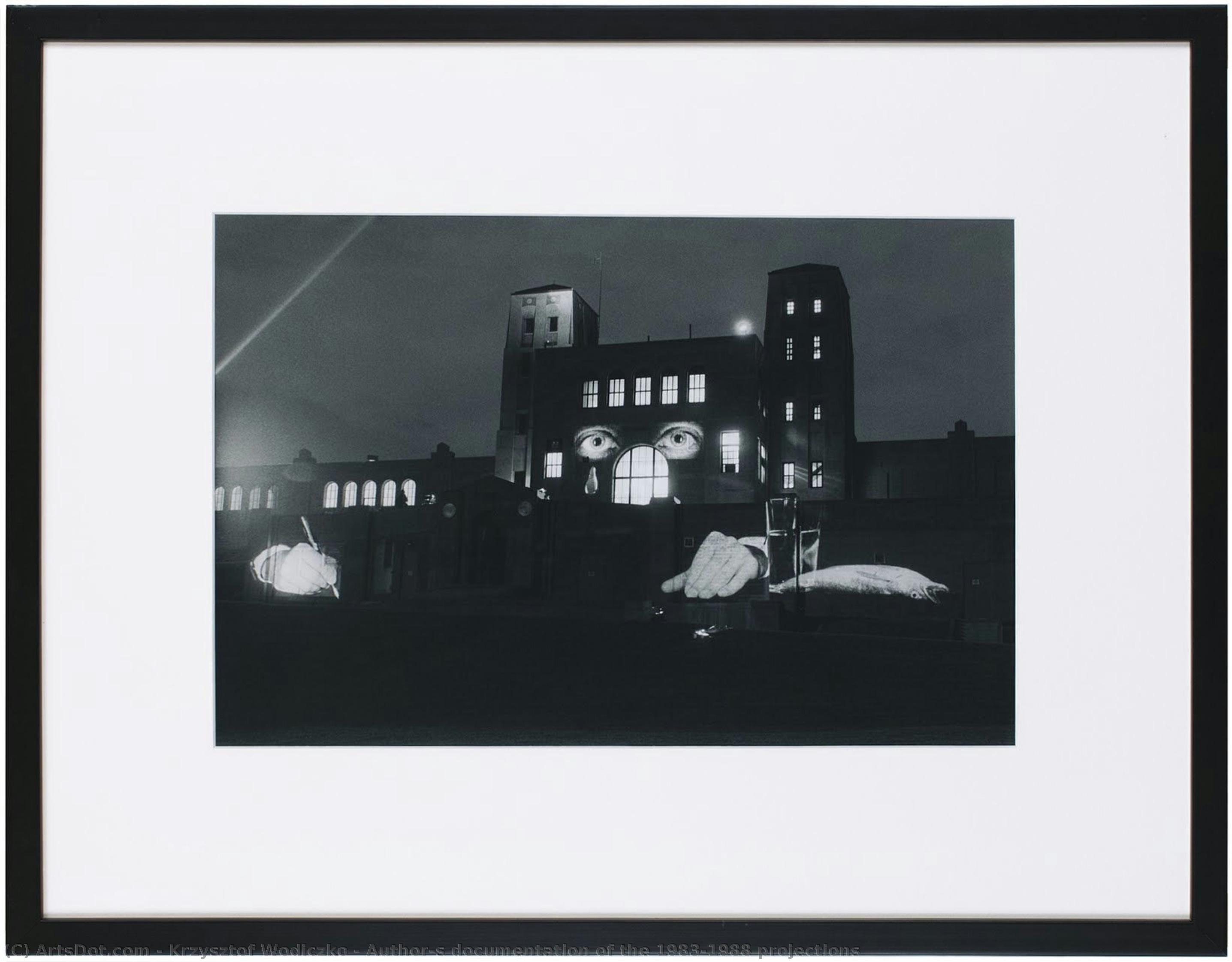
Author’s documentation of the 1983–1988 projections
 68.0 x 53.0 cm
 Centre of Contemporary Art Znaki Czasu
 Read More
Hand Made Oil Reproduction
Hand-painted oil on canvas in your size and frame, made to order by our artists. ( Buy Print Buy Image)




































Pick from our preset sizes that match the artwork's original proportions.

You may enter your own dimensions to fit a specific frame or space. If your selected size does not match the original image's proportions, we will either crop the artwork or extend the painting with additional hand-painted elements. A digital mockup will be sent for your approval before production begins.
Please note that the on-screen preview does not reflect the actual cropping or extension. Only the mockup will accurately show the final composition.
While custom sizes are available, we recommend selecting a dimension from the predefined list to preserve the original proportions.
After order, ArtsDot.com team will email client for instructions and provide a mockup preview
Worldwide Delivery () in 3/4 weeks instead of standard 5 weeks. (27 August). No compromise on quality.

Free Worldwide Express Shipping

High-Quality Linen Canvas

Full Shipping Insurance

Customs Tax Refund Guarantee

True Color Matching Guarantee

60-Day Return Policy (Defects Only)

100% Money-Back Guarantee

Bulk Discount Offer
 Glass option is only available in size under 110 CM

Author’s documentation of the 1983–1988 projections
Reproduction Medium
Reproduction Size
-


Total Price
$ 263
Artwork Description
Related Artworks




Artist Biography
The Architect of Public Memory
Krzysztof Wodiczko stands as a singular, transformative figure in the landscape of contemporary art, an artist whose canvas is not the quiet confines of a gallery wall but the monumental facades of history itself. Born in Warsaw in 1943, his very arrival was framed by the harrowing echoes of the Warsaw Ghetto uprising and the subsequent Soviet occupation. This backdrop of profound upheaval and systemic erasure deeply etched itself into his creative consciousness. Growing up in post-war communist Poland, Wodiczko developed a piercing sensitivity to social injustice and a conviction that art must serve as more than mere aesthetic contemplation; it must act as a catalyst for dialogue, a tool for reclaiming the voices of those silenced by political and social structures.
His early life was a tapestry of diverse cultural influences. The son of Bohdan Wodiczko, a renowned orchestra conductor, he inherited a deep appreciation for the emotive power of sound and rhythm. This musicality found a counterpart in the influence of his Jewish mother, whose heritage connected him to the weight of historical trauma and the necessity of remembrance. These formative years led him to the Warsaw Polytechnic Institute, where he studied industrial design. It was here that the seeds of his unique methodology were sown, as he began to merge the precision of technical design with an experimental interest in media, seeking ways to use technology to confront difficult narratives.
Interrogative Design and the Living Monument
The true emergence of Wodiczko’s artistic voice arrived through what he terms Interrogative Design. This practice transcends traditional sculpture or installation by utilizing large-scale slide and video projections to breathe life into architectural facades and monuments. By projecting grand, often unsettling images—such as human body parts or symbolic objects—onto the cold stone of statues and government buildings, Wodiczko forces a confrontation between the permanence of architecture and the fragility of human experience. His work does not merely decorate a building; it interrogates it, stripping away the official, sanitized histories embedded in monuments to reveal the underlying tensions of war, conflict, and trauma.
Through these luminous interventions, Wodiczko has realized more than eighty public projections across the globe, spanning continents from North America to Australia and throughout Europe. His work often focuses on the most marginalized members of society—the homeless, immigrants, and victims of political violence. By projecting the faces and voices of these individuals onto the very structures that often ignore or oppress them, he creates a temporary, democratic space for discourse. In his vision, public space is a space of rights, a place where the architecture of power can be reclaimed to amplify the hopes and fears of the disenfranchised.
A Legacy of Social Engagement
The historical significance of Krzysztof Wodiczko lies in his ability to transform the urban environment into a site of active political and psychological engagement. His career, which includes influential roles as a professor at the Massachusetts Institute of Technology (MIT) and the Harvard Graduate School of Design, has bridged the gap between technological innovation and social activism. He has successfully utilized the tools of modern media—projection mapping, video, and sound—to ensure that the wounds of history are not forgotten but are instead brought into the light of contemporary scrutiny.
Wodiczko’s achievements can be summarized through the enduring impact of his practice:
- Redefining Public Space: He transformed static monuments into dynamic participants in social dialogue, making the city a theater for collective memory.
- Amplifying Marginalized Voices: Through his projections, he provided a platform for those often excluded from the historical record, lending legitimacy to their struggles.
- Technological Humanism: He pioneered a method of using advanced design and media technologies not for spectacle, but as critical instruments for social commentary and human rights advocacy.
Ultimately, Wodiczko remains an artist of profound necessity. In an era where history is often contested and public discourse is increasingly fragmented, his work serves as a luminous reminder that the stones of our cities hold stories that demand to be heard, and that art possesses the unique power to make the silent monuments of our past speak once more.
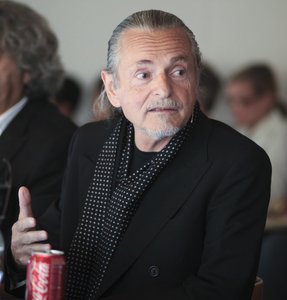
Krzysztof Wodiczko
1943 - , Poland
Quick Facts
- Artistic Movement Or Style: Interrogative Design
- Artists Or Movements Influenced By This Artist: ['Tactical Media']
- Artists Who Influenced This Artist:
- Andrzej Dluzniewski
- Wojciech Wybieralski
- Date Of Birth: April 16, 1943
- Full Name: Krzysztof Wodiczko
- Nationality: Polish
- Notable Artworks:
- City of Refuge
- The Abolition of War
- Place Of Birth: Warsaw, Poland