 Preview
 Send
Send Share
Share
 Details

 Download
 Similars
 X-Ray
X-Ray Diaporama
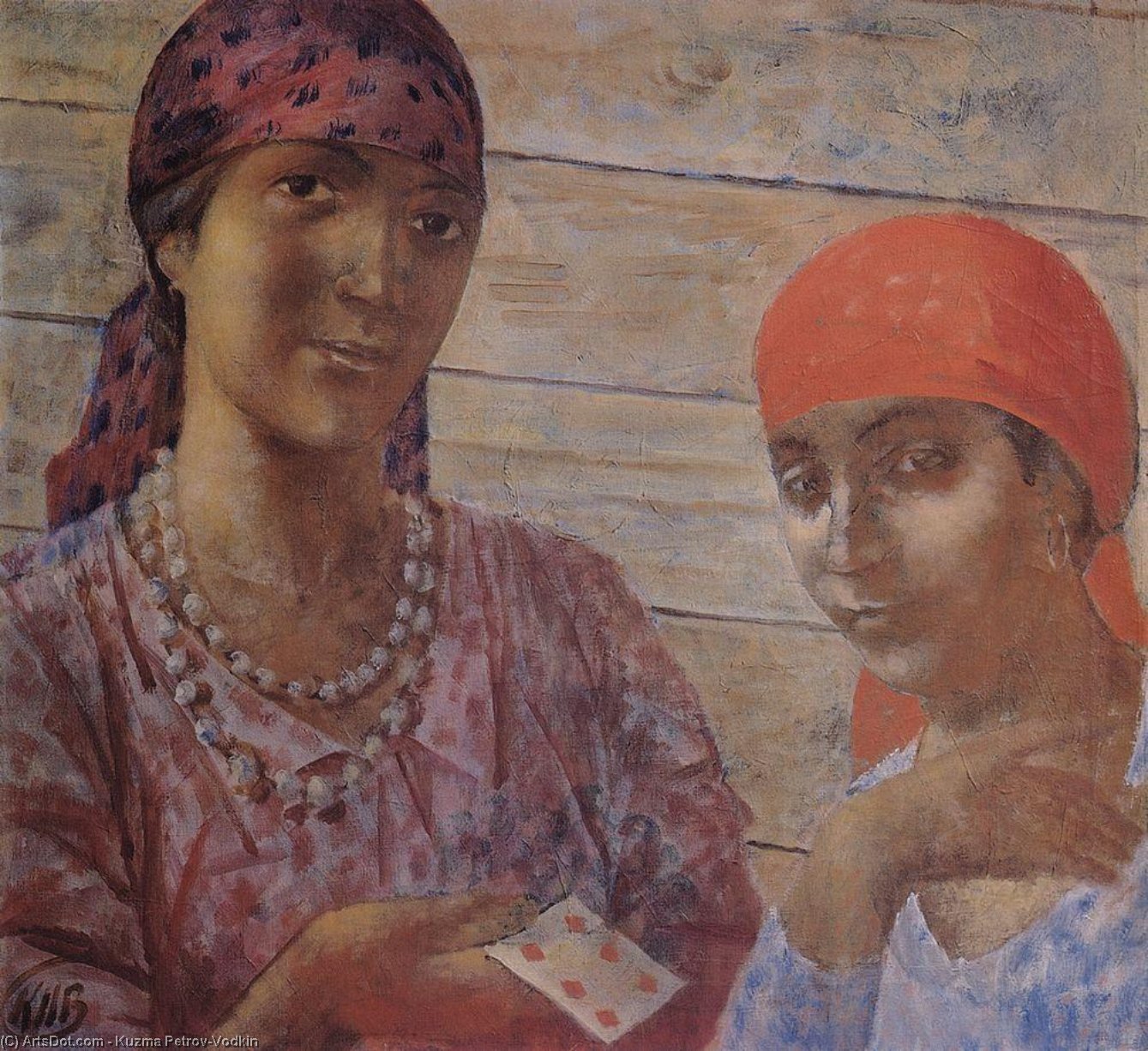
Gypsy
 Oil On Canvas
- WallArt
- Symbolism
 1927
1927- Modern
 57.0 x 63.0 cm
 Read More
Hand Made Oil Reproduction
Hand-painted oil on canvas in your size and frame, made to order by our artists. ( Buy Print Buy Image)




P118B $10

P118H $10

P118W $10

P438Z $10

P508JH $12

P508YH $12

P805H $10

P805Z $10

P919BZ $10

P919G $10

P919XJ $10

P959ZH $10

P968JZ $12

W106C $8

W218G $10

W218JH $8

W218Y $10

W307PJ $10

W316G $10

W316PJ $8

W316Y $10

W398PJ $8

W4111J $10

W500HY $15

W500JH $15

W692G $12

W849H $8

W940BG $15

W953PJ $8




Pick from our preset sizes that match the artwork's original proportions.

You may enter your own dimensions to fit a specific frame or space. If your selected size does not match the original image's proportions, we will either crop the artwork or extend the painting with additional hand-painted elements. A digital mockup will be sent for your approval before production begins.
Please note that the on-screen preview does not reflect the actual cropping or extension. Only the mockup will accurately show the final composition.
While custom sizes are available, we recommend selecting a dimension from the predefined list to preserve the original proportions.
After order, ArtsDot.com team will email client for instructions and provide a mockup preview
Worldwide Delivery () in 3/4 weeks instead of standard 5 weeks. (17 August). No compromise on quality.

Free Worldwide Express Shipping

High-Quality Linen Canvas

Full Shipping Insurance

Customs Tax Refund Guarantee

True Color Matching Guarantee

60-Day Return Policy (Defects Only)

100% Money-Back Guarantee

Bulk Discount Offer
 Glass option is only available in size under 110 CM

Gypsy
Reproduction Medium
Reproduction Size
-


Total Price
$ 263
Artwork Description
A Mystical Encounter: The Soul of Petrov-Vodkin’s Gypsy
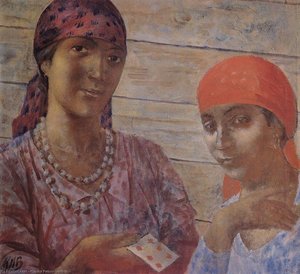
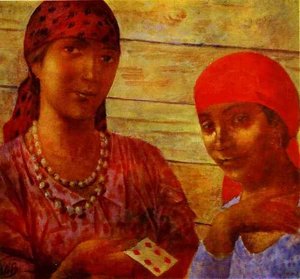
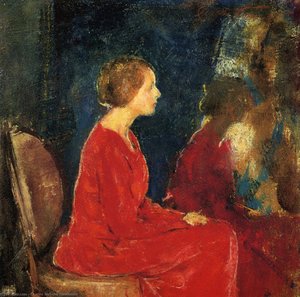
In the quiet, heavy atmosphere of 1927, Kuzma Petrov-Vodkin captured a moment that transcends mere portraiture, inviting us into a world where the mundane and the metaphysical collide. His masterpiece, Gypsy, is not simply a depiction of two women; it is a profound exploration of fate, destiny, and the unseen threads that bind human existence. As one gazes upon this oil on canvas, there is an immediate sense of being a silent witness to a ritual. The composition, measuring 57 x 63 cm, possesses an intimate yet expansive energy, pulling the viewer into a space where every object—from a scattered chair to a single playing card—carries the weight of a whispered secret.
The painting serves as a quintessential example of Symbolism, a movement that sought to represent absolute truths through metaphorical imagery. Petrov-Vodkin, a master of synthesizing Russian iconographic traditions with modern sensibilities, utilizes color as his primary language of emotion. The striking contrast between the woman draped in a vibrant red scarf and her companion in deep blue creates a visual dialogue between passion and tranquility. This duality is central to the work's emotional impact; while the red evokes the heat of life and the unpredictability of fortune, the blue offers a grounding, contemplative stillness. Together, they represent the dual nature of the human spirit—restless yet seeking peace.
The Language of Fate and Form
Beyond the striking figures, the painting is rich with symbolic elements that demand deep contemplation. The presence of playing cards held delicately in the women's hands serves as a poignant memento mori, a reminder of the randomness of life and the inescapable hand of destiny. This theme of chance is echoed by the seemingly haphazard arrangement of chairs throughout the scene, which may symbolize the transience and instability of our earthly journey. Petrov-Vodkin’s technique, characterized by his unique "spherical" perspective and a deliberate, almost sculptural approach to form, lends the figures a monumental quality despite the intimate setting.
For the discerning collector or interior designer, Gypsy offers more than just aesthetic beauty; it provides a focal point of intellectual and emotional depth. The artwork’s ability to spark conversation makes it an ideal centerpiece for a curated gallery wall or a sophisticated study. Whether you are drawn to its historical significance within the Russian Symbolist movement or its ability to evoke a sense of mystery in a modern living space, a high-quality reproduction of this work allows the haunting beauty of Petrov-Vodkin’s vision to reside within your own home. It is an invitation to pause, to look beyond the surface, and to ponder the beautiful mysteries of the human condition.
Related Artworks

Artist Biography
A Visionary of Spherical Space: The Life and Art of Kuzma Petrov-Vodkin
Kuzma Sergeevich Petrov-Vodkin, a name resonating with the spirit of early 20th-century Russian art, was more than just a painter; he was a philosopher of form, a weaver of symbolism, and a chronicler of his nation’s turbulent soul. Born in 1878 in Khvalynsk, a small provincial town on the Volga River, Petrov-Vodkin's artistic journey began not within the hallowed halls of academies but amidst the vibrant, deeply spiritual world of Russian icon painting and local signmakers. These early influences instilled in him a reverence for line, color, and narrative—qualities that would define his unique aesthetic throughout his career. His formal training commenced at the Baron Stieglitz School in Saint Petersburg between 1895 and 1897, providing a foundation upon which he would build a style utterly his own. He wasn’t merely absorbing techniques; he was synthesizing tradition with an emerging modern sensibility, forging a path that diverged from prevailing artistic currents.The Birth of a Unique Style: Spherical Perspective and Symbolic Resonance
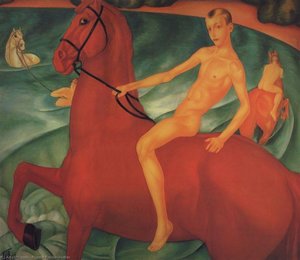
Petrov-Vodkin's most recognizable contribution to art history is undoubtedly his development of “spherical perspective.” Rejecting the conventional linear perspective favored by Renaissance masters, he embraced a more encompassing, almost cosmic view. This technique wasn’t simply an aesthetic choice; it was deeply rooted in his philosophical beliefs and spiritual inclinations. He sought to represent not just what the eye sees but how space *feels*, creating compositions that draw the viewer into a swirling vortex of emotion and meaning. The Dream, painted in 1910, became a focal point for debate within Russian artistic circles. Alexandre Benois championed its innovative approach, while Ilya Repin voiced criticism, yet it undeniably sparked conversation about the possibilities of modern painting. The work’s dreamlike quality, achieved through flattened planes and symbolic figures, exemplifies Petrov-Vodkin's ability to evoke profound psychological states. Bathing of a Red Horse, completed in 1912, cemented his reputation as a visionary artist. This iconic image—a group of peasant youths bathing a crimson horse against a backdrop of rolling hills—is often interpreted as a premonition of the social upheaval that would soon engulf Russia. The vibrant color and unusual composition are hallmarks of his style, signaling a departure from traditional realism towards a more symbolic and emotionally charged form of expression.Beyond Painting: Literary Pursuits and Reflections on Life
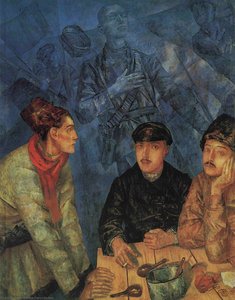
Petrov-Vodkin’s creative energies weren't confined to the canvas. After contracting pulmonary tuberculosis in 1927, he turned increasingly to literature, embarking on a remarkable writing career that mirrored his artistic explorations. He produced three semi-autobiographical volumes—Khvalynsk, Euclid’s Space, and Samarkandia—which offered intimate glimpses into his childhood, philosophical musings, and artistic process. These writings, rediscovered and republished in the 1970s, were met with widespread acclaim, revealing a profound intellect and a poetic sensibility that complemented his visual art. His literary works are not merely memoirs; they are explorations of memory, perception, and the search for meaning in a rapidly changing world. They provide invaluable insight into the intellectual and spiritual foundations of his artistic vision. His later paintings, such as Death of a Commissar and In the Line of Fire, reflect a shift towards darker tones and more detailed compositions, perhaps mirroring the increasing political tensions of the era.Legacy and Influence: A Lasting Mark on Russian Art
Kuzma Petrov-Vodkin’s influence extends far beyond his own prolific output. He left an indelible mark on subsequent generations of Russian artists, inspiring them to explore new avenues of symbolism, perspective, and emotional expression. His unique approach to spherical space continues to fascinate art historians and practitioners alike. He was also influenced by the Post-Impressionist movement, a cultural reaction against Impressionism that emphasized subjectivity and often delved into occult themes—elements readily apparent in his work. Today, his paintings are held in esteemed collections such as the Kramskoy Museum of Fine Arts in Voronezh and the Krasnoyarsk Art Museum, ensuring his legacy remains accessible to audiences worldwide. Petrov-Vodkin passed away in Leningrad in 1939, but his artistic spirit endures—a testament to the power of a singular vision that dared to challenge conventions and explore the depths of human experience. His work serves as a poignant reminder of the enduring connection between art, spirituality, and the search for meaning in an ever-changing world.Museums Featuring Petrov-Vodkin’s Work
- Kramskoy Museum of Fine Arts (Voronezh, Russia)
- Krasnoyarsk Art Museum (Krasnoyarsk, Russia)
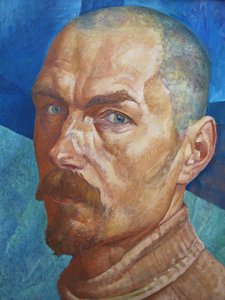
Kuzma Petrov-Vodkin
1878 - 1939 , Russia
Quick Facts
- Artistic Movement Or Style: Post-Impressionism
- Artists Or Movements Influenced By This Artist: ['Russian artists']
- Date Of Birth: November 5, 1878
- Date Of Death: February 15, 1939
- Full Name: Kuzma Petrov-Vodkin
- Nationality: Russian
- Notable Artworks:
- The Dream
- Bathing of a Red Horse
- Death of a Commissar
- Place Of Birth: Khvalynsk, Russia
Related Articles

Slate Blue Masterpieces: 10 Iconic Paintings & Timeless Home Decor Ideas
Immerse yourself in the captivating world of slate blue! Explore 10 iconic paintings by Monet, Van Gogh & Renoir. Discover their stories, techniques & find museum-quality art reproductions for your home at .
Crimson Threads of Narrative: Exploring Symbolism & Representation in Artworks Featuring the Red Dress
Explore the rich symbolism of the red dress in art history! From ancient power displays to iconic portraits like Cézanne’s 'Madame Cezanne', discover the cultural and artistic significance behind this captivating color. Expert analysis & insights.
The Allure of Azure: Exploring the Symbolic & Aesthetic Depths of Blue in Art History
Explore the rich history of blue in art! Discover its symbolism, from ancient pigments to modern masterpieces by Kandinsky & Seurat. Uncover the psychological impact and cultural meanings behind this captivating hue.

The Enduring Legacy of Oil on Canvas: Technique, History & Aesthetic Impact
Explore the rich history & techniques of oil painting – from Renaissance masters to Impressionism. Discover pigments, layering methods, and why this timeless medium endures. Expert insights for artists & art enthusiasts.

Oil on Canvas: A Historical & Technical Exploration of a Timeless Artistic Medium
Explore the rich history & enduring techniques of oil painting on canvas. Discover the science behind its longevity, conservation practices, and contemporary relevance. Expert insights for art enthusiasts.