 Preview
 Send
Send Share
Share
 Details

 Download
 Similars
 X-Ray
X-Ray Diaporama
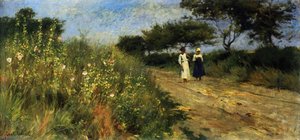
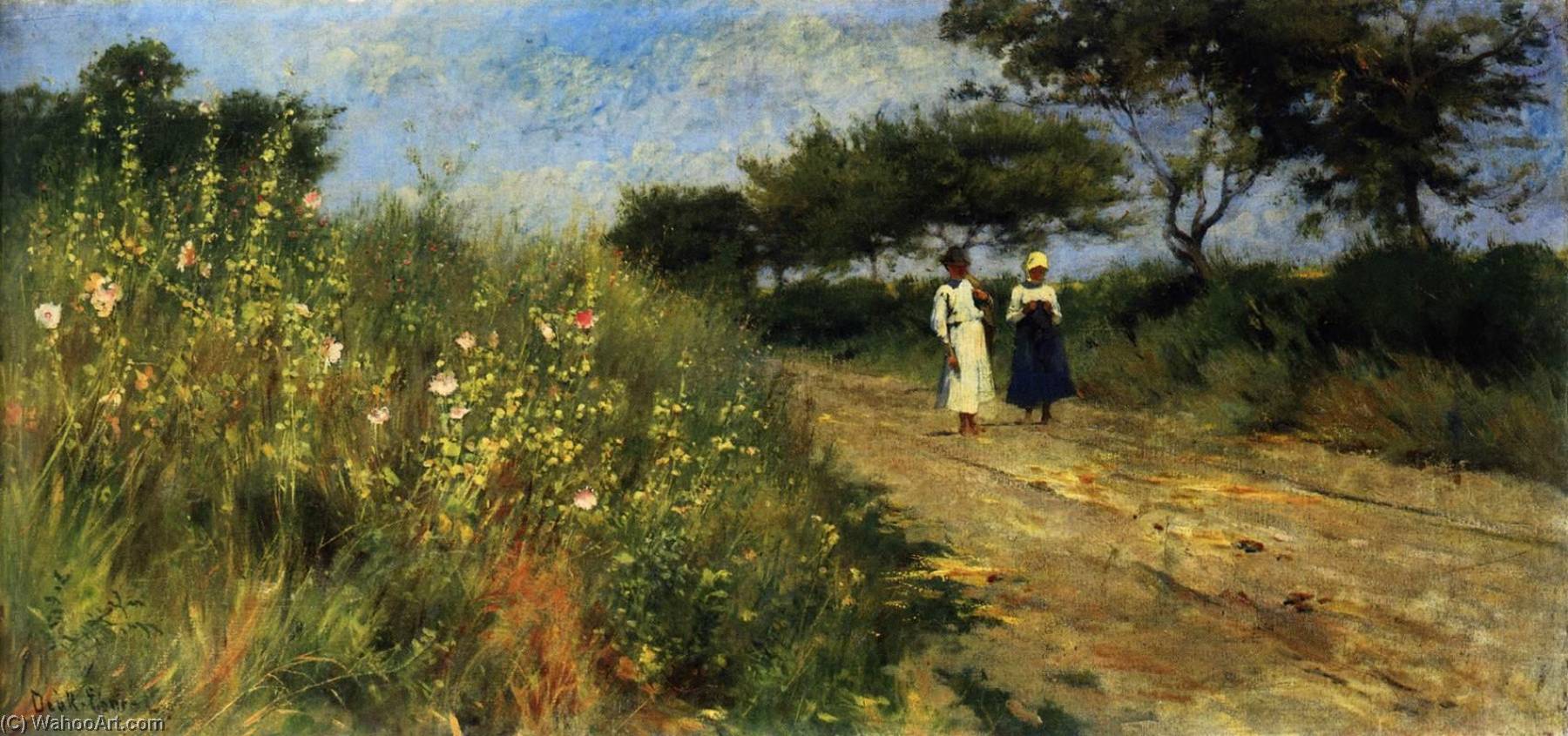
Road of the Wild Mallows
 1880
1880 37.0 x 78.0 cm
 Read More
Hand Made Oil Reproduction
Hand-painted oil on canvas in your size and frame, made to order by our artists. ( Buy Print Buy Image)




































Pick from our preset sizes that match the artwork's original proportions.

You may enter your own dimensions to fit a specific frame or space. If your selected size does not match the original image's proportions, we will either crop the artwork or extend the painting with additional hand-painted elements. A digital mockup will be sent for your approval before production begins.
Please note that the on-screen preview does not reflect the actual cropping or extension. Only the mockup will accurately show the final composition.
While custom sizes are available, we recommend selecting a dimension from the predefined list to preserve the original proportions.
After order, ArtsDot.com team will email client for instructions and provide a mockup preview
Worldwide Delivery () in 3/4 weeks instead of standard 5 weeks. (29 August). No compromise on quality.

Free Worldwide Express Shipping

High-Quality Linen Canvas

Full Shipping Insurance

Customs Tax Refund Guarantee

True Color Matching Guarantee

60-Day Return Policy (Defects Only)

100% Money-Back Guarantee

Bulk Discount Offer
 Glass option is only available in size under 110 CM

Road of the Wild Mallows
Reproduction Medium
Reproduction Size
-


Total Price
$ 263
Related Artworks







Artist Biography
The Soul of the Hungarian Landscape: The Life of Lajos Deák Ébner
In the golden light of the late 19th century, a profound artistic movement began to take root in the heart of the Austro-Hungarian Empire, driven by a desire to capture the raw, unadorned essence of nature and rural existence. At the forefront of this movement was Lajos Deák Ébner, a painter whose brush possessed the unique ability to translate the quiet dignity of Hungarian life onto canvas. Born in 1850 in Pest, Ébner’s early years were steeped in an era of great transition, and his artistic journey would eventually become a bridge between the classical traditions of Europe and a deeply localized, realistic portrayal of his homeland.
Ébner’s education was far from provincial; he sought the intellectual rigor of the great European art capitals, studying in both Munich and Paris. It was within these vibrant, cosmopolitan atmospheres that his artistic identity truly began to coalesce. He found himself drawn into the inner circle of legendary Hungarian masters such as László Paál and Mihály Munkácsy. These mentors introduced him to the aesthetic principles of the Barbizon School, a movement that championed the beauty of direct observation and the practice of plein air painting. From this influence, Ébner inherited a lifelong commitment to eschewing idealized, romanticized subjects in favor of the subtle nuances of light, atmosphere, and the honest textures of the natural world.
The Szolnok Art Colony and the Mastery of Realism
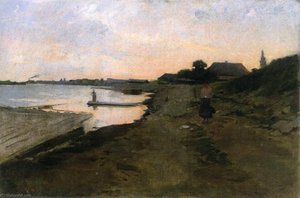
A pivotal moment in Ébner’s career arrived in 1874 when he established a permanent presence at the renowned Szolnok art colony. This location became more than just a residence; it was his creative sanctuary and a primary source of inspiration. The rolling hills, sun-drenched plains, and bustling river life surrounding Szolnok provided him with an endless repertoire of subjects. His work from this period reflects a masterful command of realism, where the landscape is not merely a backdrop but a living, breathing protagonist. Whether depicting the tranquil movement of water or the rugged resilience of rural laborers, his canvases are imbued with a palpable sense of place and emotion.
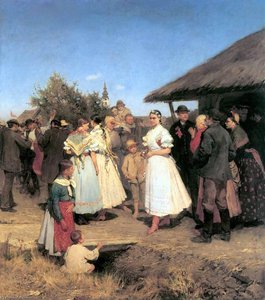
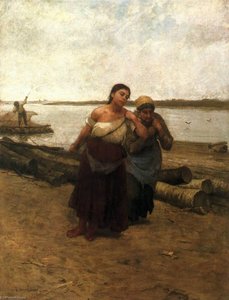
His technical prowess is perhaps most evident in his ability to balance the weight of realism with a delicate touch of romanticism. In works such as Market Scene (1885), one can witness his skill in capturing the kinetic energy of a crowd, using earthy tones and rhythmic brushstrokes to convey warmth and vitality. Similarly, in pieces like Boat Warpers, he explores more somber themes of rural hardship, utilizing textural detail to evoke the poignant reality of life on the margins. His paintings do not simply document scenes; they invite the viewer to feel the humidity of the air, the heat of the sun, and the quiet rhythms of a vanishing way of life.
Legacy and Artistic Contributions
Beyond his celebrated landscapes and genre scenes, Ébner’s influence extended into the very fabric of Hungarian art education and monumental decoration. His dedication to the next generation was profound; from 1887 to 1922, he served as the head of the Budapest School of Painting for Women, shaping the technical foundations of many emerging artists. Furthermore, his talent for large-scale composition allowed him to contribute significantly to the architectural heritage of Hungary through fresco painting. Working alongside the esteemed Károly Lotz, he executed breathtaking frescoes at the Tihany Abbey and later at the Kunsthalle Budapest, leaving an indelible mark on the nation's cultural landscape.
Lajos Deák Ébner passed away in Budapest in 1934, but his legacy remains a cornerstone of Hungarian art history. He stands as a vital figure who successfully synthesized international influences with a fierce devotion to local identity. Through his eyes, we continue to witness the enduring beauty of the Hungarian countryside and the timeless, quiet strength of its people, preserved forever in the amber of his masterful oil paintings.
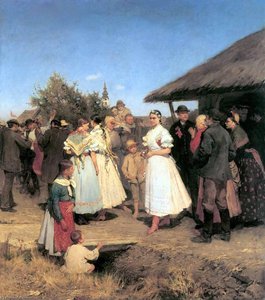
lajos deák ébner
1850 - 1934
Quick Facts
- Artistic Movement Or Style: Barbizon School
- Artists Or Movements Influenced By This Artist: ['Budapest School of Painting']
- Artists Who Influenced This Artist:
- László Paál
- Mihály Munkácsy
- Date Of Birth: 18 July 1850
- Full Name: Lajos Deák Ébner
- Nationality: Hungarian
- Notable Artworks:
- Szolnok Life Frescoes
- Tihany Abbey Frescoes
- Place Of Birth: Pest, Austrian Empire