 Preview
 Send
Send Share
Share
 Details

 Download
 Similars
 X-Ray
X-Ray Diaporama
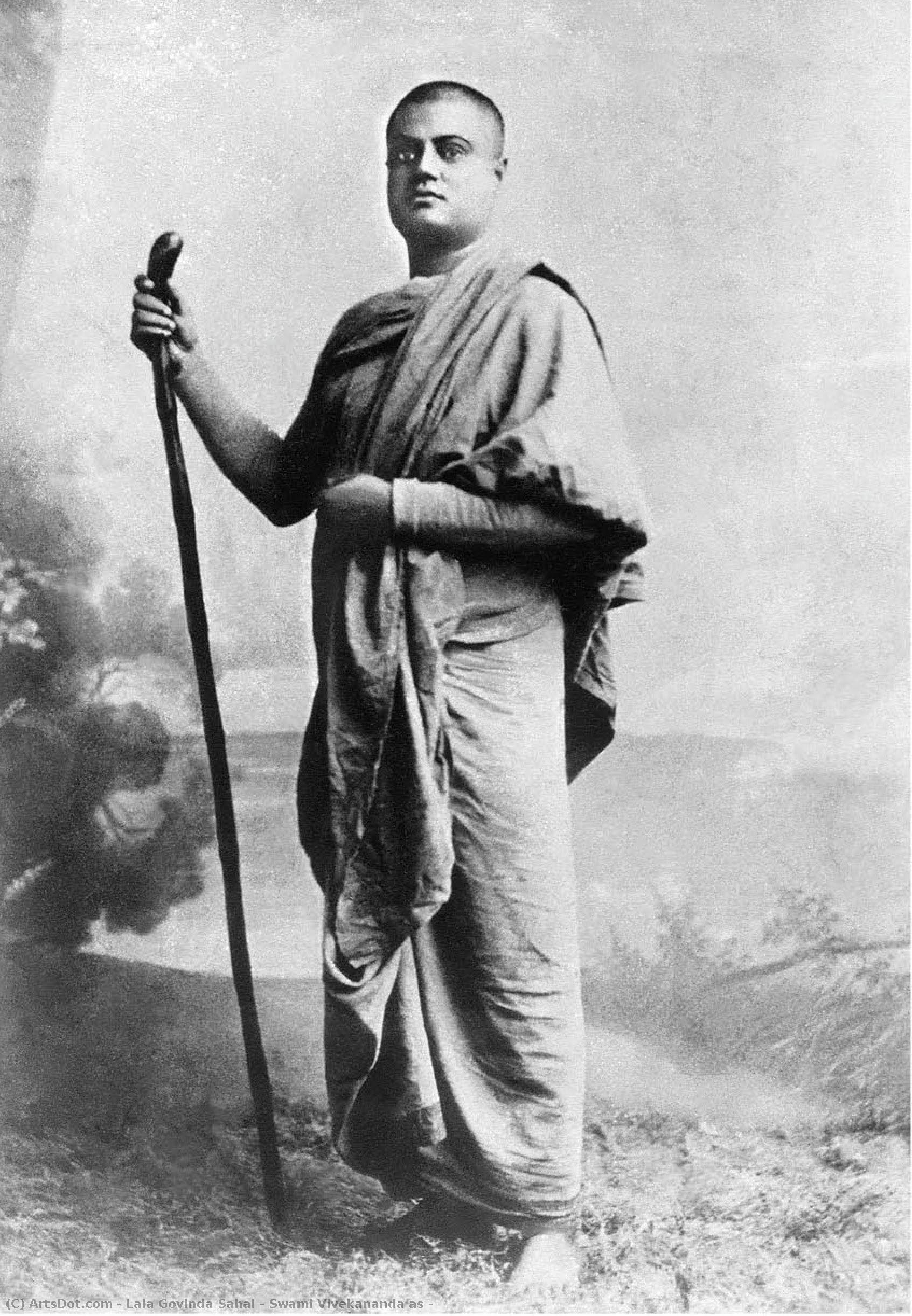
Swami Vivekananda as


 Read More
Hand Made Oil Reproduction
Hand-painted oil on canvas in your size and frame, made to order by our artists. ( Buy Print Buy Image)




































Pick from our preset sizes that match the artwork's original proportions.

You may enter your own dimensions to fit a specific frame or space. If your selected size does not match the original image's proportions, we will either crop the artwork or extend the painting with additional hand-painted elements. A digital mockup will be sent for your approval before production begins.
Please note that the on-screen preview does not reflect the actual cropping or extension. Only the mockup will accurately show the final composition.
While custom sizes are available, we recommend selecting a dimension from the predefined list to preserve the original proportions.
After order, ArtsDot.com team will email client for instructions and provide a mockup preview
Worldwide Delivery () in 3/4 weeks instead of standard 5 weeks. (29 August). No compromise on quality.

Free Worldwide Express Shipping

High-Quality Linen Canvas

Full Shipping Insurance

Customs Tax Refund Guarantee

True Color Matching Guarantee

60-Day Return Policy (Defects Only)

100% Money-Back Guarantee

Bulk Discount Offer
 Glass option is only available in size under 110 CM

Swami Vivekananda as
Reproduction Medium
Reproduction Size
-


Total Price
$ 263
Related Artworks






Artist Biography
A Pioneer of Visual Remembrance: The Life and Legacy of Lala Govinda Sahai
Lala Govinda Sahai, a name perhaps unfamiliar to many outside the circles of Indian art history and devotees of Swami Vivekananda, occupies a unique position as a bridge between spiritual reverence and visual documentation. Born in Jaipur, India, in 1892, Sahai’s life was not one traditionally associated with artistic creation; rather, it was defined by an unwavering dedication to capturing a fleeting moment that would become eternally significant – the photographic portrait of Swami Vivekananda during his 1891 visit to Rajputana. This single act, born from insistence and respect, cemented Sahai's place in history as more than just a disciple but as a preserver of an icon’s image for generations to come. He passed away in 1962, leaving behind a legacy intertwined with the burgeoning Indian nationalist movement and the enduring power of visual representation.Early Life and Spiritual Awakening
Sahai's early life remains somewhat shrouded in historical obscurity, but it is known he came from a family deeply rooted in the cultural fabric of Jaipur. The late 19th century India was a nation grappling with colonial rule, witnessing a surge in spiritual and political awakening. It was within this context that Sahai encountered Swami Vivekananda, whose powerful oratory and message of self-reliance resonated profoundly with him. Vivekananda’s visit to Rajputana proved pivotal; Sahai, driven by an ardent desire to immortalize the Swamiji's presence, persistently requested permission for a formal photograph. This wasn’t merely about creating an image; it was about providing a tangible symbol of inspiration for a nation yearning for self-determination and spiritual guidance. Sahai’s initiation into Vivekananda’s teachings in 1891 marked the beginning of a life dedicated to spreading his message, not through direct preaching but through the dissemination of this now-iconic portrait.Beyond the Photograph: Activism and Intellectual Influence
While Sahai is most celebrated for the Vivekananda photograph, reducing him solely to that role overlooks the breadth of his contributions. He was a man of simple living coupled with keen intellectual acumen, qualities that propelled him into becoming an influential figure amongst expatriate Indian communities in Canada and the United States during World War I. Sahai actively inspired these communities to support India’s campaign against British rule, leveraging his connection to Vivekananda's ideals as a rallying point for nationalist sentiment. He wasn’t a politician or a revolutionary in the traditional sense; instead, he functioned as a vital link, fostering unity and providing moral impetus through intellectual discourse and the symbolic power of Vivekananda’s image. Furthermore, Sahai dedicated himself to social activism within Haryana, India, working towards improving the lives of his fellow citizens – demonstrating a commitment to practical action alongside his spiritual pursuits.The Enduring Significance of a Single Image
The photograph taken by Lala Govinda Sahai transcends its status as a mere portrait; it has become an emblem of Indian spirituality, nationalism, and the power of individual conviction. Its widespread circulation throughout the 20th century and into the present day served to galvanize support for India’s independence movement and continues to inspire millions with Vivekananda's teachings. The image itself is striking in its simplicity – capturing a contemplative Vivekananda, radiating an aura of wisdom and strength. It’s a testament to Sahai’s foresight that he understood the importance of preserving this moment visually, recognizing its potential to transcend time and geographical boundaries. The photograph became a visual mantra, embodying the spirit of a nation striving for liberation.Legacy and Remembrance
Lala Govinda Sahai’s story is a compelling reminder that artistic contribution doesn't always manifest in brushstrokes or sculptures. His legacy lies in his dedication to preserving an image that became synonymous with a movement, a philosophy, and the aspirations of a nation. He was a silent architect of remembrance, ensuring that Swami Vivekananda’s message would endure beyond his lifetime. While details about his personal artistic endeavors remain scarce, his impact on Indian art history is undeniable – not as a creator of artworks but as a pivotal figure in their dissemination and symbolic power. Sahai's life serves as an inspiration to those who believe in the transformative potential of visual culture and the enduring importance of preserving moments that shape our collective consciousness.
lala govinda sahai
1892 - 1962 , India
Quick Facts
- Date Of Birth: 1892
- Date Of Death: 1962
- Full Name: Lala Govinda Sahai
- Nationality: Indian
- Notable Artworks: ['Swami Vivekananda as']
- Place Of Birth: Jaipur, India