 Preview
 Send
Send Share
Share
 Details

 Download
 Similars
 X-Ray
X-Ray Diaporama
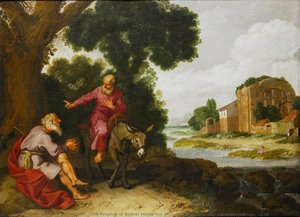
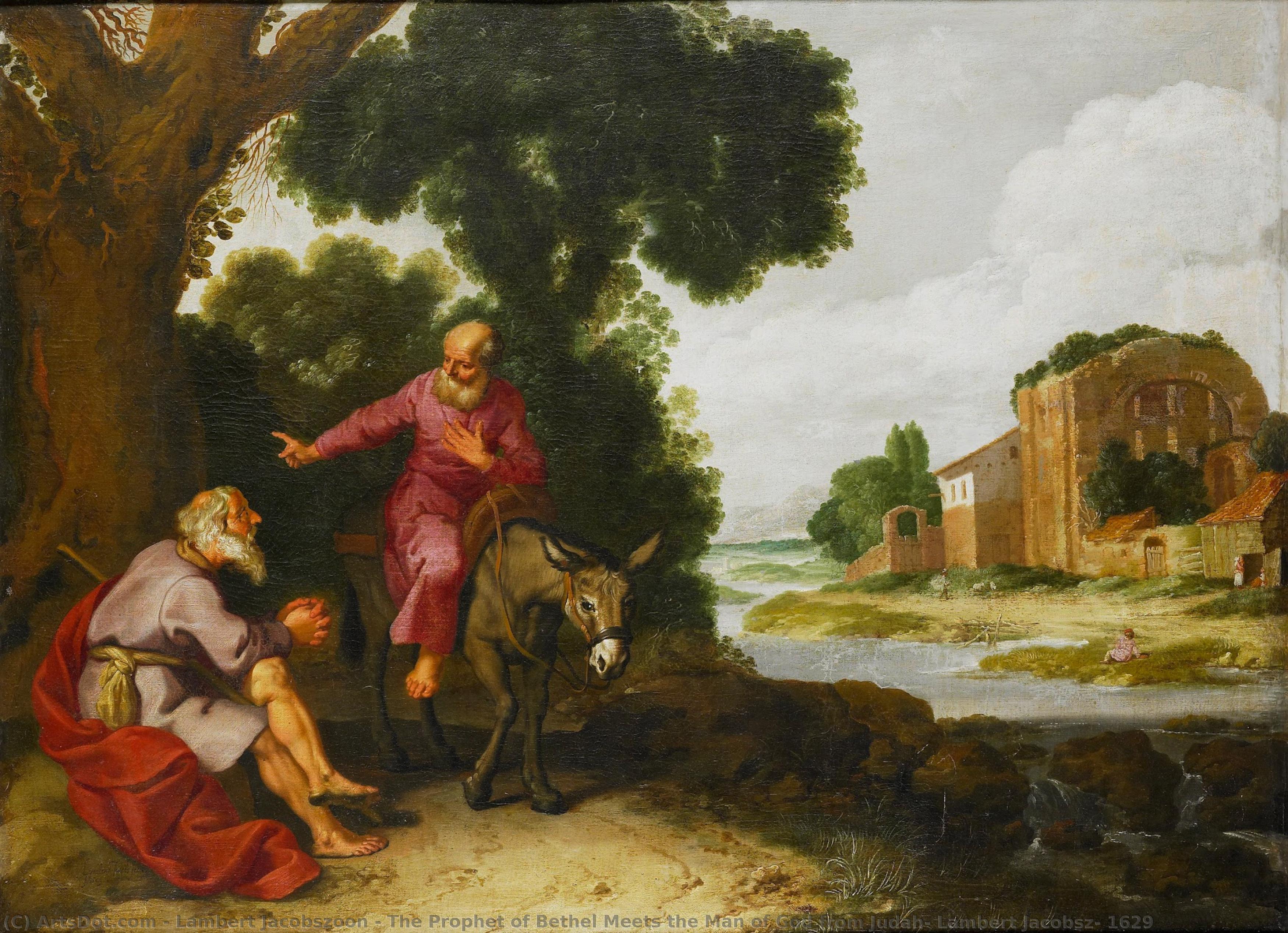
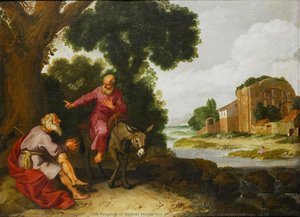
The Prophet of Bethel Meets the Man of God from Judah, Lambert Jacobsz, 1629
 1629
1629 83.0 x 111.0 cm
 Read More
Giclée / Art Print
Museum-quality giclée or canvas print with fast production and flexible finish options. ( Buy Hand Made Painting Buy Image)




































Pick from our preset sizes that match the artwork's original proportions.

You may enter your own dimensions to fit a specific frame or space. If your selected size does not match the original image's proportions, we will either crop the artwork or extend the image with a mirrored or solid-fill edge. A digital mockup will be sent for your approval before production begins.
Please note that the on-screen preview does not reflect the actual cropping or extension. Only the mockup will accurately show the final composition.
While custom sizes are available, we recommend selecting a dimension from the predefined list to preserve the original proportions.
Worldwide Delivery () in 2 weeks instead of standard 4/5 weeks. (2 September)

Free Worldwide Express Shipping

High-Quality Linen Canvas

Full Shipping Insurance

Customs Tax Refund Guarantee

True Color Matching Guarantee

60-Day Return Policy (Defects Only)

100% Money-Back Guarantee

Bulk Discount Offer
 Glass option is only available in size under 110 CM

The Prophet of Bethel Meets the Man of God from Judah, Lambert Jacobsz, 1629
Giclée / Art Print
Reproduction Size
-


Total Price
$ 63
Related Artworks








Artist Biography
A Life Defined by Faith and the Golden Age
Born around 1598 in the bustling, maritime atmosphere of Amsterdam, Lambert Jacobszon lived a life that was as much defined by spiritual devotion as it was by artistic pursuit. Growing up within the vibrant tapestry of the Dutch Mennonite community, his early years were shaped by the profound religious shifts of the Protestant Reformation. This dual identity—as both a painter and a preacher—infused his work with a unique gravity, where every brushstroke served to illuminate the sacred narratives of the Old Testament. His existence was a delicate balance between the earthly pursuit of aesthetic mastery and an unwavering commitment to the tenets of his faith, a tension that would eventually manifest in the dramatic emotional depth of his canvases.
The trajectory of Jacobszon’s career was marked by significant connections to some of the most influential figures of the Dutch Golden Age. His formative training under Jan Pynas provided him with a foundation in the humanist ideals and Renaissance spirit that were sweeping through the Netherlands. However, it was his role as a mentor and contemporary to rising stars like Govaert Flinck and Jacob Adriaensz Backer that cemented his place within the artistic lineage of his era. These relationships were not merely professional; they represented a shared movement toward a more expressive, character-driven style of painting that would come to define the century.
The Shadow of Rembrandt and the Mastery of Light
To understand the soul of Jacobszon’s technique, one must look toward the towering presence of Rembrandt Harmenszoon van Rijn. While their relationship was complex—alternating between that of mentor and rival—the influence of Rembrandt is unmistakable within Jacobszon’s oeuvre. The master’s use of chiaroscuro, that breathtaking interplay of profound shadow and piercing light, became a cornerstone of Jacobszon’s visual language. He adopted this method not merely as a technical trick, but as an emotional tool to heighten the drama of his biblical subjects, allowing light to act as a divine messenger within the darkness of his compositions.
His ability to manipulate texture and atmosphere allowed him to breathe life into historical figures, transforming static religious icons into palpable, breathing entities. In works such as “The Prophet of Bethel Meets the Man of God from Judah,” Jacobszon demonstrates a remarkable command over narrative tension. He captures the precise moment of deception and vulnerability, using the landscape and the positioning of his protagonists to guide the viewer’s eye through a story of disobedience and consequence. His style was characterized by this very dynamism—a refusal to let the sacred remain distant, choosing instead to bring the weight of scripture into the immediate, visceral reality of the viewer.
Legacy and the End of an Era
The later years of Jacobszon’s life took him to Leeuwarden, a city that would become both a sanctuary for his remaining works and the site of his untimely passing. In 1636, during a devastating outbreak of the plague, the artist’s life was cut short, leaving behind a legacy that was deeply intertwined with the local community he served as a preacher. Though his life ended abruptly, his influence rippled through the next generation of Dutch masters, most notably through his son, Abraham Lambertsz van den Tempel, who would carry forward the traditions of the Golden Age.
Today, the historical significance of Lambert Jacobszon lies in his ability to bridge the gap between the spiritual and the theatrical. His paintings remain vital testaments to a period when art was used to explore the deepest recesses of human morality and divine intervention. Through his meticulous attention to detail and his mastery of light, he ensured that the stories of the past would continue to resonate with a haunting, eternal beauty, preserving the flickering candlelight of the Dutch Golden Age for all time.
lambert jacobszoon
1598 - 1636
Quick Facts
- Artistic Movement Or Style: Dutch Golden Age
- Artists Or Movements Influenced By This Artist: ['Rembrandt']
- Artists Who Influenced This Artist: ['Jan Pynas']
- Date Of Birth: ca. 1598
- Full Name: Lambert Jacobsz.
- Nationality: Dutch
- Notable Artworks:
- The Prophet of Bethel Meets the Man of God from Judah
- Joseph's Brothers On The Road From Egypt
- Place Of Birth: Amsterdam, Netherlands