

 Preview
 Send
Send Share
Share
 Details

 Download
 Similars
 X-Ray
X-Ray Diaporama
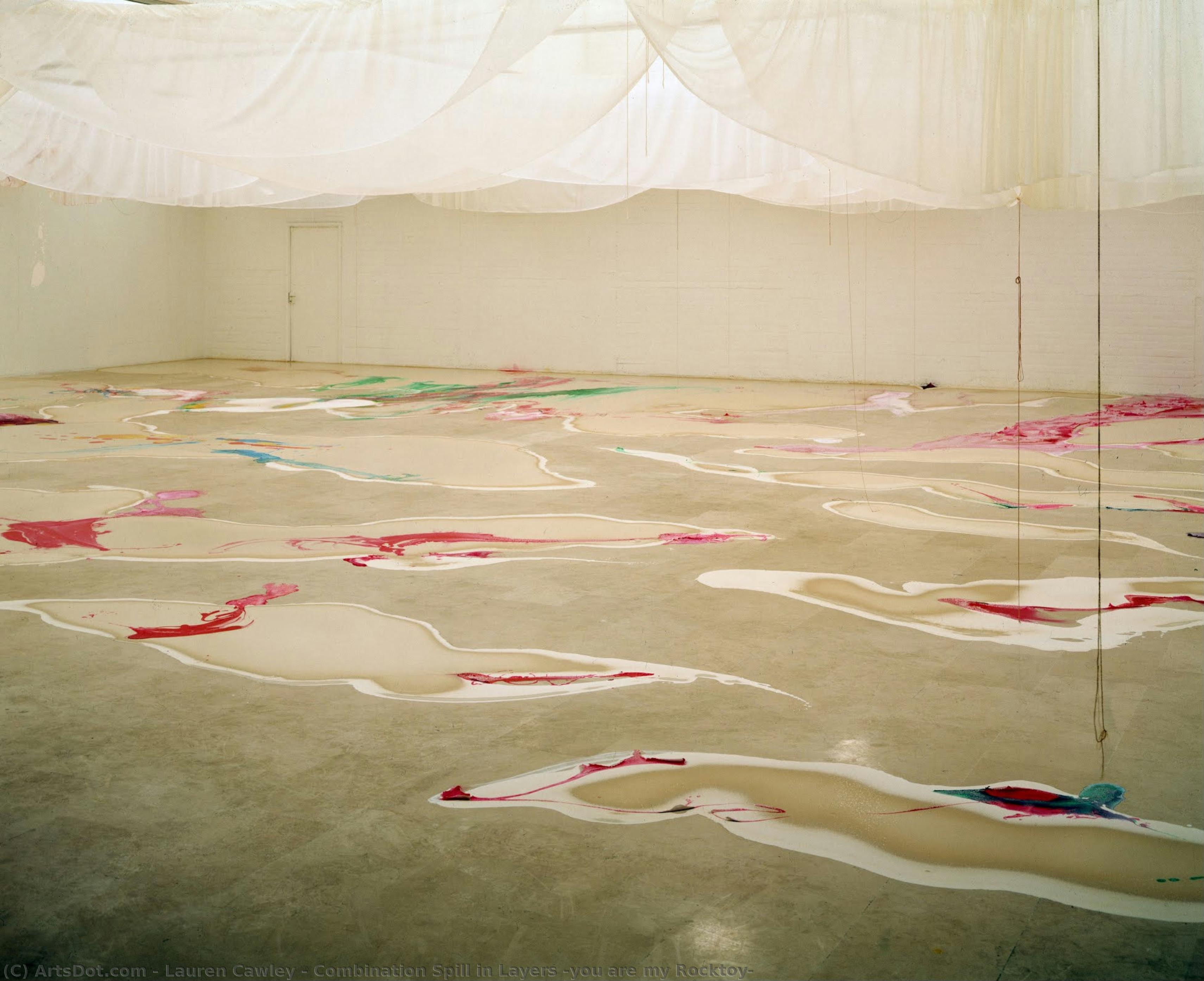
Combination Spill in Layers (you are my Rocktoy)
 1993
1993 360.0 x 1740.0 cm
 Villa Arson
 Read More
Purchase a high-resolution, enhanced digital image, far superior to the online preview.
Each file is meticulously prepared by our in-house specialists using advanced tools and expert manual retouching. We ensure every image has exceptional clarity, precise color accuracy, and fine detail.
The final file is delivered via email within 72 hours, optimized for immediate use in professional, editorial, and print environments. This is the same quality trusted by top-tier design studios, publishers, and galleries.
Digital Image
Download a high-resolution file for personal display, printing, and creative projects. ( Buy Print Buy Hand Made Painting)
Included in Every Digital Image Order
Expert Digital Delivery, Guaranteed
When you choose ArtsDot.com, you're not just getting an image - you're receiving a professionally enhanced digital artwork, crafted with precision and backed by a satisfaction guarantee. Here's everything that comes with your order, automatically:

Fast Email Delivery
Your high-resolution digital image file will be emailed to you within 72 hours of ordering - ready for immediate use.

AI-Enhanced Digital File
Your artwork is professionally optimized using advanced AI tools and manual editing, ensuring maximum detail, clarity, and color accuracy.

Free Lifetime Re-Delivery
Accidentally deleted or lost your file? No worries - we'll resend it to you anytime, free of charge.

No Import Fees - Ever
Enjoy your artwork instantly with zero customs, duties, or delivery fees - digital downloads are always tax-free.

Color Accuracy Guarantee
We ensure your digital image reflects the original colors as closely as possible using professional tools and color management.

100-Day Satisfaction Guarantee
If you're not satisfied with your digital image, we'll revise it or refund 100% within 100 days - no questions asked.

100% Money-Back Guarantee
Not satisfied? Get a full refund within 100 days of receiving your digital file - no questions asked.

Bulk Order Discounts
Buy 3 images, save 10% - Buy 5, save 15% - Buy 10+, save 20%. Great for creative projects, galleries, and agencies.
Related Artworks









Artist Biography
Robert Rauschenberg: A Life Woven from Fragments
Robert Rauschenberg, a name synonymous with innovation and challenging artistic boundaries, remains one of the most significant figures in 20th-century American art. Born Milton Ernest Rauschenberg in Port Arthur, Texas, in 1925, his journey was marked by a restless spirit, a deep engagement with everyday life, and an unwavering commitment to blurring the lines between painting, sculpture, photography, and printmaking. His work wasn’t simply about creating images; it was about constructing experiences, inviting viewers into a dialogue with the unexpected and revealing the inherent poetry within the commonplace.
Rauschenberg's early life instilled in him a fundamental duality – a grounding in his conservative, Protestant family alongside a burgeoning fascination with the world beyond. His father, a utility worker, provided a pragmatic counterpoint to Rauschenberg’s increasingly experimental artistic pursuits. This tension fueled his desire to break free from traditional notions of art and explore new modes of expression. He attended the University of Texas at Austin, initially studying philosophy before switching to painting, where he was profoundly influenced by Abstract Expressionism, particularly Jackson Pollock's drip technique. However, Rauschenberg quickly moved beyond mere imitation, seeking a more personal and intellectually rigorous approach.
The Dawn of the Combine
Rauschenberg’s breakthrough came in 1954 with the creation of his “Combines,” a series of works that fundamentally redefined the possibilities of art. These hybrid paintings—often incorporating found objects, photographs, textiles, and even human hair—were not simply assembled; they were meticulously integrated into a painted surface. The Combines challenged the established hierarchy between painting and sculpture, demonstrating that an artwork could be both visually arresting and conceptually complex. Works like *Monogram* (1955), featuring a tire mounted on a canvas alongside a photograph of a woman’s shoe, exemplify this radical approach.
The Combines were deeply rooted in Rauschenberg's interest in chance and process. He often employed techniques such as “automatic drawing,” where he would randomly drop pencils onto paper to generate unexpected marks, using these accidental results as the basis for his compositions. This embrace of spontaneity reflected a broader shift within art during the mid-20th century, moving away from rigid control and toward a more intuitive and exploratory approach. His collaboration with Max Ernst on the “Erne Zeitung” (1953), a surrealist newspaper created through a process of chance and collage, further solidified his commitment to embracing the unpredictable.
Autobiography: A Monumental Reflection
In 1968, Rauschenberg produced *Autobiography*, a monumental print that stands as perhaps the most ambitious and revealing work in his oeuvre. Commissioned by Marion Javits, wife of Senator Jacob Javits, the print was intended to be a comprehensive overview of the artist’s life and artistic journey. Printed on three sheets of paper using a billboard press – an industrial printing method typically reserved for advertising – *Autobiography* incorporated a dizzying array of images: photographs of Rauschenberg himself, X-rays of his body, indexical representations of everyday objects (an umbrella, a wheel), and references to significant places in his life.
The print’s intricate layering and deliberate juxtaposition of seemingly disparate elements created a complex narrative that explored themes of identity, memory, and the relationship between art and reality. As Rauschenberg himself described it, *Autobiography* was “a way to make a record of my life,” but also “a way to make a statement about what I do.” The sheer scale of the work—over sixteen feet tall—underscored its ambition and served as a powerful testament to Rauschenberg’s desire to synthesize his entire artistic practice into a single, monumental image.
Beyond the Combine: Printmaking and Late Works
While the Combines remain central to Rauschenberg's legacy, he continued to explore diverse media throughout his career. His printmaking work, particularly in the 1960s and 70s, became increasingly sophisticated, utilizing techniques such as lithography, screenprinting, and woodcut to create intricate and layered compositions. His “Book Art” series (1968-1970), which involved creating books from found materials and incorporating photographs and text, further demonstrated his willingness to experiment with unconventional formats and challenge traditional notions of the book as a medium.
In his later years, Rauschenberg shifted his focus towards large-scale installations and public art projects. His work during this period often involved collaborations with architects and engineers, resulting in immersive environments that engaged viewers on multiple sensory levels. Despite facing health challenges in his final decade, Rauschenberg remained a prolific artist until his death in 2008 at the age of 82. His legacy endures as a testament to his innovative spirit, his profound engagement with the world around him, and his unwavering belief in the transformative power of art.
A Lasting Influence
Robert Rauschenberg’s impact on contemporary art is undeniable. He paved the way for subsequent generations of artists who embraced collage, assemblage, and mixed-media approaches. His willingness to challenge artistic conventions, his embrace of chance and process, and his profound interest in everyday life continue to inspire artists today. Rauschenberg's work reminds us that art can be found in unexpected places—in the discarded objects we encounter, in the fleeting moments of our lives, and in the complex interplay between image and meaning.

lauren cawley
1968 - , France
Quick Facts
- Artistic Movement Or Style:
- Assemblage
- Pop Art
- Neo-Dada
- Abstract Expressionism
- Artists Or Movements Influenced By This Artist:
- Andy Warhol
- Pop Art movement
- Artists Who Influenced This Artist:
- Jackson Pollock
- Mark Rothko
- Jasper Johns
- Date Of Birth: October 22, 1925
- Date Of Death: May 12, 2008
- Full Name: Robert Rauschenberg
- Nationality: American
- Notable Artworks:
- Canyon
- Monogram
- Autobiography
- Place Of Birth: Port Arthur, Texas, USA