

 Preview
 Send
Send Share
Share
 Details

 Download
 Similars
 X-Ray
X-Ray Diaporama
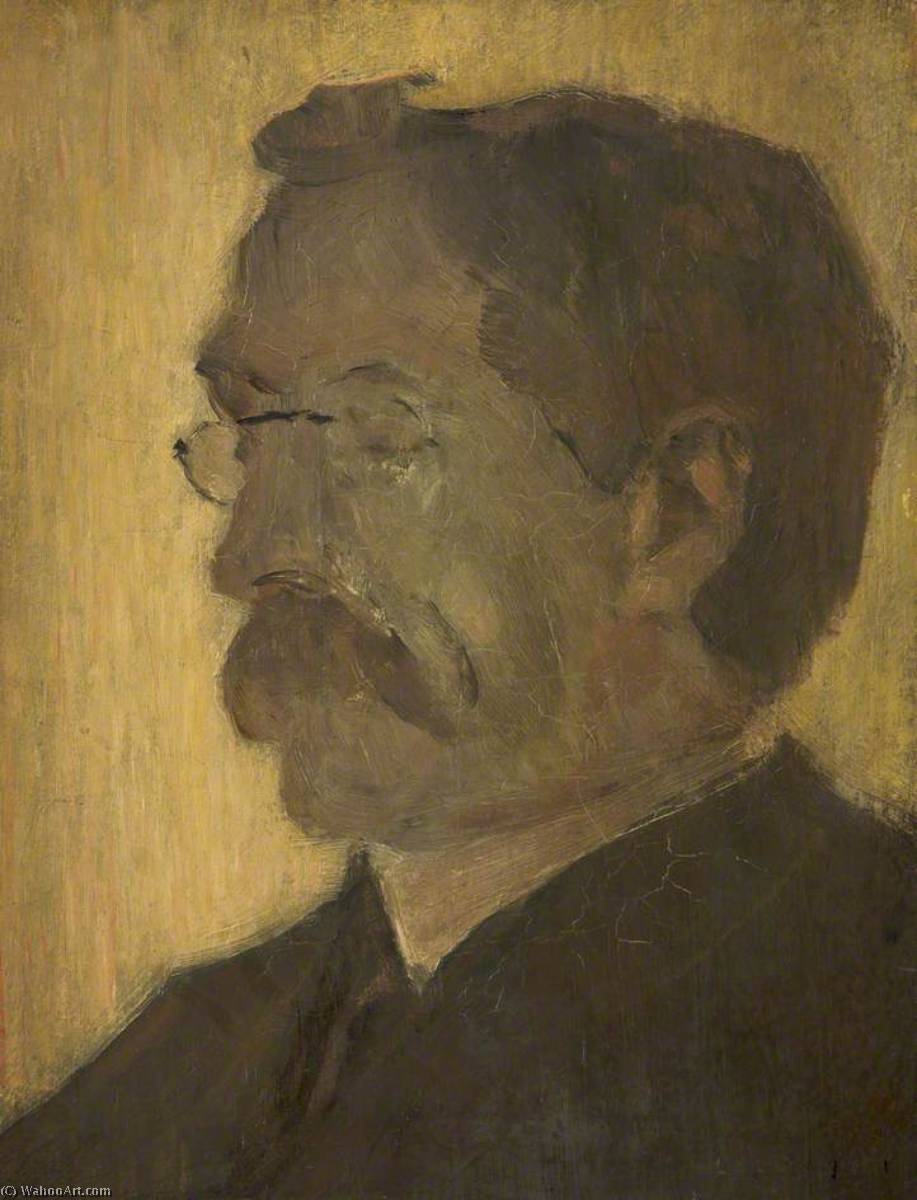
Portrait of the Artist's Father
 Oil On Canvas
- WallArt
- Post-Impressionism
 1910
1910- Modern
 41.0 x 31.0 cm
 The Lowry
 Read More
Purchase a high-resolution, enhanced digital image, far superior to the online preview.
Each file is meticulously prepared by our in-house specialists using advanced tools and expert manual retouching. We ensure every image has exceptional clarity, precise color accuracy, and fine detail.
The final file is delivered via email within 72 hours, optimized for immediate use in professional, editorial, and print environments. This is the same quality trusted by top-tier design studios, publishers, and galleries.
Digital Image
Download a high-resolution file for personal display, printing, and creative projects. ( Buy Print Buy Hand Made Painting)
Included in Every Digital Image Order
Expert Digital Delivery, Guaranteed
When you choose ArtsDot.com, you're not just getting an image - you're receiving a professionally enhanced digital artwork, crafted with precision and backed by a satisfaction guarantee. Here's everything that comes with your order, automatically:

Fast Email Delivery
Your high-resolution digital image file will be emailed to you within 72 hours of ordering - ready for immediate use.

AI-Enhanced Digital File
Your artwork is professionally optimized using advanced AI tools and manual editing, ensuring maximum detail, clarity, and color accuracy.

Free Lifetime Re-Delivery
Accidentally deleted or lost your file? No worries - we'll resend it to you anytime, free of charge.

No Import Fees - Ever
Enjoy your artwork instantly with zero customs, duties, or delivery fees - digital downloads are always tax-free.

Color Accuracy Guarantee
We ensure your digital image reflects the original colors as closely as possible using professional tools and color management.

60-Day Satisfaction Guarantee
If you're not satisfied with your digital image, we'll revise it or refund 100% within 60 days - no questions asked.

100% Money-Back Guarantee
Not satisfied? Get a full refund within 60 days of receiving your digital file - no questions asked.

Bulk Order Discounts
Buy 3 images, save 10% - Buy 5, save 15% - Buy 10+, save 20%. Great for creative projects, galleries, and agencies.
A Tender Glimpse into the Past
In the intimate realm of portraiture, few works possess the quiet, piercing dignity found in Laurence Stephen Lowry’s "Portrait of the Artist's Father." Painted in 1910, this evocative oil on canvas serves as a profound window into the artist's personal history and the tender bonds of familial connection. The subject, a man of mature years, is captured in a moment of contemplative stillness. With his spectacles catching the light and a well-groomed beard framing a thoughtful expression, he gazes slightly away from the viewer, inviting us to wonder about the thoughts passing through his mind. This is not merely a likeness; it is an exploration of character, rendered with a sensitivity that transcends the boundaries of time.
The composition, though modest in its 41 x 31 cm dimensions, carries a weight that commands attention. Lowry utilizes a formal attire—a suit and tie—to suggest a sense of respectability and the gravity of the era. Through his masterful use of light and shadow, the artist breathes life into the textures of the fabric and the subtle contours of the face, creating a three-dimensional presence that feels remarkably immediate. For collectors and lovers of classical portraiture, this piece offers a rare opportunity to possess a fragment of early twentieth-century intimacy, making it an exquisite focal point for any curated collection.
Mastery of Technique and Industrial Soul
While many recognize L.S. Lowry for his sweeping, panoramic depictions of industrial landscapes and his iconic "matchstick men," this early portrait reveals a different facet of his burgeoning talent. Here, we see the influence of Impressionism and Post-Impressionism manifesting in a more controlled, academic manner. The brushwork, though precise enough to define the subject's features, retains a certain painterly warmth that prevents the work from feeling static or overly clinical. The artist’s ability to manipulate oil paint to convey the soft sheen of skin and the heavy drape of cloth demonstrates a technical proficiency that laid the groundwork for his later, more stylized masterpieces.
For interior designers seeking to infuse a space with heritage and soul, this reproduction offers a sophisticated touch of British history. The painting’s palette, grounded in earthy tones and classic shadows, provides a sense of stability and timelessness. It is a piece that does not shout for attention but rather rewards the observant eye, making it an ideal addition to a study, a library, or a formal sitting room where conversation and reflection are encouraged.
An Emotional Legacy for the Modern Collector
Beyond its technical merits, "Portrait of the Artist's Father" resonates on a deeply emotional level. It captures the universal experience of looking upon a loved one and recognizing both their individual strength and their vulnerability. In an age often characterized by rapid change and digital fleetingness, there is a profound luxury in owning art that celebrates permanence, memory, and the human spirit. This work stands as a testament to Lowry’s lifelong role as the "Quiet Observer," proving that even in the smallest of subjects, one can find the vastness of the human condition.
Whether you are an established connoisseur or a newcomer looking to decorate your home with pieces of significant cultural weight, this reproduction allows you to bring the legacy of the North into your personal sanctuary. It is more than a decoration; it is an invitation to pause, to look closely, and to connect with the enduring beauty of a life well-remembered.
Related Artworks
Artist Biography
The Quiet Observer of Industrial England
Laurence Stephen Lowry, born in the heart of Stretford, Cheshire, in 1887, remains one of Britain’s most beloved and distinctive voices in twentieth-century art. While his name is now synonymous with the gritty, evocative landscapes of Northern England, his journey to international acclaim was a slow, poignant ascent. For much of his life, Lowry lived as a quiet observer, working as a rent collector by day while honing his craft in the evenings. This dual existence allowed him to witness the rhythmic, often harsh, pulse of industrial life with a unique intimacy. His work does not merely represent the smoke-filled horizons of Salford and Pendlebury; it captures a profound sensitivity to the human condition, finding a quiet dignity within the stark realities of the industrial age.
Lowry’s artistic development was deeply rooted in his surroundings, yet his technical foundations were built upon a careful study of form and light. Initially influenced by the principles of Impressionism and Post-Impressionism, he sought to capture the essence of a scene rather than its mere surface. His early training at the Manchester Art School provided him with the tools to translate the sprawling factories and crowded streets into something much more symbolic. As his style matured, he moved away from grand narratives, choosing instead to focus on subtle nuances of observation. He often worked within a highly restricted palette—utilizing colors such as flake white, ivory black, vermilion, Prussian blue, and yellow ochre—to create compositions that felt both grounded in reality and elevated by a dreamlike, almost surrealist quality.
The Magic of the Matchstick Men
Perhaps the most enduring legacy of Lowry is his creation of the so-called "matchstick men." These stylized, simplified human figures, often depicted without shadows or distinct facial features, populate his urban landscapes with a sense of collective movement and shared destiny. Through these figures, Lowry transformed bustling street scenes into poetic meditations on community and solitude. Whether they are walking toward a football match, congregating near a mill, or wandering through a park, these characters embody the resilience of the working class. There is a haunting beauty in how he places these small, fragile forms against the backdrop of massive, brooding industrial structures, creating a tension between the monumental scale of industry and the delicate nature of human life.
Beyond his famous urban scenes, Lowry’s repertoire was surprisingly diverse, revealing an artist of great depth and curiosity. While the industrial landscape is his most celebrated subject, he also explored:
- Mysterious Unpopulated Landscapes: Brooding, atmospheric scenes that evoke a sense of solitude and the passage of time.
- Seascapes: Pure, elemental depictions of sea and sky that emerged from his fascination with the coast in the 1940s.
- Portraits: Intimate, often somber studies of individuals that showcase his ability to capture character through minimal detail.
- The "Marionette" Works: A collection of unpublished, surrealist-leaning pieces discovered only after his death, revealing a more experimental side of his imagination.
A Lasting Legacy in British Art
Though he achieved significant national fame following his first solo exhibition in London in 1939, Lowry’s true impact is felt in the way he redefined the English landscape. He did not seek to glorify progress or paint heroic vistas; instead, he found beauty in the mundane and the melancholic. His ability to find poignant beauty in the soot-stained streets of the North West has made his work a cornerstone of British cultural identity. Today, institutions such as The Lowry in Salford Quays serve as vital guardians of his immense legacy, housing one of the largest public collections of his work.
Lowry’s significance lies in his refusal to look away from the difficult realities of his era. By documenting the lives of ordinary people with such empathy and stylistic innovation, he ensured that the spirit of industrial England would be preserved not just as history, but as art. He remains a master of atmosphere, an artist who proved that even in the most crowded, industrial settings, there is a profound, quiet magic to be found.
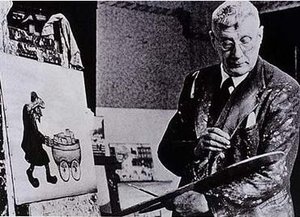
laurence stephen lowry
1887 - 1976 , United Kingdom
Quick Facts
- Artistic Movement Or Style: Industrial Painting
- Artists Or Movements Influenced By This Artist: ['Northern England Art']
- Artists Who Influenced This Artist: ['Impressionism']
- Date Of Birth: Stretford, United Kingdom (1887)
- Date Of Death: 1976
- Full Name: Laurence Stephen Lowry
- Nationality: British
- Notable Artworks:
- An Old Street
- Swinton Moss
- Untitled (447)
- Place Of Birth: Stretford, UK

