 Preview
 Send
Send Share
Share
 Details

 Download
 Similars
 X-Ray
X-Ray Diaporama
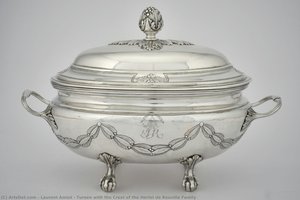
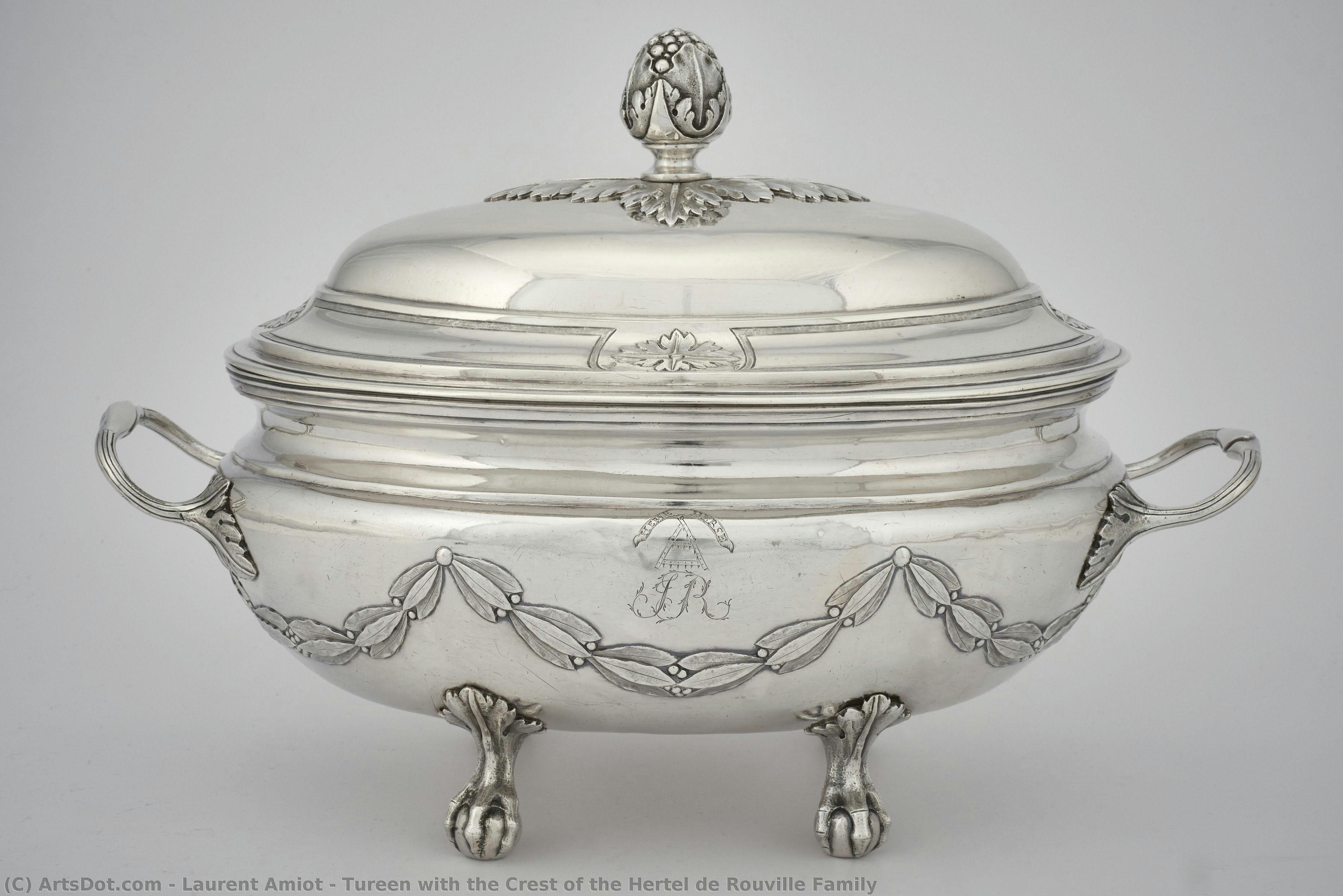
Tureen with the Crest of the Hertel de Rouville Family
 1794
1794 25.0 x 40.0 cm
 National Gallery of Canada
 Read More
Giclée / Art Print
Museum-quality giclée or canvas print with fast production and flexible finish options. ( Buy Hand Made Painting Buy Image)




































Pick from our preset sizes that match the artwork's original proportions.

You may enter your own dimensions to fit a specific frame or space. If your selected size does not match the original image's proportions, we will either crop the artwork or extend the image with a mirrored or solid-fill edge. A digital mockup will be sent for your approval before production begins.
Please note that the on-screen preview does not reflect the actual cropping or extension. Only the mockup will accurately show the final composition.
While custom sizes are available, we recommend selecting a dimension from the predefined list to preserve the original proportions.
Worldwide Delivery () in 2 weeks instead of standard 4/5 weeks. (29 August)

Free Worldwide Express Shipping

High-Quality Linen Canvas

Full Shipping Insurance

Customs Tax Refund Guarantee

True Color Matching Guarantee

60-Day Return Policy (Defects Only)

100% Money-Back Guarantee

Bulk Discount Offer
 Glass option is only available in size under 110 CM

Tureen with the Crest of the Hertel de Rouville Family
Giclée / Art Print
Reproduction Size
-


Total Price
$ 63
Related Artworks


Artist Biography
Laurent Amiot: A Quebec Silversmith’s Legacy
Laurent Amiot (1764–1839) stands as a pivotal figure in Canadian art history, embodying the fusion of craftsmanship and artistic vision that characterized Quebec City during the late Eighteenth Century. Born into an innkeeper's family in Quebec City, he embarked on a transformative journey—one that would elevate silversmithing from mere trade to a celebrated form of artistic expression. His formative years were marked by apprenticeship under his elder brother Jean-Nicolas and subsequent studies at the Petit Séminaire de Québec, laying the groundwork for his mastery of technique and stylistic innovation.- Early Life & Training: Amiot’s initial training occurred within the confines of Jean-Nicolas’s workshop, where he honed his skills alongside fellow artisans. Recognizing his exceptional talent, Abbé Lionel Lindsay arranged for him to pursue further education at the Petit Séminaire de Québec, exposing him to humanist ideals and fostering a lifelong appreciation for intellectual pursuits.
- Parisian Influence: Amiot’s decision to travel to Paris in 1782 represents a watershed moment—a deliberate embrace of European artistic trends that would profoundly shape his oeuvre. Supported by his family and facilitated by the Séminaire de Québec, he studied with an unnamed master, absorbing the latest advancements in silversmithing techniques and immersing himself in the neoclassical style prevalent during the revolutionary era.
- Return to Quebec & Recognition: Amiot’s return to Quebec City in 1787 signaled a renewed commitment to his craft and solidified his reputation as a leading artisan. Encouraged by Abbé François Sorbier de Villars, he established an atelier—a distinction that elevated silversmithing beyond mere production to encompass artistic creation—and quickly gained commissions from ecclesiastical, secular, and governmental patrons throughout Quebec and Montreal.
Amiot’s Artistic Style & Techniques
Amiot's distinctive style emerged from a synthesis of Parisian influences and Quebecois traditions. He championed the neoclassical aesthetic, prioritizing symmetry, balance, and elegance—characteristics evident in his celebrated liturgical silverwork. His meticulous attention to detail—a hallmark of his craft—was complemented by an innovative approach to engraving and etching, as exemplified by James Orkney’s collaboration on the *Kingfisher* commemorative cup commissioned by Lord Dalhousie. Amiot's preparatory drawings meticulously documented every step of his creative process, reflecting a commitment to academic precision that distinguished him from many of his contemporaries.- Neoclassical Aesthetics: Amiot’s designs mirrored the stylistic ideals championed in Paris during the 1780s—a preference for geometric forms and refined ornamentation that conveyed intellectual sophistication.
- Engraving & Etching Expertise: Collaborations with engravers like James Smillie Jr., particularly on projects honoring Lord Dalhousie, underscored Amiot’s mastery of etching techniques—a skill he honed during his Parisian studies.
- Detailed Preparatory Drawings: Amiot's meticulous drawings served as blueprints for his creations, demonstrating a dedication to academic precision and reflecting the influence of European artistic conventions.
Notable Works & Legacy
Laurent Amiot’s enduring legacy rests upon his remarkable output—a collection of liturgical silverwork that continues to inspire admiration for its beauty and craftsmanship. Among his most celebrated pieces is the *Théière Regency*, rediscovered in 2015 and housed at the National Gallery of Canada, which embodies Amiot's stylistic prowess and reflects the broader artistic currents of the era. The cup commissioned by Lord Dalhousie—a testament to Amiot’s collaborative spirit—features a unicorn motif taken from Dalhousie’s coat of arms and exemplifies the fusion of artistic innovation and symbolic representation characteristic of Quebecois art during the Victorian period.- The Théière Regency: This teapot, rediscovered in 2015, showcases Amiot's neoclassical style and reflects the broader artistic trends of his time.
- Lord Dalhousie’s Cup: Collaborations with James Smillie Jr., particularly on this commemorative cup, exemplify Amiot’s mastery of engraving techniques and underscore the importance of patronage in shaping Quebecois art history.
Recognition & Influence
Laurent Amiot's contributions to Canadian art were acknowledged by scholars like René Villeneuve, who penned a seminal biographical entry for the *Dictionary of Canadian Biography*—a testament to his enduring significance as a cultural icon. Furthermore, E. Alfred Jones’s 1918 article on Amiot silver in *Antiques & The Arts Weekly*, and Henry G. Birks's subsequent acquisition of Yale University Art Gallery’s Amiot holdings cemented his place within the canon of Quebecois art history. Laurent Amiot’s influence extended beyond his own lifetime, inspiring subsequent generations of artisans and shaping the aesthetic landscape of Quebec City for decades to come.
laurent amiot
1764 - , Canada
Quick Facts
- Artistic Movement Or Style: Neoclassical
- Artists Or Movements Influenced By This Artist: ['French Nobility Art']
- Artists Who Influenced This Artist: ['Jacques-Laurent Agasse']
- Date Of Birth: 1764 Quebec City Canada
- Date Of Death: Living
- Full Name: Laurent Amiot
- Nationality: Canadian
- Notable Artworks: ['Tureen with the Crest of the Hertel de Rouville Family']
- Place Of Birth: Quebec City Canada