 Preview
 Send
Send Share
Share
 Details

 Download
 Similars
 X-Ray
X-Ray Diaporama
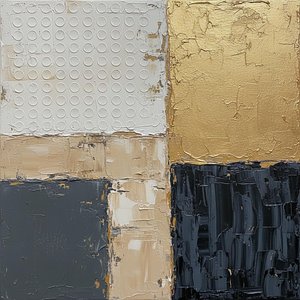
Fragmented Monolith in Burnt Orange and Charcoal: A Singular Tactile Study of Tension


 Read More
Hand Made Oil Reproduction
Hand-painted oil on canvas in your size and frame, made to order by our artists. ( Buy Print Buy Image)

White $1

Blurside $1

Extended $1

































Pick from our preset sizes that match the artwork's original proportions.

You may enter your own dimensions to fit a specific frame or space. If your selected size does not match the original image's proportions, we will either crop the artwork or extend the painting with additional hand-painted elements. A digital mockup will be sent for your approval before production begins.
Please note that the on-screen preview does not reflect the actual cropping or extension. Only the mockup will accurately show the final composition.
While custom sizes are available, we recommend selecting a dimension from the predefined list to preserve the original proportions.
After order, ArtsDot.com team will email client for instructions and provide a mockup preview
Worldwide Delivery () in 3/4 weeks instead of standard 5 weeks. (16 August). No compromise on quality.

Free Worldwide Express Shipping

High-Quality Linen Canvas

Full Shipping Insurance

Customs Tax Refund Guarantee

True Color Matching Guarantee

60-Day Return Policy (Defects Only)

100% Money-Back Guarantee

Bulk Discount Offer
 Glass option is only available in size under 110 CM

Fragmented Monolith in Burnt Orange and Charcoal: A Singular Tactile Study of Tension
Reproduction Medium
Reproduction Size
-


Total Price
$ 263
Artwork Description
A Symphony of Texture and Tension
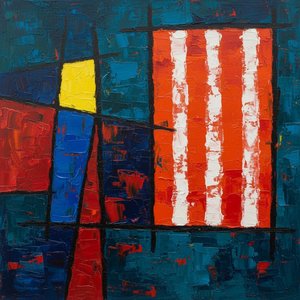
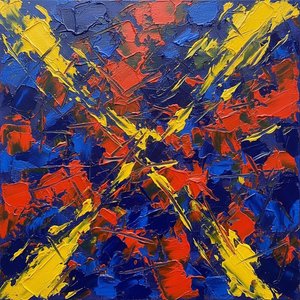
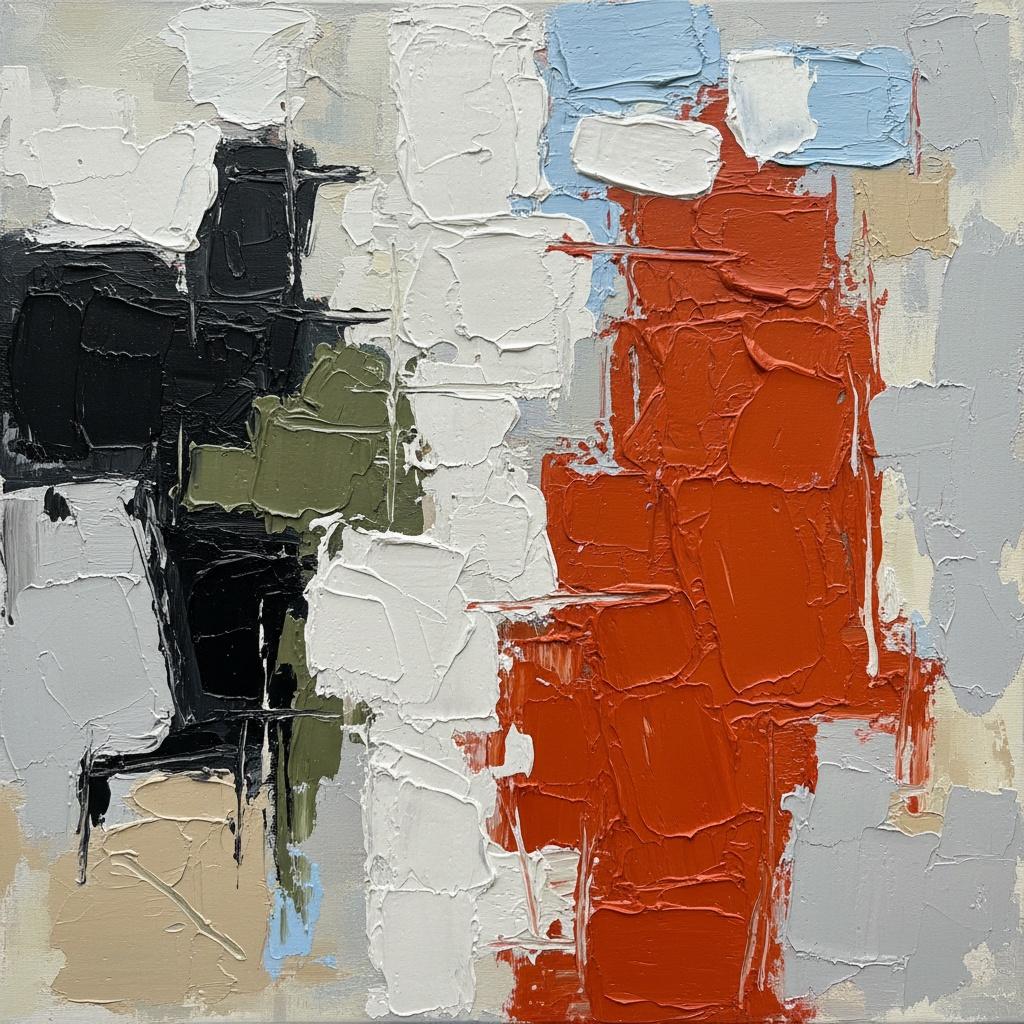
In the realm of contemporary abstraction, few works command the room with such visceral authority as Fragmented Monolith in Burnt Orange and Charcoal. This masterpiece by Laurent Noiret is not merely a painting but a sculptural event captured on canvas. At first glance, the eye is drawn to the monumental collision of color—a massive, vertical slab of burnt orange that anchors the composition with the heat of a dying ember. This vibrant, rust-toned weight stands in stark, dramatic opposition to the deep, charcoal masses that press against it from the periphery. The work avoids the comfort of a singular focal point, instead presenting a mosaic of jagged edges and interlocking geometries that force the viewer into an active state of discovery. It is a study in controlled chaos, where the structural stability of the monolith is constantly threatened by the fragmented, energetic movement of its own edges.
<The Alchemy of Impasto and Light
To truly appreciate this work, one must look beyond the pigment to the physical topography of the surface. Noiret employs an extreme impasto technique, utilizing heavy palette knife strokes to create a three-dimensional relief that breathes with its own internal light. The artist builds layers of titanium white and cool grey so thick they cast micro-shadows across the canvas, creating a sense of depth that shifts as the viewer moves through the space. These sculptural peaks and deep, recessed ridges mimic the rugged terrain of an ancient landscape or the weathered surface of industrial stone. This tactile approach ensures that the artwork is never static; it reacts to the ambient lighting of a room, revealing new textures and subtle tonal shifts throughout the day. The interplay between the warmth of the orange and the cold authority of the black creates a sensory friction, making the canvas feel as though it possesses its own gravitational pull.
Symbolism and the Modern Spirit
Beyond its striking aesthetic, the piece serves as a profound metaphor for the human condition in an era of fragmentation. The "monolith" represents our desire for permanence and structural truth, while the jagged, broken edges speak to the inevitable instability of modern existence. There is a palpable tension between the heavy, grounded masses and the light-filled voids that separate them, suggesting a delicate balance between order and disintegration. For the discerning collector, this work offers more than decoration; it provides an emotional anchor. It evokes a sense of mystery and monumental strength, making it an ideal centerpiece for sophisticated interiors where a statement of power and introspection is desired. Whether viewed as a landscape of raw energy or a psychological portrait of resilience, Noiret’s creation remains a timeless exploration of the beauty found within structural conflict.
Related Artworks
Artist Biography
The Essence of Abstraction
Born in 1964, Christian Noiret has emerged as a profound voice in the contemporary landscape, rooted in the rich cultural heritage of Lyon, France. His practice is defined by a rigorous modern non-representational visual exploration, where the boundaries of traditional form are dissolved to reveal a deeper, more visceral reality. Through a meticulous study of chromatic harmony and structural tension, Noiret invites the viewer into a space where color and texture serve as the primary protagonists of a silent, powerful narrative.
A Dialogue of Texture and Light
Noiret's mastery lies in his ability to manipulate the tactile qualities of his medium, creating works that possess an almost sculptural luminous depth. His compositions are not merely images but sensory experiences, characterized by a complex interplay between layered pigments and raw, gestural energy. This focus on the physical properties of paint allows his work to transcend the flat surface, establishing a dialogue between eras by applying a contemporary lens to the timeless principles of formalist abstraction.
The ArtsDot Exclusive Collection
As the sole guardian of his legacy, ArtsDot provides an exclusive gateway to Noiret's complete oeuvre. We take immense pride in presenting our Master-Style Interpretations, which are meticulously crafted to preserve the artist's original intent and the intricate materiality of his brushwork. These premium reproductions are engineered to capture every nuance of his texture and tone, ensuring that the soul of his non-representational vision is available only through our curated platform.

Christian Noiret
1967 - , France
Related Articles
Abstract Expressionism's 10 Defining Masterpieces |
Explore 10 defining Abstract Expressionism masterpieces by Pollock, Rothko & de Kooning. Discover the stories behind these iconic paintings and find museum-quality art reproductions to elevate your home decor on .

Geometric Abstraction's 10 Defining Masterpieces | Art for Your Home - ArtsDot
Explore 10 defining masterpieces of Geometric Abstraction! Discover Kandinsky, Mondrian & Malevich’s iconic works. Find museum-quality art reproductions and curated decor ideas to elevate your home at ArtsDot.com.
Kandinsky's Masterpieces: 25 Paintings That Define Abstract Art | ArtsDot
Journey through Wassily Kandinsky's 25 most iconic abstract paintings. Explore his revolutionary use of color, form & spiritual expressionism. Find museum-quality Kandinsky reproductions and elevate your home decor with ArtsDot.com. Discover all masterpieces on ArtsDot.com!
Navigating Abstract Expression: A Guide to Contemporary Movements for Emotional Resonance in Art Selection
Explore the evolution of Abstract Expressionism & discover contemporary movements for emotional resonance. Expert guidance for discerning art collectors seeking lasting value. ArtsDot.
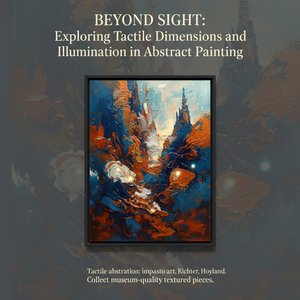
Beyond Sight: Exploring Tactile Dimensions and Illumination in Abstract Painting
Explore the captivating world of tactile abstraction! Discover impasto techniques, influential artists like Richter & Hoyland, and expert insights for collecting textured art. Elevate your space with museum-quality pieces.