

 Preview
 Send
Send Share
Share
 Details

 Download
 Similars
 X-Ray
X-Ray Diaporama
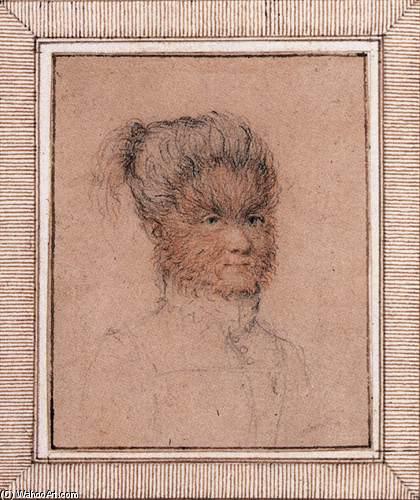
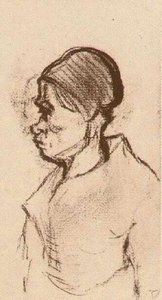
Portrait of Antonietta Gonzalez (8)
 Acrylic On Canvas
- WallArt
- Mannerist
 1594
1594 94.0 x 76.0 cm
 Pierpont Morgan Library
 Read More
Purchase a high-resolution, enhanced digital image, far superior to the online preview.
Each file is meticulously prepared by our in-house specialists using advanced tools and expert manual retouching. We ensure every image has exceptional clarity, precise color accuracy, and fine detail.
The final file is delivered via email within 72 hours, optimized for immediate use in professional, editorial, and print environments. This is the same quality trusted by top-tier design studios, publishers, and galleries.
Digital Image
Download a high-resolution file for personal display, printing, and creative projects. ( Buy Print Buy Hand Made Painting)
Included in Every Digital Image Order
Expert Digital Delivery, Guaranteed
When you choose ArtsDot.com, you're not just getting an image - you're receiving a professionally enhanced digital artwork, crafted with precision and backed by a satisfaction guarantee. Here's everything that comes with your order, automatically:

Fast Email Delivery
Your high-resolution digital image file will be emailed to you within 72 hours of ordering - ready for immediate use.

AI-Enhanced Digital File
Your artwork is professionally optimized using advanced AI tools and manual editing, ensuring maximum detail, clarity, and color accuracy.

Free Lifetime Re-Delivery
Accidentally deleted or lost your file? No worries - we'll resend it to you anytime, free of charge.

No Import Fees - Ever
Enjoy your artwork instantly with zero customs, duties, or delivery fees - digital downloads are always tax-free.

Color Accuracy Guarantee
We ensure your digital image reflects the original colors as closely as possible using professional tools and color management.

60-Day Satisfaction Guarantee
If you're not satisfied with your digital image, we'll revise it or refund 100% within 60 days - no questions asked.

100% Money-Back Guarantee
Not satisfied? Get a full refund within 60 days of receiving your digital file - no questions asked.

Bulk Order Discounts
Buy 3 images, save 10% - Buy 5, save 15% - Buy 10+, save 20%. Great for creative projects, galleries, and agencies.
Lavinia Fontana’s Bold Vision: Unveiling ‘Portrait of Antonietta Gonzalez (8)’
Lavinia Fontana's 1594 portrait of Antonietta Gonzales stands as an extraordinary testament to artistic innovation during the Italian Renaissance—a period often lauded for its male luminaries. Yet, Fontana defied convention, establishing herself not merely as a skilled artist but as a trailblazer who challenged societal expectations and fundamentally reshaped perceptions of women’s role in art history. Her story is one rooted in familial encouragement, unwavering dedication to craft, and an unparalleled ability to secure recognition within a field historically dominated by men. Her father, Prospero Fontana, a respected painter himself, recognized Lavinia's innate talent and fostered her artistic development—a crucial advantage given the scarcity of formal art education for women at the time. Early works like “Monkey Child” (1575), though sadly lost to time, foreshadowed Fontana’s distinctive style, demonstrating an early aptitude for capturing nuanced emotion and visual complexity.A Study in Mannerist Realism: Style and Technique
‘Portrait of Antonietta Gonzalez (8)’ exemplifies the stylistic hallmarks of Mannerism—a movement that prioritized stylized elegance and dramatic expression over naturalistic representation. Fontana eschewed the idealized beauty favored by earlier Renaissance artists, opting instead for a disconcerting portrayal of a young girl whose face is dominated by an unsettling abundance of hair. The artist’s meticulous approach to rendering texture is evident in the extensive hatching and cross-hatching employed throughout the drawing—a technique demanding considerable patience and precision. Lines are predominantly dark grey-brown, creating strong outlines that delineate the subject's form with remarkable accuracy. Careful shading contributes to a palpable sense of depth, subtly hinting at the contours of clothing and facial features without resorting to overtly theatrical perspective. This deliberate restraint underscores Fontana’s mastery of tonal manipulation—a cornerstone of Mannerist aesthetics. Graphite pencil on paper serves as the medium, highlighting Fontana’s commitment to understated elegance and technical virtuosity.Symbolism Beyond Beauty: Exploring Layers of Meaning
The portrait transcends mere likeness; it operates on a symbolic level that speaks to broader societal concerns surrounding notions of beauty and femininity. The exaggerated facial hair—a deliberate departure from conventional standards—can be interpreted as a commentary on vanity, obsession, or perhaps even an indictment of patriarchal ideals that prioritized masculine attributes over feminine grace. Fontana’s decision to focus solely on the head and shoulders creates a claustrophobic intimacy, forcing viewers to confront the subject's gaze directly. This compositional choice amplifies the unsettling quality of the image—it deliberately avoids presenting Antonietta as conventionally attractive, prompting contemplation about perceptions of beauty and identity within a restrictive social framework. The frame itself reinforces the formal presentation of the portrait, emphasizing its status as an object of artistic contemplation.Historical Context: Challenging Artistic Boundaries
Fontana’s success in securing recognition as a female artist during the Renaissance represents a significant achievement—a defiance of societal norms that relegated women to domestic roles and denied them access to intellectual pursuits. Her ability to gain patronage from influential families like the Gonzaga underscores the evolving attitudes toward artistic creativity within aristocratic circles. Despite facing considerable obstacles, Fontana persevered, producing an impressive oeuvre encompassing portraits, mythological scenes, and religious compositions—demonstrating her versatility as a painter and cementing her legacy as one of Italy’s most celebrated artists. Her work continues to inspire admiration for its technical brilliance and profound psychological insight.Emotional Resonance: An Uneasy Beauty
Ultimately, ‘Portrait of Antonietta Gonzalez (8)’ evokes an emotional response rooted in discomfort—a deliberate provocation designed to unsettle viewers and compel them to reconsider their assumptions about beauty and representation. Fontana’s masterful use of tonal shading creates a palpable sense of unease, mirroring the unsettling gaze of the subject herself. The portrait serves as a powerful reminder that art can challenge conventions and provoke introspection, prompting us to confront uncomfortable truths about societal ideals and artistic ambition. It stands as an enduring symbol of Fontana's courageous assertion of female agency within a male-dominated world—a testament to her unwavering dedication to craft and her profound understanding of the human condition.Related Artworks
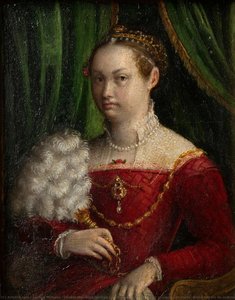
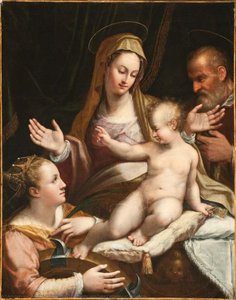
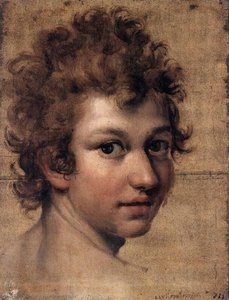
Artist Biography
A Bolognese Trailblazer: The Life and Art of Lavinia Fontana
Lavinia Fontana, born in Bologna in 1552, emerged as a remarkable figure during the Renaissance—a period often celebrated for its male masters. Yet, Fontana carved her own path, becoming not only a successful artist but also a pioneer who challenged societal norms and redefined the role of women in the art world. Her story is one of talent nurtured within a family of artists, dedication to craft, and an unwavering ability to secure recognition in a field historically dominated by men. Her father, Prospero Fontana, a respected painter himself, provided her initial training, recognizing and fostering her innate artistic abilities. This familial foundation was crucial, allowing Lavinia access to the skills and connections necessary to begin her career at a time when formal art education for women was virtually nonexistent. Early works like “Monkey Child” (1575), though now lost, signaled the emergence of a unique talent, quickly followed by pieces demonstrating a growing mastery of technique and composition, such as "Christ with the Symbols of the Passion" (1576).Elegance, Innovation, and the Bolognese Style
Fontana’s artistic style initially mirrored that of her father, steeped in the traditions of the School of Bologna. However, she soon began to absorb influences from other prominent artists, notably Denis Calvaert, whose school in Bologna was a hub of artistic innovation. This exposure led to an evolution in her work, incorporating elements of the Carracciesque style—characterized by its dramatic compositions and vibrant coloring—and a quasi-Venetian richness that added depth and luminosity to her paintings. She quickly became renowned for her portraits, particularly those of the upper-class women of Bologna. These were not merely likenesses; they were celebrations of wealth, status, and feminine grace. Fontana possessed an exceptional ability to capture both the physical appearance and the inner character of her sitters, forging unusually warm relationships with many of her female clients. Her portraits are notable for their meticulous attention to detail—the intricate embroidery on gowns, the shimmering pearls adorning necks, the subtle play of light across skin—all rendered with a remarkable degree of realism. Notable works like “Double Marriage Portrait” (also known as "Self-Portrait of Lavinia Fontana"), currently housed in the Zaragoza Museum, exemplify her skill and sophistication, offering a glimpse into the elegance of 16th-century society. Other significant pieces include “Venus and Cupid” (1592), a Baroque portrait brimming with symbolic beauty, and “Newborn Baby in a Crib” (1583), a poignant depiction of maternal tenderness and domestic life.Breaking Barriers: A Career Forged Against the Grain
Lavinia Fontana’s achievements extended far beyond her artistic skill; she was a true trailblazer, widely regarded as the first woman artist to operate independently within the established art world—outside the confines of a court or convent. This was an extraordinary feat in an era when women were largely excluded from professional life. Her success wasn't simply about talent; it was also about shrewd business acumen and the support of her husband, Paolo Zappi, who served as her agent and managed their growing family—they had eleven children together. The marriage agreement itself was unconventional, acknowledging Lavinia’s earning potential and negating the need for a traditional dowry. Her rising reputation eventually attracted the attention of powerful patrons, including Pope Gregory XIII and his family, leading to commissions for portraits of prominent individuals. This patronage propelled her career to new heights, culminating in her move to Rome in 1604 where she became a sought-after portraitist at the papal court. In 1611, she received further recognition with a bronze portrait medallion cast by Felice Antonio Casoni, and was elected into the Accademia di San Luca—an honor rarely bestowed upon women artists of the time.A Lasting Legacy: Challenging Conventions and Inspiring Future Generations
Lavinia Fontana’s legacy continues to resonate today, inspiring both artists and art lovers alike. Her work can be found in museums and collections around the world, serving as a testament to her enduring talent and historical significance. She not only demonstrated that women could achieve artistic excellence on par with their male counterparts but also paved the way for future generations of female artists to pursue their passions without societal constraints. While debate continues among art historians regarding whether she was truly among the first women to paint nudes—as evidenced in works like “Judith with the Head of Holofernes” (1600)—her willingness to explore a wider range of subjects, including mythological and religious themes, further solidified her position as a versatile and innovative artist. Fontana’s ability to balance a thriving artistic career with the demands of motherhood—raising eleven children while maintaining a rigorous painting schedule—is a testament to her resilience, dedication, and unwavering commitment to her craft. Her story serves as a powerful reminder that talent knows no gender and that perseverance can overcome even the most formidable obstacles. Lavinia Fontana’s impact extends beyond her paintings; she remains an icon of female empowerment in the art world.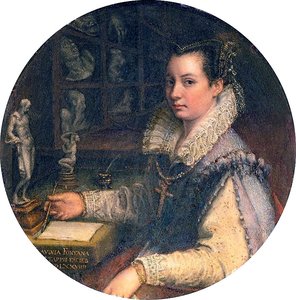
Lavinia Fontana
1552 - 1614 , Italy
Quick Facts
- Artistic Movement Or Style: Mannerism, Baroque
- Artists Who Influenced This Artist:
- Prospero Fontana
- Denis Calvaert
- Date Of Birth: August 24, 1552
- Date Of Death: 1614
- Full Name: Lavinia Fontana
- Nationality: Italian
- Notable Artworks:
- Double Marriage Portrait
- Venus and Cupid
- Newborn Baby in a Crib
- Judith with Holofernes
- Place Of Birth: Bologna, Italy

