 Preview
 Send
Send Share
Share
 Details

 Download
 Similars
 X-Ray
X-Ray Diaporama
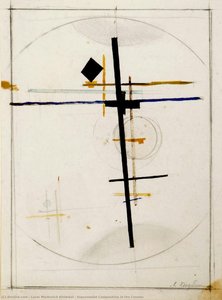
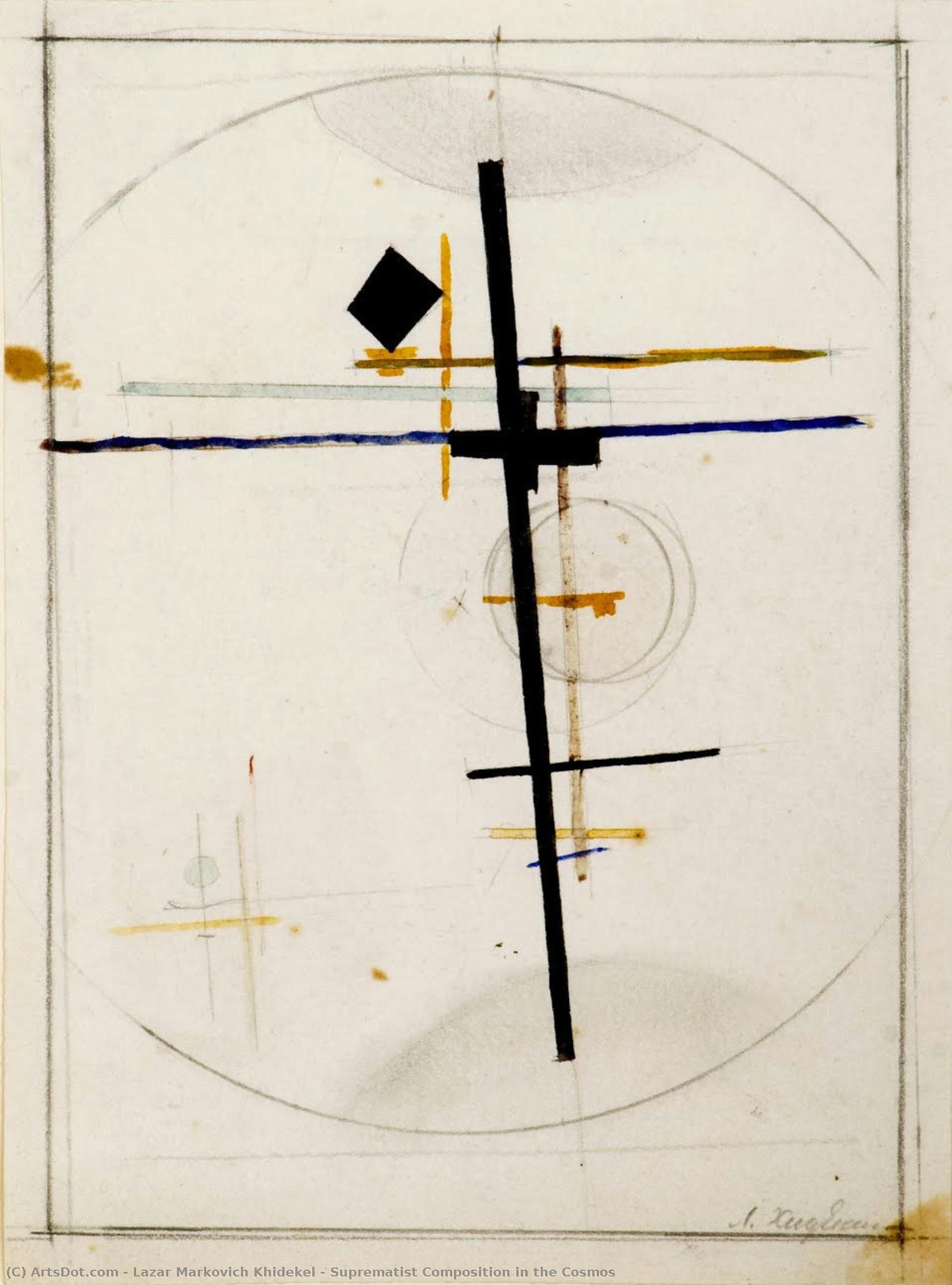
Suprematist Composition in the Cosmos
 1922
1922 16.0 x 12.0 cm
 Lazar Khidekel Society
 Read More
Hand Made Oil Reproduction
Hand-painted oil on canvas in your size and frame, made to order by our artists. ( Buy Print Buy Image)




































Pick from our preset sizes that match the artwork's original proportions.

You may enter your own dimensions to fit a specific frame or space. If your selected size does not match the original image's proportions, we will either crop the artwork or extend the painting with additional hand-painted elements. A digital mockup will be sent for your approval before production begins.
Please note that the on-screen preview does not reflect the actual cropping or extension. Only the mockup will accurately show the final composition.
While custom sizes are available, we recommend selecting a dimension from the predefined list to preserve the original proportions.
After order, ArtsDot.com team will email client for instructions and provide a mockup preview
Worldwide Delivery () in 3/4 weeks instead of standard 5 weeks. (20 August). No compromise on quality.

Free Worldwide Express Shipping

High-Quality Linen Canvas

Full Shipping Insurance

Customs Tax Refund Guarantee

True Color Matching Guarantee

60-Day Return Policy (Defects Only)

100% Money-Back Guarantee

Bulk Discount Offer
 Glass option is only available in size under 110 CM

Suprematist Composition in the Cosmos
Reproduction Medium
Reproduction Size
-


Total Price
$ 263
Related Artworks






Artist Biography
A Visionary of Form: The Life and Legacy of Lazar Markovich Khidekel
Lazar Markovich Khidekel, born in Vitebsk, Belarus in 1904, was more than just an artist; he was a philosophical architect, a daring designer, and a devoted disciple of Kazimir Malevich’s revolutionary Suprematist movement. His life unfolded against the backdrop of immense social and artistic upheaval, from the vibrant energy of post-revolutionary Russia to the stifling constraints of Soviet rule. Khidekel didn't simply paint or build; he sought to materialize pure feeling, translating the abstract language of Suprematism into three-dimensional realities that challenged conventional notions of space and form. His journey began at the Vitebsk School of Art, a crucible of avant-garde thought where he encountered not only Malevich but also El Lissitzky, figures who would profoundly shape his artistic trajectory. This early exposure ignited within him a passion for geometric abstraction and a commitment to exploring the spiritual potential inherent in non-objective art. He quickly became one of the few students to fully embrace Suprematism’s core tenets, becoming an integral part of Malevich's inner circle.From Painting to Volumetric Suprematism: A New Spatial Language
Khidekel’s early works reflected his burgeoning interest in abstraction, characterized by geometric shapes and a restrained color palette. However, it was his involvement with UNOVIS – Affirmers of the New Art – the group led by Malevich, that truly solidified his artistic direction. This period wasn't merely about adopting a style; it was about embracing a worldview, a belief in art’s power to transcend representation and connect directly with universal emotions. He didn’t see Suprematism as simply an aesthetic choice but as a pathway to a new consciousness. Khidekel distinguished himself by not only understanding the principles of planar Suprematism but also by actively working to translate them into three dimensions, pioneering what would become known as volumetric Suprematism. He began creating axonometric projections and intricate models, envisioning buildings that defied gravity and conventional architectural norms. This was a radical departure from traditional design, prioritizing pure artistic feeling over functional considerations. His designs weren’t meant to be merely inhabited; they were intended to evoke a sense of awe and spiritual elevation.Architectural Innovations and the “Post-Suprematist” Series
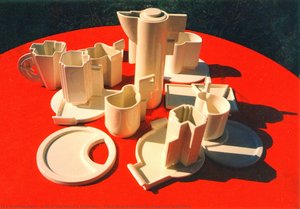
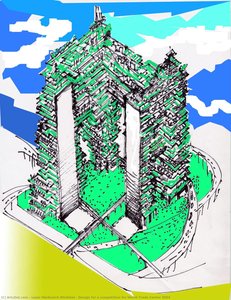
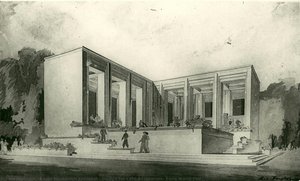
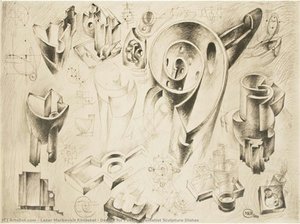
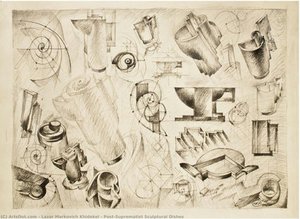
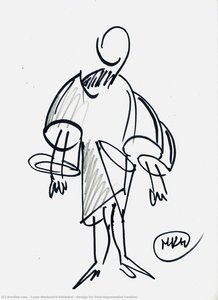
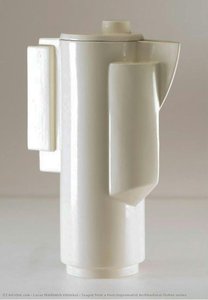
The 1920s marked a period of intense creative exploration for Khidekel. He is celebrated for his designs within the "Post-Suprematist" series, which extended Suprematist principles beyond painting and architecture into everyday objects. These weren’t simply aesthetically pleasing items; they were experiments in applying abstract forms to functional design – teapots, sculptural dishes, even fashion designs all bore the unmistakable imprint of his geometric vision. However, it was his 1926 design for a Workers' Club that cemented his place in architectural history as the creator of the world’s first Suprematist architectural project. This wasn’t just a building on paper; it was a bold statement about the potential of architecture to embody utopian ideals and transform society. Beyond this landmark project, Khidekel continued to explore futuristic urban environments, most notably with his visionary “City on the Water” design – a prescient response to concerns about flooding and rising sea levels that remains remarkably relevant today. Even later in life, as evidenced by his 2002 design for a World Trade Center competition, he remained committed to architectural innovation, responding to contemporary anxieties with bold and unconventional solutions.A Rediscovered Legacy: Khidekel’s Enduring Influence
Despite facing the challenges of artistic expression within the Soviet system, Lazar Khidekel persevered, leaving behind a body of work that continues to inspire architects and designers worldwide. For years, his contributions were largely overlooked, overshadowed by the dominant styles of Socialist Realism. However, recent exhibitions and publications, spearheaded by organizations like the Lazar Khidekel Society, have brought renewed attention to his remarkable achievements. His pioneering spirit and unwavering commitment to Suprematist principles have earned him recognition as a key figure in the Russian avant-garde movement. Khidekel’s legacy extends beyond his specific designs; it lies in his demonstration of how abstract art can inform and enrich the built environment, challenging us to rethink our relationship with space, form, and function. He was a true visionary, one who dared to imagine a world shaped by pure artistic feeling, and whose work continues to resonate with those seeking to push the boundaries of creative expression. His influence can be seen in contemporary architecture that embraces geometric abstraction and seeks to create spaces that are not merely functional but also emotionally resonant.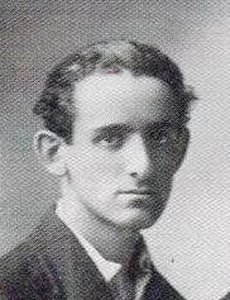
Lazar Markovich Khidekel
1904 - 1986 , Belarus
Quick Facts
- Artistic Movement Or Style: Suprematism
- Artists Or Movements Influenced By This Artist:
- Russian avant-garde
- Architects & Designers
- Artists Who Influenced This Artist:
- Kazimir Malevich
- El Lissitzky
- Marc Chagall
- Date Of Birth: 1904
- Date Of Death: 1986
- Full Name: Lazar Markovich Khidekel
- Nationality: Russian
- Notable Artworks:
- Workers’ Club (1926)
- City on the Water
- World Trade Center 2002
- Teapot series
- Fashion designs
- Place Of Birth: Vitebsk, Belarus