

 Preview
 Send
Send Share
Share
 Details

 Download
 Similars
 X-Ray
X-Ray Diaporama
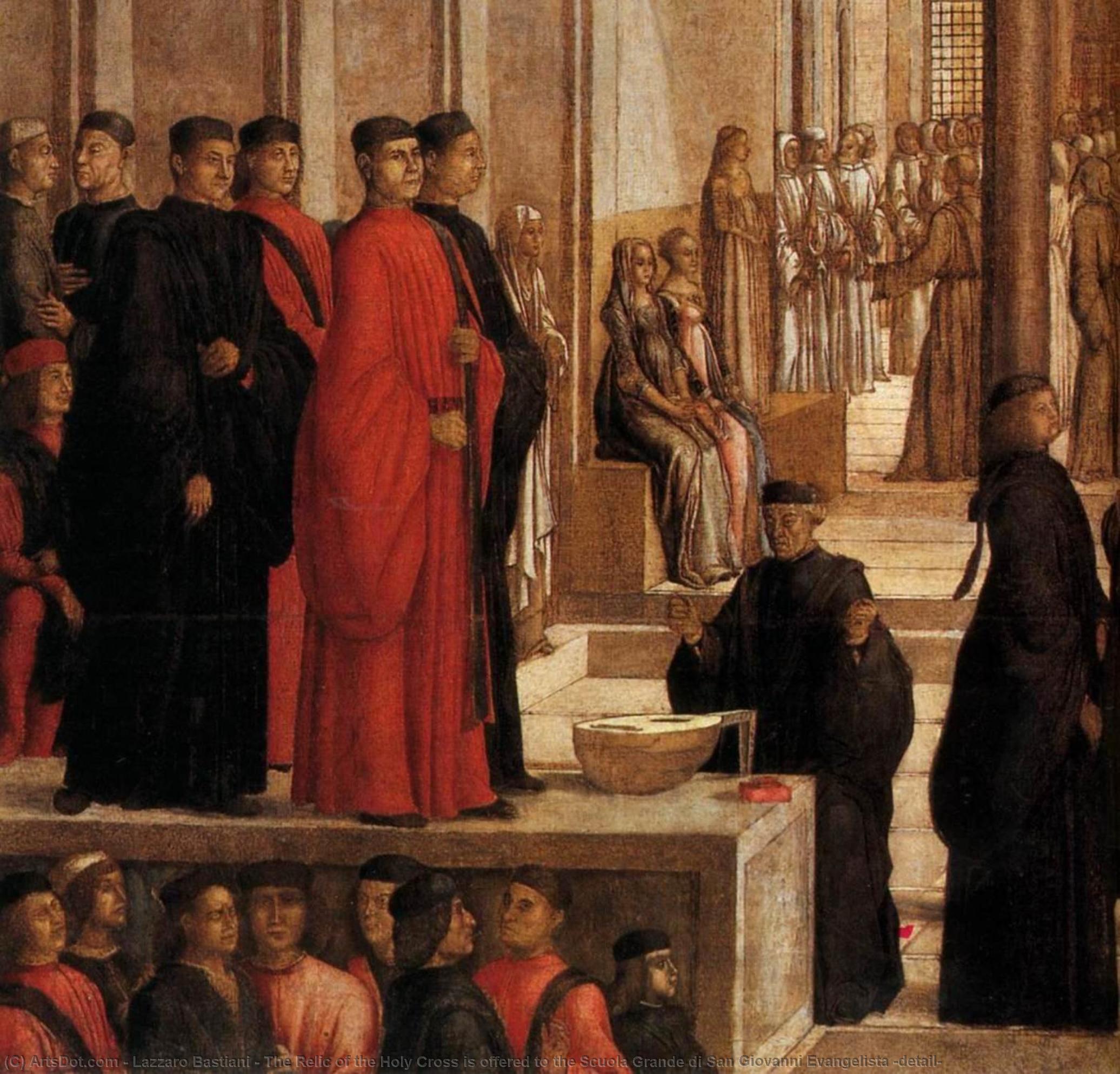
The Relic of the Holy Cross is offered to the Scuola Grande di San Giovanni Evangelista (detail)


 Read More
Purchase a high-resolution, enhanced digital image, far superior to the online preview.
Each file is meticulously prepared by our in-house specialists using advanced tools and expert manual retouching. We ensure every image has exceptional clarity, precise color accuracy, and fine detail.
The final file is delivered via email within 72 hours, optimized for immediate use in professional, editorial, and print environments. This is the same quality trusted by top-tier design studios, publishers, and galleries.
Digital Image
Download a high-resolution file for personal display, printing, and creative projects. ( Buy Print Buy Hand Made Painting)
Included in Every Digital Image Order
Expert Digital Delivery, Guaranteed
When you choose ArtsDot.com, you're not just getting an image - you're receiving a professionally enhanced digital artwork, crafted with precision and backed by a satisfaction guarantee. Here's everything that comes with your order, automatically:

Fast Email Delivery
Your high-resolution digital image file will be emailed to you within 72 hours of ordering - ready for immediate use.

AI-Enhanced Digital File
Your artwork is professionally optimized using advanced AI tools and manual editing, ensuring maximum detail, clarity, and color accuracy.

Free Lifetime Re-Delivery
Accidentally deleted or lost your file? No worries - we'll resend it to you anytime, free of charge.

No Import Fees - Ever
Enjoy your artwork instantly with zero customs, duties, or delivery fees - digital downloads are always tax-free.

Color Accuracy Guarantee
We ensure your digital image reflects the original colors as closely as possible using professional tools and color management.

60-Day Satisfaction Guarantee
If you're not satisfied with your digital image, we'll revise it or refund 100% within 60 days - no questions asked.

100% Money-Back Guarantee
Not satisfied? Get a full refund within 60 days of receiving your digital file - no questions asked.

Bulk Order Discounts
Buy 3 images, save 10% - Buy 5, save 15% - Buy 10+, save 20%. Great for creative projects, galleries, and agencies.
Lazzaro Bastiani’s “The Relic of the Holy Cross is Offered to the Scuola Grande di San Giovanni Evangelista (detail)”
Lazzaro Bastiani’s “The Relic of the Holy Cross is Offered to the Scuola Grande di San Giovanni Evangelista,” painted in 1494, stands as a testament to Venetian Renaissance artistic fervor—a moment captured on canvas that embodies both meticulous observation and profound symbolic resonance. Commissioned by the Scuola Grande di San Marco, one of Venice’s most influential confraternities dedicated to safeguarding relics of Christ, this detailed panel exemplifies Bastiani's mastery of tempera paint on canvas, a technique favored for its luminosity and durability.
- Subject Matter: The scene depicts the ceremonial presentation of the Holy Cross relic by Philippe de Méziéres—Chancellor of Cyprus—to the Scuola Grande’s brethren. It captures not merely an event but the palpable atmosphere of Venetian civic pride during a period defined by burgeoning humanist ideals and artistic innovation.
- Style: Bastiani's style aligns closely with that of Giovanni Bellini, his mentor, demonstrating a restrained elegance characterized by balanced compositions and subtle tonal gradations. However, unlike Bellini’s more lyrical approach, Bastiani prioritizes clarity and precision—a stylistic choice reflecting the humanist emphasis on rational observation.
- Technique: Employing tempera paint—mixed with egg yolk—Bastiani achieved remarkable detail through layering thin glazes of pigment onto a prepared gesso ground. This meticulous process ensured that every brushstroke conveyed nuance and depth, resulting in an image imbued with atmospheric perspective and luminous color.
Historical Context: The Scuola Grande’s veneration for the Holy Cross relic underscored Venice's role as a center of religious pilgrimage and artistic patronage. Bastiani’s painting reflects the broader cultural landscape of the time—a fascination with biblical narratives and an aspiration to represent sacred subjects with intellectual rigor.
Symbolism: The composition is laden with symbolic significance. The figures are arranged in a hierarchical manner, reflecting the importance of ecclesiastical authority. Furthermore, the depiction of the basilica itself symbolizes faith and spiritual contemplation—a visual reminder of Venice’s enduring devotion to Christian traditions. Bastiani's careful attention to architectural detail underscores this overarching theme.
Emotional Impact: “The Relic of the Holy Cross is Offered to the Scuola Grande di San Giovanni Evangelista” transcends mere representation; it evokes a sense of solemn grandeur and spiritual reverence. The artist’s skillful rendering captures not only the visual splendor of the scene but also its emotional core—a testament to Bastiani's ability to communicate profound ideas through evocative imagery.
- Notable Features: Observe the meticulous depiction of the basilica’s interior, highlighting the polygonal apse and towering windows. The figures are rendered with understated realism, conveying dignity and solemnity.
- Color Palette: Bastiani utilizes a restrained color palette—primarily muted blues and golds—creating an atmosphere of contemplative serenity. These colors harmonize seamlessly to reinforce the painting’s overarching mood of piety and reverence.
Ultimately, Lazzaro Bastiani's “The Relic of the Holy Cross is Offered to the Scuola Grande di San Giovanni Evangelista” remains a captivating exemplar of Venetian Renaissance art—a masterpiece that continues to inspire admiration for its technical virtuosity and profound symbolic depth.
Related Artworks




Artist Biography
The Venetian Legacy of Lazzaro Bastiani
Lazzaro Bastiani stands as a significant, albeit somewhat enigmatic, figure within the Venetian artistic landscape of the fifteenth and sixteenth centuries. Born in Padua in 1429, he emerged as a painter during a period marked by burgeoning humanist ideals and unparalleled artistic innovation—a time when Venice reigned supreme as a commercial powerhouse and cultural epicenter. While his output wasn’t as prolific or celebrated as contemporaries like Titian or Bellini, Bastiani nonetheless contributed substantially to the stylistic evolution of Venetian painting, particularly within the Scuola Grande di San Marco and its associated workshops.
Bastiani's artistic journey began in Padua, where he honed his skills under the tutelage of Andrea Mantegna—a master whose influence is palpable in Bastiani’s early works. This foundation in the rigorous, sculptural style of Mantegna provided him with a technical precision that would later blend seamlessly with the softer, more atmospheric qualities of the Venetian school. Records indicate that he swiftly established himself as a painter in Venice by 1460, securing commissions for altarpieces commissioned by the Procurators of San Marco, demonstrating an immediate grasp of the prevailing artistic tastes and expectations of the Venetian elite. Notably, his payment rate mirrored that of Giovanni Bellini at the time, signifying his recognition as a rising talent within the influential Bellini workshop—a connection that undoubtedly shaped his stylistic development.
A Collaborative Spirit in the Heart of Venice
Bastiani’s involvement with the Scuola Grande di San Marco proved pivotal to his career. From the 1480s onwards, he collaborated closely with Gentile Bellini, engaging in ambitious projects aimed at glorifying Venetian civic pride and commemorating important religious events. Their partnership exemplifies the collaborative spirit characteristic of Venetian painting during this era—a tradition where shared workshops and collective commissions allowed for a rich exchange of ideas and techniques. Through these large-scale endeavors, Bastiani helped weave the narrative of Venetian identity into the very fabric of its religious and civic institutions.
His mastery is perhaps most evident in his ability to balance sacred solemnity with human emotion. In works such as St. Veneranda Enthroned and the Madonna of Humility, one can observe a delicate interplay of light and shadow that breathes life into the divine subjects. His religious compositions often served as more than mere decoration; they were profound theological statements designed to inspire devotion. This is particularly evident in his detailed depictions of sacred ceremonies, such as The Relic of the Holy Cross is offered to the Scuola Grande di San Giovanni Evangelista, where he captures the intricate ritualism and communal fervor of the period with remarkable clarity.
Artistic Significance and Enduring Influence
As his career progressed, Bastiani’s work became a bridge between the structured, linear traditions of the early Renaissance and the more fluid, color-driven approach that would eventually define the High Renaissance in Venice. His ability to integrate the monumental presence of Mantegnesque figures with the luminous, atmospheric qualities pioneered by the Bellini family allowed him to create works that were both physically imposing and spiritually resonant.
Though history often focuses on the titans of the Venetian school, the contributions of Lazzaro Bastiani remain vital to understanding the cohesive movement of 15th-century art. His legacy is found in:
- The development of the Venetian altarpiece: Refining the use of religious iconography to serve both church and state.
- Collaborative excellence: Demonstrating how workshop partnerships drove the innovation of the Renaissance era.
- Stylistic synthesis: Merging Paduan precision with Venetian luminosity, creating a unique visual language for his era.
By the time of his death in 1512, Bastiani had left an indelible mark on the workshops of Venice, ensuring that his influence would ripple through the generations of painters who followed him into the golden age of the Venetian Renaissance.

Lazzaro Bastiani
1429 - 1512 , Italy
Quick Facts
- Artistic Movement Or Style: Renaissance
- Artists Who Influenced This Artist:
- Giovanni Bellini
- Gentile Bellini
- Date Of Birth: Padua, Italy (1429)
- Date Of Death: 1512
- Full Name: Lazzaro Bastiani
- Nationality: Italian
- Notable Artworks:
- St. Jerome
- Madonna of Humility
- Madonna and Child enthroned with St. George
- Place Of Birth: Venice

