 Preview
 Send
Send Share
Share
 Details

 Download
 Similars
 X-Ray
X-Ray Diaporama
Stele for Li Sixun\n\nImage 1
 Traditional Chinese Art
 1200
1200 29.0 x 15.0 cm
 Read More
Hand Made Oil Reproduction
Hand-painted oil on canvas in your size and frame, made to order by our artists. ( Buy Print Buy Image)




































Pick from our preset sizes that match the artwork's original proportions.

You may enter your own dimensions to fit a specific frame or space. If your selected size does not match the original image's proportions, we will either crop the artwork or extend the painting with additional hand-painted elements. A digital mockup will be sent for your approval before production begins.
Please note that the on-screen preview does not reflect the actual cropping or extension. Only the mockup will accurately show the final composition.
While custom sizes are available, we recommend selecting a dimension from the predefined list to preserve the original proportions.
After order, ArtsDot.com team will email client for instructions and provide a mockup preview
Worldwide Delivery () in 3/4 weeks instead of standard 5 weeks. (6 September). No compromise on quality.

Free Worldwide Express Shipping

High-Quality Linen Canvas

Full Shipping Insurance

Customs Tax Refund Guarantee

True Color Matching Guarantee

100-Day Return Policy (Defects Only)

100% Money-Back Guarantee

Bulk Discount Offer
 Glass option is only available in size under 110 CM

Stele for Li Sixun\n\nImage 1
Reproduction Medium
Reproduction Size
-


Total Price
$ 263
Related Artworks
Artist Biography
Lee Kun-yong: A Body in Revolt
Born in Seoul, South Korea, in 1942, Lee Kun-yong’s life and art were inextricably linked to the turbulent political landscape of his nation. Emerging during the period of martial law under Park Chung-hee, he witnessed firsthand the suppression of artistic expression and the constraints placed upon individual freedoms. This experience profoundly shaped his trajectory as an artist, fueling a deeply rebellious spirit that would permeate his work for decades. Lee’s early career was marked by experimentation with diverse media – performance, video, sculpture, and installation – all united by a singular goal: to challenge conventional notions of art and the body itself.
The 1970s proved to be a crucial period of gestation for his artistic vision. Facing an authoritarian regime that actively discouraged dissent, Lee developed what he termed “event-logical” performances. These weren’t simply theatrical displays; they were meticulously orchestrated events designed to disrupt established norms and provoke visceral reactions from the audience. They interrogated the relationship between the body, movement, and time, often pushing the boundaries of physical endurance and social acceptability. His work during this era was a direct response to the stifling atmosphere of South Korea at the time – an assertion of individual agency against systemic control.
Bodyscapes: Mapping the Human Form
Perhaps Lee Kun-yong’s most recognizable contribution to the art world is his series of “bodyscapes.” These paintings, often large-scale and intensely detailed, depict the human body not as a static object but as a dynamic, ever-changing landscape. He employed a unique technique – layering paint with meticulous precision – to create surfaces that seemed to ripple and breathe. These aren’t portraits in the traditional sense; they are explorations of the body's potential for movement, transformation, and ultimately, resistance. The term “bodyscape” itself suggests a terrain, a space to be navigated and understood.
The influence of Eastern philosophies, particularly Zen Buddhism, can be discerned within his approach to the human form. He sought to capture not just the outward appearance but also the underlying energy and flow of life force – *qi* – through his paintings. The repetitive layering and meticulous detail mirror meditative practices, suggesting a process of stripping away the superficial to reveal the essential.
Performance as Political Statement
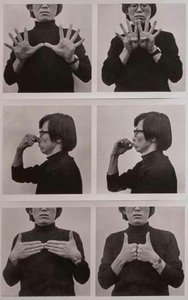
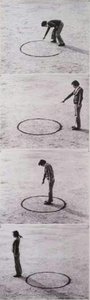
Beyond his paintings, Lee Kun-yong’s performances remain arguably his most impactful work. These events frequently involved extended periods of physical exertion, often pushing the limits of human endurance. He utilized his own body as a canvas, subjecting it to extreme conditions – heat, cold, confinement – and transforming these experiences into powerful statements about the constraints imposed by society and the resilience of the human spirit.
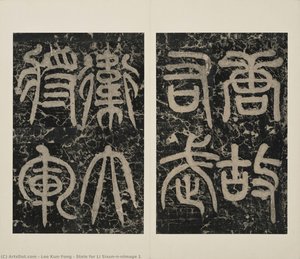
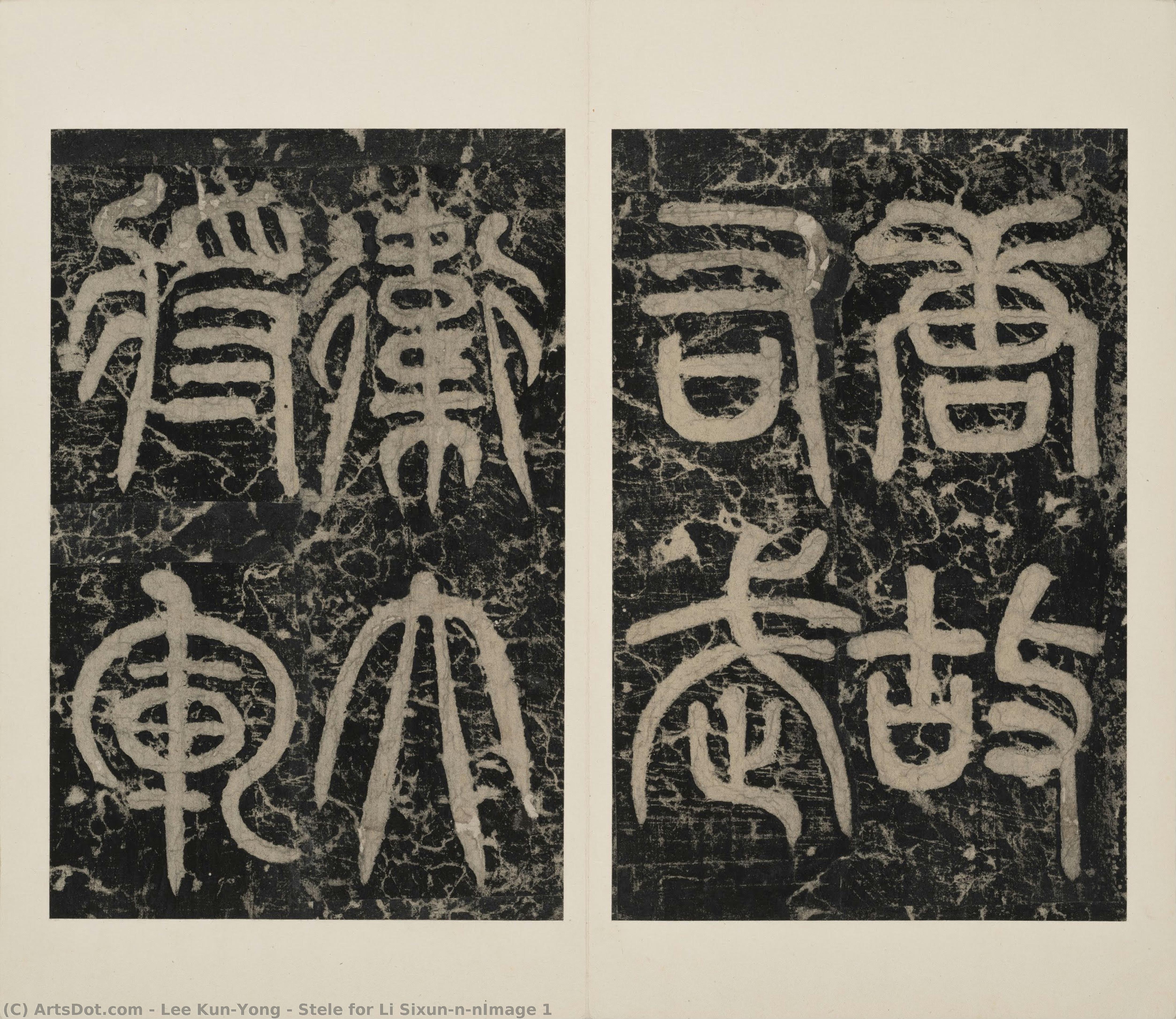
One particularly notable example is “Stele for Li Sixun,” a rubbing of a 1200 CE Chinese stele created by the calligrapher Li Sixun. Lee’s interpretation involved him spending an extended period meticulously recreating the calligraphy, transforming it into a physical manifestation of his own endurance and artistic process. This piece highlights his ability to engage with historical art forms while simultaneously injecting them with contemporary meaning.
Legacy and Recognition
Lee Kun-yong's career spanned several decades, culminating in his joining Pace Gallery in 2020 – a significant milestone recognizing the breadth and depth of his artistic achievements. His work continues to be exhibited internationally and studied for its innovative approach to performance art, body art, and conceptual expression. He left behind a legacy as one of Korea’s most important avant-garde artists, a provocative voice challenging established norms and reminding us of the power of the human body to resist oppression and express itself in unexpected ways.
It's worth noting that Lee Kun-yong was part of a family deeply involved in South Korean business. His sister, Lee Boo-jin, is the president of Hotel Shilla, and his brother-in-law, Lee Seo-hyun, served as chairman of Samsung Welfare Foundation – figures who represent both the economic power and the complex social dynamics of modern Korea.

Lee Kun-yong
1942 - 2022 , South Korea
Quick Facts
- Artistic Movement Or Style: Avant-garde
- Date Of Birth: 1942
- Date Of Death: 2022
- Full Name: Lee Kun-yong
- Nationality: Korean
- Notable Artworks: ['Stele for Li Sixun']
- Place Of Birth: Seoul, South Korea
Related Articles
Xie Zhiliu: A Legacy of Ink Wash Painting & Modern Chinese Literati Tradition
Explore the legacy of Xie Zhiliu, a master of Chinese ink wash painting & prominent figure in modern art. Discover his techniques, influences, and contributions to literati tradition. A guide for discerning collectors.

Peter Graham Li: Capturing Light & Narrative in Contemporary Oil Painting
Discover the captivating oil paintings of Peter Graham Li – a contemporary artist celebrated for his masterful use of light, color, and impasto technique. Explore investment potential & curated selections at ArtsDot.
Pu Xinyu's 'Puru': A Legacy of Literati Painting & Emotional Resonance
Explore the captivating world of Pu Xinyu (Puru), the last great literati painter. Discover his imperial heritage, masterful ink wash techniques & enduring legacy – a valuable addition to any discerning art collection.
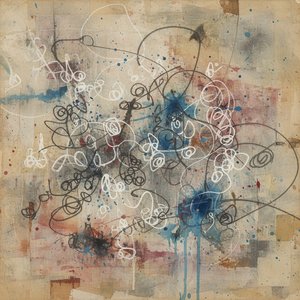
Cy Twombly: Scribbles of Emotion – Deconstructing Post-War Expressionism Through Calligraphy & Abstraction
Explore the captivating world of Cy Twombly with ArtsDot. Discover the emotional depth & artistic significance behind his abstract calligraphy. Expert insights for collectors.
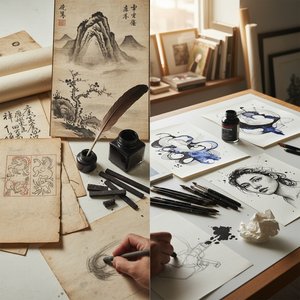
Ephemeral Expressions: Exploring the Nuances of Ink on Paper Through History & Contemporary Art
Explore the captivating world of ink wash painting – from its ancient origins to contemporary masters. Discover techniques, symbolism & conservation insights with ArtsDot.com.