

 Preview
 Send
Send Share
Share
 Details

 Download
 Similars
 X-Ray
X-Ray Diaporama
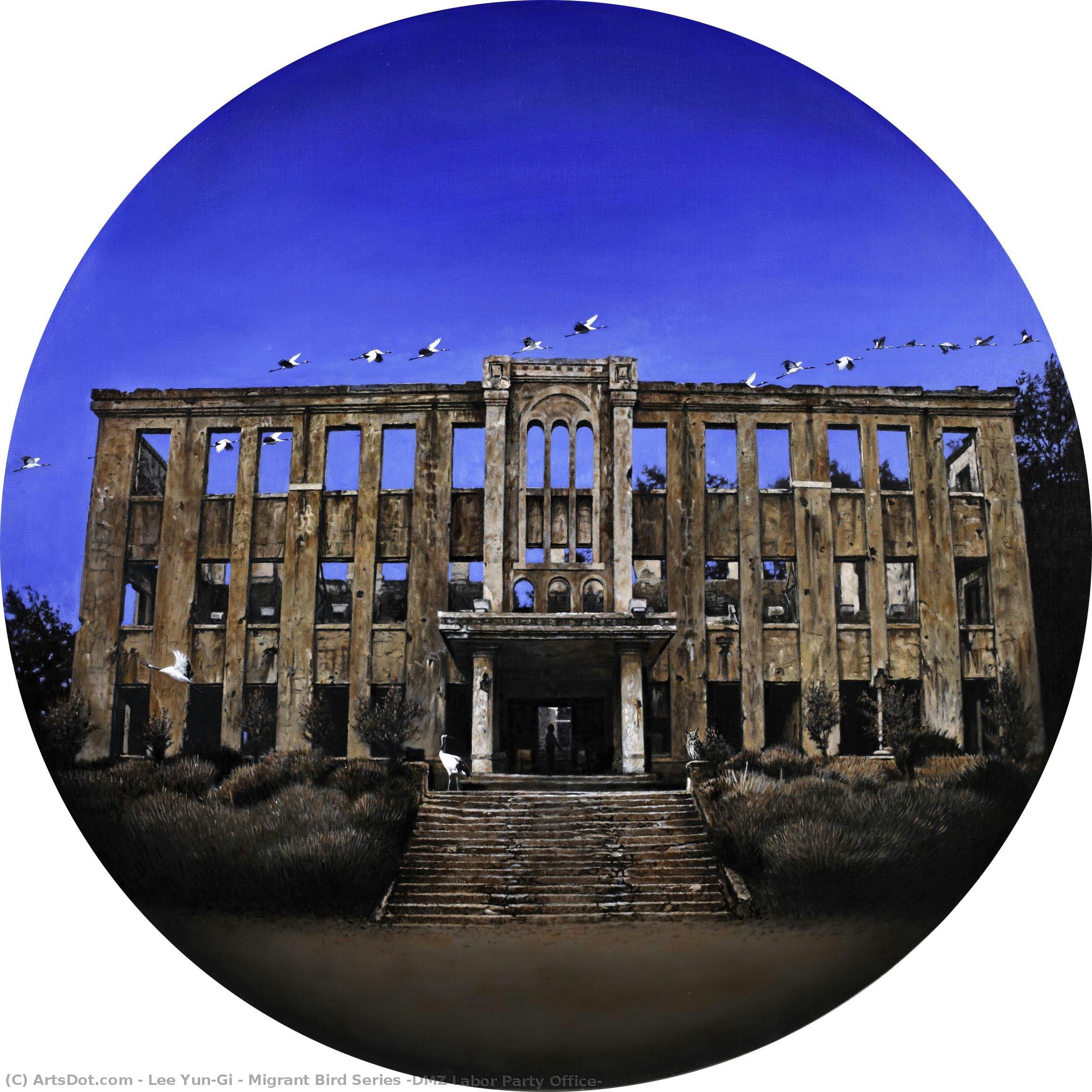
Migrant Bird Series (DMZ Labor Party Office)

 Read More
Purchase a high-resolution, enhanced digital image, far superior to the online preview.
Each file is meticulously prepared by our in-house specialists using advanced tools and expert manual retouching. We ensure every image has exceptional clarity, precise color accuracy, and fine detail.
The final file is delivered via email within 72 hours, optimized for immediate use in professional, editorial, and print environments. This is the same quality trusted by top-tier design studios, publishers, and galleries.
Digital Image
Download a high-resolution file for personal display, printing, and creative projects. ( Buy Print Buy Hand Made Painting)
Included in Every Digital Image Order
Expert Digital Delivery, Guaranteed
When you choose ArtsDot.com, you're not just getting an image - you're receiving a professionally enhanced digital artwork, crafted with precision and backed by a satisfaction guarantee. Here's everything that comes with your order, automatically:

Fast Email Delivery
Your high-resolution digital image file will be emailed to you within 72 hours of ordering - ready for immediate use.

AI-Enhanced Digital File
Your artwork is professionally optimized using advanced AI tools and manual editing, ensuring maximum detail, clarity, and color accuracy.

Free Lifetime Re-Delivery
Accidentally deleted or lost your file? No worries - we'll resend it to you anytime, free of charge.

No Import Fees - Ever
Enjoy your artwork instantly with zero customs, duties, or delivery fees - digital downloads are always tax-free.

Color Accuracy Guarantee
We ensure your digital image reflects the original colors as closely as possible using professional tools and color management.

60-Day Satisfaction Guarantee
If you're not satisfied with your digital image, we'll revise it or refund 100% within 60 days - no questions asked.

100% Money-Back Guarantee
Not satisfied? Get a full refund within 60 days of receiving your digital file - no questions asked.

Bulk Order Discounts
Buy 3 images, save 10% - Buy 5, save 15% - Buy 10+, save 20%. Great for creative projects, galleries, and agencies.
Related Artworks








Artist Biography
The Weaver of Myth and Memory
Lee Yun-gi (1947–2010) occupied a rare space in the Korean cultural landscape, acting as a bridge between the profound depths of ancient mythology and the visceral realities of modern existence. Born in Gunwi-si, South Korea, his early life was shaped by the complex tensions of a nation navigating its postwar identity. While history often remembers him as a titan of literature—a prize-winning novelist and a prolific translator who brought the intricate labyrinths of Umberto Eco to Korean readers—his artistic soul sought expression through a more tactile medium. For Lee, the boundaries between the written word and the painted canvas were fluid; both served as vessels for exploring the psychological repercussions of conflict, displacement, and the enduring power of human connection.
His creative journey was profoundly marked by his observations during the Vietnam War, an experience that birthed his 1977 literary debut, Hayan Hellikop. This early encounter with the shadows of war ignited a lifelong preoccupation with themes of trauma and survival. As he matured, his intellectual horizons expanded through formal studies at Michigan State University, where he immersed himself in comparative literature and religious studies. This academic rigor allowed him to master the art of translation, eventually publishing over 150 works that included the heavy, symbolic weight of Greek and Roman myths. This deep immersion in classical archetypes provided the foundational vocabulary for his visual art, allowing him to infuse his paintings with a sense of timelessness and universal truth.
Texture, Symbolism, and the Visual Narrative
In his transition from the precision of translation to the expressive freedom of painting, Lee Yun-gi developed a stylistic approach that was as much about physical sensation as it was about visual representation. His work is characterized by a remarkable use of texture, where layers of pigment are built upon the canvas to create a palpable, sculptural depth. This technique does not merely depict a subject; it invites the viewer to feel the weight of history and the grit of memory. In celebrated pieces such as Blue-eyed Owl, Lee utilizes avian symbolism—a recurring motif in his oeuvre—to evoke a sense of watchful wisdom and the ethereal connection between the earthly and the divine.
The artist’s ability to blend disparate elements is perhaps his greatest achievement. His paintings often mirror the structure of his prose, utilizing subtle variations in color and heavy impasto to drive a narrative forward without the need for explicit depiction. In series such as the Migrant Bird Series, he explores the poignant themes of displacement and the search for home, reflecting the socio-political shifts of the Korean peninsula. Through his use of light and shadow, Lee creates landscapes that feel both intimately personal and mythically vast, turning the canvas into a space where the individual struggle meets the collective human experience.
A Legacy of Intercultural Dialogue
The historical significance of Lee Yun-gi lies in his role as a cultural mediator. By translating the complexities of Western thought into the Korean vernacular, and subsequently translating those same archetypes into a visual language, he fostered a unique intercultural dialogue. His work resisted the easy comforts of simple description, opting instead for a dynamic use of dialogue—both literal in his books and metaphorical in his paintings—to challenge and engage his audience. He approached life with a characteristic sense of optimism and wit, refusing to succumb to the despair of human cruelty, choosing instead to focus on the resolution of conflict through creativity.
Ultimately, Lee Yun-gi’s legacy is one of profound synthesis. He remains a significant figure in contemporary Korean art because he successfully merged the analytical precision of a scholar with the emotive power of a storyteller. His life's work stands as a testament to the idea that whether through the meticulous translation of a text or the heavy application of paint to a canvas, the ultimate goal of the artist is to uncover the universal truths that bind us all together across time and geography.
Lee Yun-gi
1947 - 2010 , South Korea
Quick Facts
- Artistic Movement Or Style: Modern Fiction
- Date Of Birth: 1947
- Date Of Death: 2010
- Full Name: Lee Yun-gi
- Nationality: Korean
- Notable Artworks:
- Blue-eyed Owl
- Migrant Bird Series (DMZ Labor Party Office)
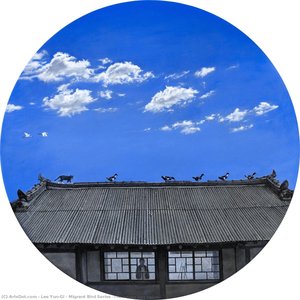
- Migrant Bird Series (The house just below)
- Place Of Birth: Gunwi-si, South Korea

