 Preview
 Send
Send Share
Share
 Details

 Download
 Similars
 X-Ray
X-Ray Diaporama
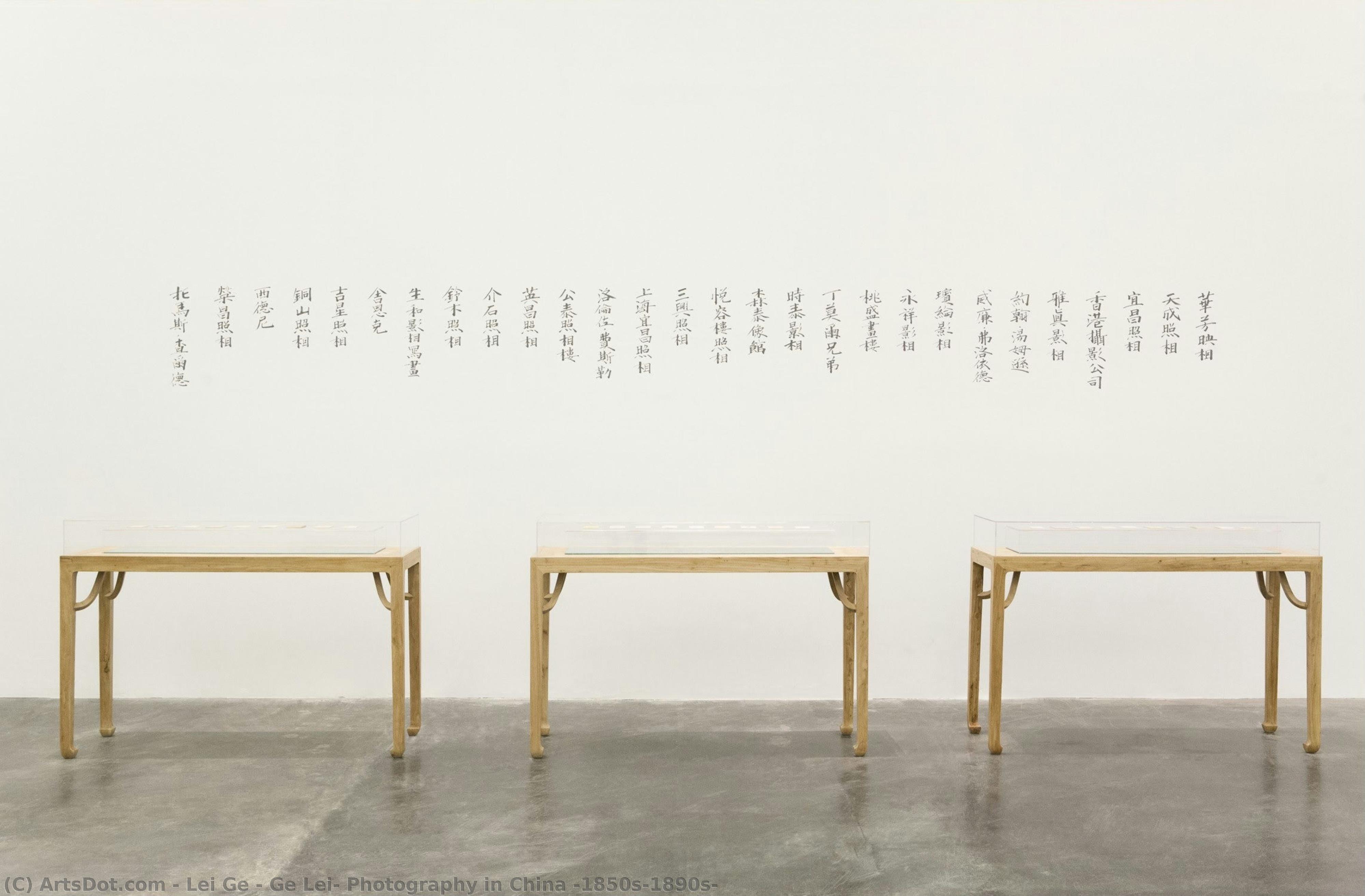
Ge Lei, Photography in China (1850s-1890s)
 136.0 x 96.0 cm
 UCCA Center for Contemporary Art
 Read More
Giclée / Art Print
Museum-quality giclée or canvas print with fast production and flexible finish options. ( Buy Hand Made Painting Buy Image)




































Pick from our preset sizes that match the artwork's original proportions.

You may enter your own dimensions to fit a specific frame or space. If your selected size does not match the original image's proportions, we will either crop the artwork or extend the image with a mirrored or solid-fill edge. A digital mockup will be sent for your approval before production begins.
Please note that the on-screen preview does not reflect the actual cropping or extension. Only the mockup will accurately show the final composition.
While custom sizes are available, we recommend selecting a dimension from the predefined list to preserve the original proportions.
Worldwide Delivery () in 2 weeks instead of standard 4/5 weeks. (30 August)

Free Worldwide Express Shipping

High-Quality Linen Canvas

Full Shipping Insurance

Customs Tax Refund Guarantee

True Color Matching Guarantee

60-Day Return Policy (Defects Only)

100% Money-Back Guarantee

Bulk Discount Offer
 Glass option is only available in size under 110 CM

Ge Lei, Photography in China (1850s-1890s)
Giclée / Art Print
Reproduction Size
-


Total Price
$ 63
Related Artworks






Artist Biography
A Unique Vision: The Photographic Journey of Lei Ge
Born in Jiangsu, China, in 1962, Lei Ge embodies a fascinating intersection of disciplines – an engineer by training and a photographer by passion. His journey is not one traditionally paved for artistic expression; rather, it’s a compelling narrative of intellectual curiosity blossoming into a unique visual voice. While his early academic pursuits focused on electronic engineering—culminating in degrees from Nanjing University of Science and Technology and the Beijing University of Posts and Telecommunications—Ge Lei's path took an unexpected turn, leading him to explore the power of imagery as a means of understanding and interpreting the rapidly changing landscape of contemporary China. He has held significant positions within China Unicom, demonstrating a pragmatic side alongside his artistic endeavors, and is a respected member of the IEEE, highlighting his continued engagement with technological advancements that subtly inform his photographic practice.From Engineering to Imagery: A Perspective Shift
Ge Lei’s work isn't simply about *taking* pictures; it’s about meticulously constructing narratives through them. His approach is deeply rooted in research, often delving into historical archives and societal shifts. This intellectual foundation sets him apart from purely aesthetic photographers. He doesn’t merely capture a moment but excavates layers of meaning embedded within the visual record. A key aspect of his artistic exploration centers around early Chinese photography—specifically, the period between the 1850s and 1890s—a time marked by intense Western influence and the burgeoning of commercial photographic studios across China. Through this investigation, Ge Lei exposes the complex relationship between image-making, capitalism, and the cultural transformations occurring during that era. His work isn’t a nostalgic look back but a critical examination of how photography became intertwined with the forces shaping modern Chinese identity.Themes and Techniques: Unveiling Hidden Histories
The core of Ge Lei's artistic practice lies in his ability to unearth hidden histories and present them through compelling visual arrangements. He often works with found materials—particularly, a vast collection of 35mm color film negatives sourced from recycling zones around Beijing. This archive, containing over half a million images documenting the lives of ordinary people over three decades, serves as the raw material for his animations and collages. These aren’t random assemblages; they are carefully curated compositions that speak to themes of memory, time, and societal change. His projects like “Recycled” demonstrate this beautifully—transforming discarded snapshots into a poignant portrait of Beijing and its inhabitants. Another significant body of work involves cutting patterns from Chinese book covers and creating collages, exploring the interplay between cultural appropriation and artistic reinterpretation. He employs stop-motion animation to document these creative processes, adding another layer of complexity to his investigations.Exhibitions and Recognition: A Growing Legacy
Ge Lei’s work has been showcased in numerous exhibitions across China, solidifying his position as a significant voice in contemporary art. Solo shows at Fei Contemporary Art Center in Shanghai (2010) and H2 Art Space in Chongqing (2007) provided platforms for deeper engagement with his unique aesthetic. Participation in group exhibitions like “HEIQIAO Night Away” (2013), “ON|OFF: China's Young Artists in Concept and Practice” at the Ullens Center for Contemporary Art, Beijing (2013), and various shows at A4 Contemporary Arts Center and Taikang Space further broadened his reach. His exhibitions often prompt viewers to question the nature of representation, the role of archives, and the relationship between art and society. He has also exhibited internationally, including a show in Darwin, Australia, demonstrating a growing global recognition of his artistic vision.Historical Significance: A Contemporary Chronicler
Lei Ge’s contribution to contemporary Chinese art lies not only in his innovative techniques but also in his ability to act as a cultural chronicler. He doesn't simply document the present; he excavates the past, revealing layers of history often overlooked or suppressed. His work challenges conventional notions of artistic creation, blurring the lines between photography, collage, animation, and research. By working with found materials and historical archives, he creates a dialogue between different eras, prompting viewers to reflect on the complexities of Chinese identity and societal transformation. His unique perspective, informed by his background in engineering and his deep intellectual curiosity, positions him as a vital voice in understanding the evolving narrative of China’s visual culture—a photographer who doesn't just show us what *is*, but invites us to contemplate what *was* and what *could be*. His legacy is one of thoughtful exploration, meticulous craftsmanship, and a profound commitment to uncovering hidden truths within the fabric of everyday life.
lei ge
1962 - , China
Quick Facts
- Artistic Movement Or Style: Contemporary photography
- Date Of Birth: 1962
- Full Name: Ge Lei
- Nationality: Chinese
- Notable Artworks:
- Photography in China (1850s-1890s)
- Truth
- da huo ji
- Place Of Birth: Jiangsu, China