

![Les Muzikis De Leopoldville [the Musicians Of Leopoldville] — Lemvo Jean Abou Bakar Depara](/media/artworks/images-full/42/d5/42d5a96c63457b2eb303ee7bc665aa36.jpg)
 Preview
 Send
Send Share
Share
 Details

 Download
 Similars
 X-Ray
X-Ray Diaporama
 Stats
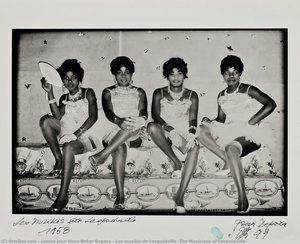
StatsLes muzikis de Leopoldville [The Musicians of Leopoldville]


 Read More
Giclée / Art Print
Museum-quality giclée or canvas print with fast production and flexible finish options. ( Buy Hand Made Painting Switch to Digital Image)




































Pick from our preset sizes that match the artwork's original proportions.

You may enter your own dimensions to fit a specific frame or space. If your selected size does not match the original image's proportions, we will either crop the artwork or extend the image with a mirrored or solid-fill edge. A digital mockup will be sent for your approval before production begins.
Please note that the on-screen preview does not reflect the actual cropping or extension. Only the mockup will accurately show the final composition.
While custom sizes are available, we recommend selecting a dimension from the predefined list to preserve the original proportions.
Worldwide Delivery () in 2 weeks instead of standard 4/5 weeks. (8 September)

Free Worldwide Express Shipping

High-Quality Linen Canvas

Full Shipping Insurance

Customs Tax Refund Guarantee

True Color Matching Guarantee

100-Day Return Policy (Defects Only)

100% Money-Back Guarantee

Bulk Discount Offer
 Glass option is only available in size under 110 CM

Les muzikis de Leopoldville [The Musicians of Leopoldville]
Giclée / Art Print
Reproduction Size
-


Total Price
$ 63
Related Artworks






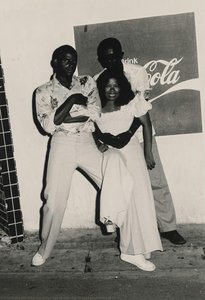
Artist Biography
The Lens of a Legend: The Life and Legacy of Lemvo Jean Abou Bakar Depara
In the vibrant, rhythmic heart of mid-century Kinshasa, where the echoes of rumba and cha-cha danced through the humid night air, one man stood poised with a camera to capture the soul of an era. Lemvo Jean Abou Bakar Depara, known affectionately to many as Depara, was far more than a mere observer; he was a visual chronicler of a golden age. Born in 1928 in Luanda, Angola, his journey into the world of photography began not with formal training, but with a deeply personal impulse. In 1950, driven by the desire to document his own wedding celebration, Depara purchased an Adox camera—a small, pragmatic step that would eventually blossom into a monumental archive of Congolese cultural history.
His early years were shaped by the complexities of Portuguese colonial rule in Angola, yet it was in the Democratic Republic of Congo that his artistic identity truly found its pulse. Before becoming a celebrated photographer, Depara navigated the diverse landscapes of urban survival, working as a bicycle repairman and a scrap metal trader. This immersion in the everyday textures of life provided him with an unparalleled intimacy with his subjects. He did not merely photograph the people of Kinshasa; he lived among them, absorbing the rhythms of the streets, the energy of the marketplaces, and the sophisticated allure of the city's nightlife.
The Architect of Kinshasa’s Visual Rhythm
The trajectory of Depara’s career shifted dramatically in 1954, a moment marked by his appointment as the official photographer for the legendary Zairian singer, Franco. This collaboration placed him at the epicenter of Africa's musical revolution. Through his lens, the smoky atmosphere of iconic bars such as Afro Mogensbo, Champs-Elysées, and Show Boat became immortalized. Depara possessed a rare ability to capture the kinetic energy of the dance floor and the candid, soulful portraits of musicians who were defining a continent's sound. His work during this period serves as a vital historical document, preserving the elegance, fashion, and social nuances of a Kinshasa that was both cosmopolitan and deeply rooted in local tradition.
As his reputation grew, so did the scope of his vision. In 1975, Depara reached a new pinnacle of professional recognition when he became the official photographer for the National Assembly of the Democratic Republic of Congo. This role allowed him to bridge the gap between the raw, electric energy of the nightlife and the formal structures of political life. Yet, despite this institutional prestige, his heart remained in the streets. He was famously known for his charismatic presence, often moving through crowds with a charm that allowed him to capture spontaneous, unposed moments of human connection—a technique that gave his archive its profound sense of authenticity and warmth.
An Enduring Archive of African Identity
The significance of Depara’s work extends far beyond the aesthetic beauty of his compositions. He left behind a vast, untitled archive of negatives that, upon his death in 1997, became a treasure trove for historians and art lovers alike. These images, many of which have been painstakingly identified and presented to the world, offer a window into a period of immense cultural transformation. His work is characterized by:
- Cultural Preservation: Documenting the rise of Congolese rumba and the social fabric of Kinshasa during its most influential decades.
- Humanistic Depth: Moving beyond simple portraiture to capture the dignity, joy, and complexity of the African urban experience.
- Historical Witness: Providing a visual record of the transition from colonial influences to the emergence of a distinct national identity in the DRC.
Today, the legacy of Jean “Whisky” Depara continues to resonate within prestigious collections, such as that of Jean Pigozzi, and in galleries worldwide. He remains a foundational figure in African photography, reminding us that the most powerful histories are often found in the fleeting glances, the rhythmic movements, and the shared celebrations of everyday life. Through his lens, the spirit of Kinshasa remains forever vibrant, eternally captured in the silver halide of his unforgettable archive.
lemvo jean abou bakar depara
1928 - 1997 , Angola
Quick Facts
- Artistic Movement Or Style: Photography
- Artists Or Movements Influenced By This Artist: ['Jean Pigozzi']
- Date Of Birth: 1928 Luanda Angola
- Date Of Death: 1997 Kinshasa DRC
- Full Name: Lemvo Jean Abou Bakar Depara
- Nationality: Angolan
- Notable Artworks: ['Les muzikis de Leopoldville']
- Place Of Birth: Luanda Angola
![Les muzikis de Leopoldville [The Musicians of Leopoldville]](/media/artworks/images-thumb/f1/9f/f19f6664e75e9dba1ebf8fde04c512be.jpg)