

 Preview
 Send
Send Share
Share
 Details

 Download
 Similars
 X-Ray
X-Ray Diaporama
Quevedo and the Skeletons of Juan de la Encina and King Perico
 Oil On Canvas
- WallArt
- Northern Renaissance
 1659
1659 195.0 x 150.0 cm
 Staatliche Graphische Sammlung
 Read More
Purchase a high-resolution, enhanced digital image, far superior to the online preview.
Each file is meticulously prepared by our in-house specialists using advanced tools and expert manual retouching. We ensure every image has exceptional clarity, precise color accuracy, and fine detail.
The final file is delivered via email within 72 hours, optimized for immediate use in professional, editorial, and print environments. This is the same quality trusted by top-tier design studios, publishers, and galleries.
Digital Image
Download a high-resolution file for personal display, printing, and creative projects. ( Buy Print Buy Hand Made Painting)
Included in Every Digital Image Order
Expert Digital Delivery, Guaranteed
When you choose ArtsDot.com, you're not just getting an image - you're receiving a professionally enhanced digital artwork, crafted with precision and backed by a satisfaction guarantee. Here's everything that comes with your order, automatically:

Fast Email Delivery
Your high-resolution digital image file will be emailed to you within 72 hours of ordering - ready for immediate use.

AI-Enhanced Digital File
Your artwork is professionally optimized using advanced AI tools and manual editing, ensuring maximum detail, clarity, and color accuracy.

Free Lifetime Re-Delivery
Accidentally deleted or lost your file? No worries - we'll resend it to you anytime, free of charge.

No Import Fees - Ever
Enjoy your artwork instantly with zero customs, duties, or delivery fees - digital downloads are always tax-free.

Color Accuracy Guarantee
We ensure your digital image reflects the original colors as closely as possible using professional tools and color management.

60-Day Satisfaction Guarantee
If you're not satisfied with your digital image, we'll revise it or refund 100% within 60 days - no questions asked.

100% Money-Back Guarantee
Not satisfied? Get a full refund within 60 days of receiving your digital file - no questions asked.

Bulk Order Discounts
Buy 3 images, save 10% - Buy 5, save 15% - Buy 10+, save 20%. Great for creative projects, galleries, and agencies.
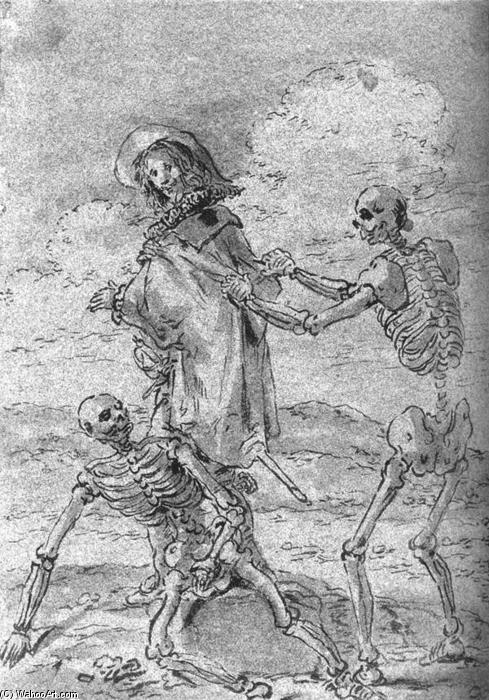
Quevedo and the Skeletons of Juan de la Encina and King Perico
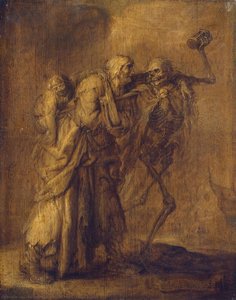
Leonaert Bramer’s “Quevedo and the Skeletons of Juan de la Encina and King Perico,” painted in 1659, transcends mere visual representation; it embodies a profound meditation on mortality, knowledge, and the ephemeral nature of earthly grandeur. Executed with meticulous brushwork and gray ink wash on wood panel, this masterpiece stands as a testament to Bramer’s mastery of Northern Baroque style—a movement characterized by dramatic lighting, opulent textures, and symbolic narratives designed to stir the soul. The artwork's enduring appeal lies not only in its technical brilliance but also in its ability to convey complex philosophical ideas within a captivating visual framework.Composition and Technique: A Triangular Dance of Shadows
The painting’s central focus is a woman draped in flowing robes, positioned slightly above three skeletal figures that dominate the lower portion of the canvas. This deliberate compositional arrangement establishes a triangular structure—a device frequently employed by Baroque artists to convey stability and grandeur while simultaneously hinting at underlying tensions. Bramer skillfully utilizes hatching and cross-hatching techniques to sculpt the rocky outcrop upon which the woman stands, creating convincing illusionistic depth and highlighting the textural contrasts between flesh and bone. Fine lines delineate intricate details in the clothing and skeletal anatomy, demonstrating an unwavering commitment to realism—a hallmark of Bramer’s artistic vision. The cloudy sky serves as a backdrop, casting diffused light that accentuates the shadows and contributes to the painting's overall atmosphere of solemn contemplation.Symbolism: Knowledge Against Decay
The inclusion of skeletons is laden with symbolic significance, representing death and decay – concepts antithetical to the woman’s presence and her grasp of a book. This juxtaposition speaks directly to the core themes explored by Bramer: the confrontation between earthly existence and eternal oblivion. The book itself symbolizes knowledge—wisdom gained through experience and contemplation—a beacon of enlightenment striving to illuminate the darkness of mortality. Furthermore, the depiction of King Perico – a regal figure rendered in muted tones – underscores the vulnerability inherent in even the most powerful rulers before the inevitable march of time. This visual allegory invites viewers to ponder questions about legacy, remembrance, and the enduring power of ideas.Historical Context: Baroque Grandeur and Philosophical Reflection
Painted during the height of the Dutch Golden Age, “Quevedo and the Skeletons” reflects the intellectual ferment of the period—a time marked by burgeoning scientific inquiry alongside a renewed interest in classical philosophy and religious contemplation. Bramer’s work aligns with the Baroque tradition's penchant for dramatic narratives infused with moral lessons, mirroring the broader cultural preoccupation with confronting existential anxieties. The painting’s stylistic choices – particularly its use of chiaroscuro (the interplay of light and shadow) – echo the influence of Caravaggio and other pioneering artists who sought to evoke emotion through visual spectacle. It stands as a poignant reminder that even amidst worldly ambition and splendor, the contemplation of mortality remains an inescapable human experience.Emotional Impact: A Momentary Pause Before Eternity
Ultimately, “Quevedo and the Skeletons” compels viewers to confront uncomfortable truths about life’s fragility and the importance of cultivating wisdom—a message conveyed with remarkable subtlety through its visual language. The painting's subdued palette – dominated by shades of gray – reinforces the mood of melancholy and solemn reflection, inviting contemplation on themes of loss, remembrance, and the pursuit of spiritual understanding. It is a work that lingers in the mind long after viewing, prompting introspection and fostering an appreciation for the beauty inherent in acknowledging the boundaries of human existence.Related Artworks



Artist Biography
A Life Illuminated: The World of Leonaert Bramer
Leonaert Bramer, a name resonating with the echoes of 17th-century Delft, was more than just a painter; he was an adventurer, innovator, and a pivotal figure in the Dutch Golden Age. Born in 1596, his life unfolded as a compelling narrative woven with extensive travel, artistic experimentation, and deep engagement within the vibrant cultural tapestry of his time. Bramer’s legacy isn't simply defined by the canvases he filled but by the unique perspective he brought to them – a penchant for dramatic nocturnal scenes infused with exotic details that set him apart from many of his contemporaries. He wasn’t merely depicting reality; he was crafting worlds steeped in atmosphere and intrigue, earning him the evocative moniker “Leonardo della Notte” or "Leonardo of the Night" during his sojourn in Italy.From Delft to Rome: A Journey of Artistic Formation
Bramer's artistic journey began with a bold departure from his native Delft at the tender age of eighteen, embarking on a grand tour that would shape his aesthetic sensibilities. This wasn’t a leisurely exploration but an immersive apprenticeship in the heart of European art centers. Passing through cities like Atrecht, Amiens, and Paris, he eventually arrived in Rome in 1616, a crucible for artistic ambition. There, he joined the ranks of the *Bentvueghels*, a society of Northern artists who adopted satirical nicknames and engaged in lively intellectual discourse. Bramer became known as “Nestelghat” (Fidget), hinting at a restless energy that permeated both his life and art. His time in Italy wasn’t without its clashes; accounts detail a physical altercation with the renowned Claude Lorraine, demonstrating a passionate spirit unafraid of confrontation. However, it was within this dynamic environment that Bramer honed his skills, mastering fresco painting – a technique relatively uncommon in Northern Europe – while absorbing the influence of masters like Adam Elsheimer and Agostino Tassi. He traveled extensively throughout Italy, visiting Mantua and Venice, each location adding another layer to his developing style.Return to Delft: Patronage, Innovation, and Artistic Versatility
Returning to Delft in 1628, Bramer seamlessly integrated into the local art scene, joining the Guild of Saint Luke in 1629. He quickly garnered patronage from prominent figures, including members of the House of Orange and influential local officials, securing a stable foundation for his artistic endeavors. But Bramer was no one-dimensional artist; he embraced diverse creative pursuits beyond painting. He designed intricate patterns for tapestry firms, creating works that adorned homes across the Netherlands. Furthermore, he undertook ambitious mural projects, employing illusionistic techniques to transform interior spaces into immersive environments. Sadly, many of these frescos were lost over time due to the harsh Dutch climate, but their existence testifies to Bramer’s remarkable versatility and willingness to push artistic boundaries. His unique style, characterized by a nervous energy and masterful depiction of light reflection, consistently favored Italianate themes over the more conventional Dutch landscapes or still lifes, marking him as an individualist within his milieu.A Mentor's Touch: Bramer’s Influence and Lasting Legacy
Bramer’s influence extended beyond his own artistic output. He is believed to have played a crucial role in the early career of Johannes Vermeer, defending the young artist when his future mother-in-law attempted to prevent his marriage. This act suggests a close relationship, leading many scholars to speculate that Bramer may have served as Vermeer’s teacher – though concrete evidence remains elusive. His intellectual curiosity was further demonstrated through the creation of the “Album Bramer” (1642-1654), a collection of drawings offering invaluable insights into the art collections and artistic practices prevalent in Delft during his time. Leonaert Bramer passed away in Delft before February 10, 1674, leaving behind a body of work that continues to captivate and intrigue. While his fame waned for a period after his death, recent scholarship has sparked renewed interest in his life and art, solidifying his position as an important – and often overlooked – figure in Dutch artistic history. He remains a testament to the power of individual vision and the enduring allure of a life lived in pursuit of artistic excellence.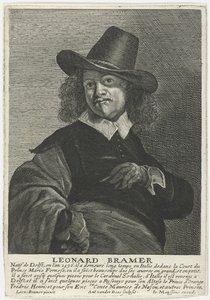
Leonaert Bramer
1596 - 1674 , Netherlands
Quick Facts
- Artistic Movement Or Style: Baroque
- Artists Or Movements Influenced By This Artist: ['Johannes Vermeer']
- Artists Who Influenced This Artist:
- Adam Elsheimer
- Agostino Tassi
- Date Of Birth: 1596
- Date Of Death: 1674
- Full Name: Leonaert Bramer
- Nationality: Dutch
- Notable Artworks:
- St Peter’s Denial
- Pashur Smiting Jeremiah
- The Judgment of Solomon
- Place Of Birth: Delft, Netherlands

