 Preview
 Send
Send Share
Share
 Details

 Download
 Similars
 X-Ray
X-Ray Diaporama
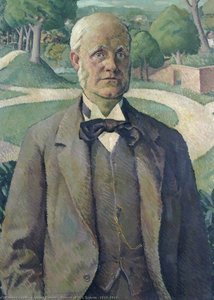
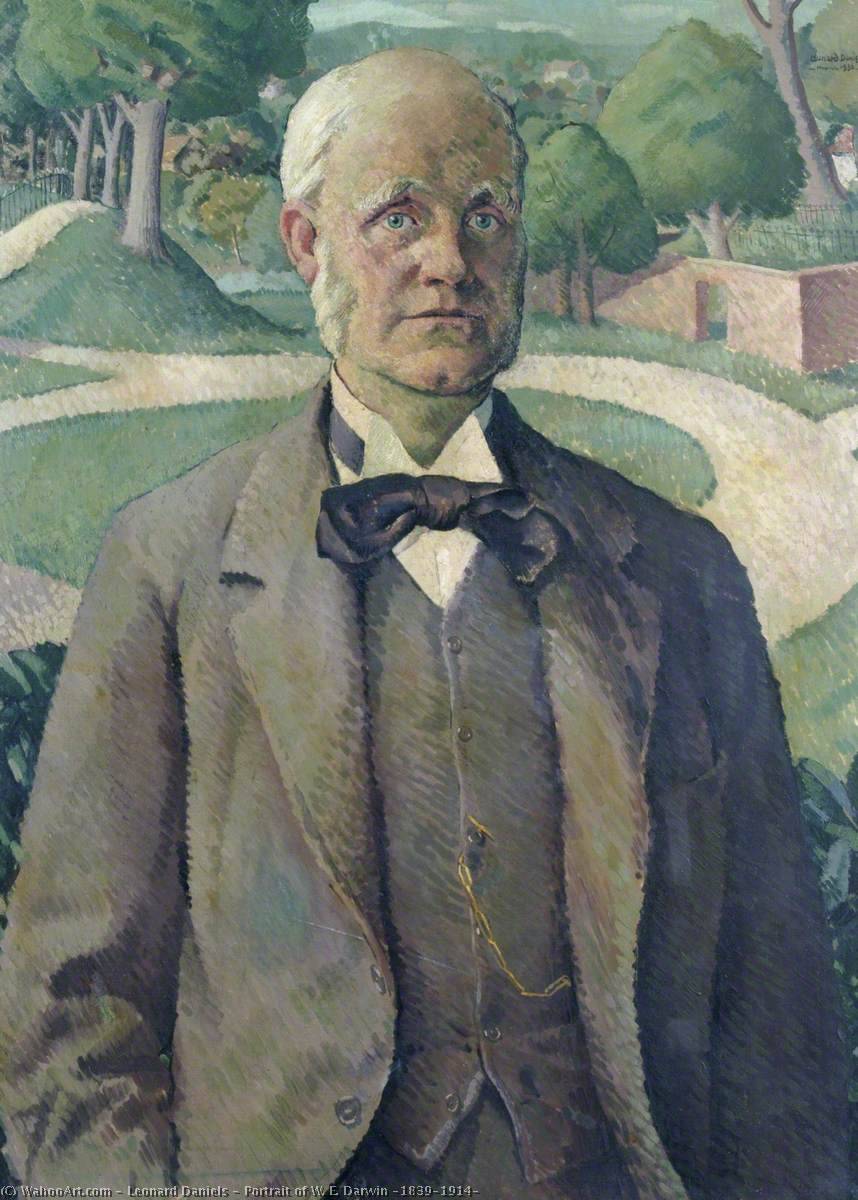
Portrait of W. E. Darwin (1839–1914)
 1936
1936 90.0 x 66.0 cm
 Read More
Hand Made Oil Reproduction
Hand-painted oil on canvas in your size and frame, made to order by our artists. ( Buy Print Buy Image)




































Pick from our preset sizes that match the artwork's original proportions.

You may enter your own dimensions to fit a specific frame or space. If your selected size does not match the original image's proportions, we will either crop the artwork or extend the painting with additional hand-painted elements. A digital mockup will be sent for your approval before production begins.
Please note that the on-screen preview does not reflect the actual cropping or extension. Only the mockup will accurately show the final composition.
While custom sizes are available, we recommend selecting a dimension from the predefined list to preserve the original proportions.
After order, ArtsDot.com team will email client for instructions and provide a mockup preview
Worldwide Delivery () in 3/4 weeks instead of standard 5 weeks. (2 September). No compromise on quality.

Free Worldwide Express Shipping

High-Quality Linen Canvas

Full Shipping Insurance

Customs Tax Refund Guarantee

True Color Matching Guarantee

60-Day Return Policy (Defects Only)

100% Money-Back Guarantee

Bulk Discount Offer
 Glass option is only available in size under 110 CM

Portrait of W. E. Darwin (1839–1914)
Reproduction Medium
Reproduction Size
-


Total Price
$ 263
Related Artworks










Artist Biography
A Legacy of Line and Light: The Life of Leonard Daniels
The story of Leonard Daniels is one of profound duality, where the disciplined vigor of an athlete met the sensitive eye of a master portraitist. Born in London in 1909, Daniels possessed a spirit that thrived on both physical endurance and creative exploration; he was as much at home as a long-distance cyclist and runner as he was within the quiet confines of an art studio. His formative education, spanning the Holloway School and the Regent Street Polytechnic, eventually led him to the prestigious Royal College of Art. It was here, between 1929 and 1932, that his burgeoning talent was formally recognized when he secured the portrait prize, a distinction that signaled the arrival of an artist capable of capturing the very essence of human character through remarkable sensitivity.
Daniels’ artistic sensibilities were deeply rooted in the traditions of the past, particularly the luminous landscapes and meticulous detail of the Dutch Golden Age. This early fascination with light and texture became a cornerstone of his oeuvre, informing a style that balanced realism with an evocative, atmospheric quality. His career was not merely one of solitary creation but also of profound influence through education. As he moved through various teaching posts—from Taunton's School in Southampton to the Leeds College of Ser Art—he established himself as a pillar of the British art community, fostering talent and shaping the pedagogical landscape of mid-century art instruction.
Resilience Amidst the Shadows of War
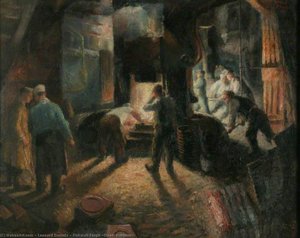
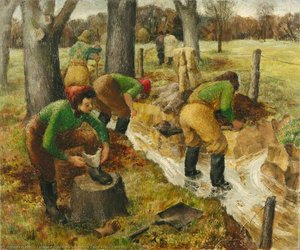
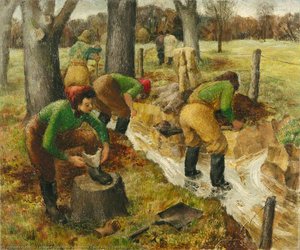
The turbulence of World War II provided a poignant backdrop to Daniels’ creative output. During this era, his role transitioned from educator to vital documentarian. Serving as the head of painting at Leeds College of Art, he undertook significant commissions for the War Artists’ Advisory Committee. His watercolors from this period are particularly moving; they do not merely record events but capture the grit and resilience of the British spirit. Through his lens, the daily realities of wartime life—the heavy industry of the Kirkstall Forge and the tireless labor of the Women's Land Army—were transformed into evocative narratives of endurance and hardship.
Even personal tragedy could not dampen his commitment to the arts. A severe fencing accident in 1942, which left him temporarily unable to use his left arm and leg, redirected his path, ultimately leading him away from military service and toward a deeper focus on academic leadership. This period of physical recovery coincided with a period of immense professional growth, as he navigated the complexities of maintaining artistic continuity during one of the most transformative decades in modern history.
The Architect of Camberwell
Perhaps the most enduring chapter of Daniels’ life began in 1948, when he was appointed Principal of the Camberwell School of Arts and Crafts. His tenure, which lasted over three decades, remains a golden era for the institution. Daniels was more than an administrator; he was a visionary curator of talent. Under his stewardship, Camberwell became a crucible of modern British art, as he successfully recruited and nurtured a faculty of luminaries including:
- Edward Ardizzone
- William Coldstream
- Claude Rogers
- Victor Pasmore
- Richard Eurich
Through his leadership, Daniels ensured that the school was not merely a place of instruction but a vibrant center of artistic innovation. His ability to blend traditional excellence with contemporary progress allowed Camberwell to flourish, leaving an indelible mark on the trajectory of British art education. Even after his retirement in 1975, the echoes of his dedication remained, as he continued to paint and teach, embodying the lifelong pursuit of beauty and truth that defined his remarkable journey from a young student in London to one of the most respected figures in the British art world.
leonard daniels
1909 - 1998
Quick Facts
- Artistic Movement Or Style: Floral Painting Style
- Artists Or Movements Influenced By This Artist: ['Royal College Art']
- Artists Who Influenced This Artist: ['Gilbert Spencer']
- Date Of Birth: 1909
- Date Of Death: 1998
- Full Name: Leonard Daniels Philpot
- Nationality: British
- Notable Artworks: ["June's Largesse"]
- Place Of Birth: London