 Preview
 Send
Send Share
Share
 Details

 Download
 Similars
 X-Ray
X-Ray Diaporama
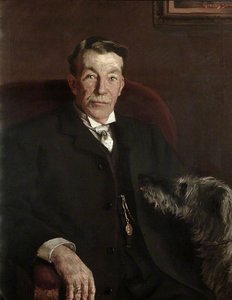
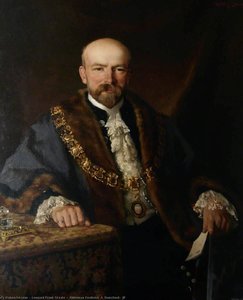
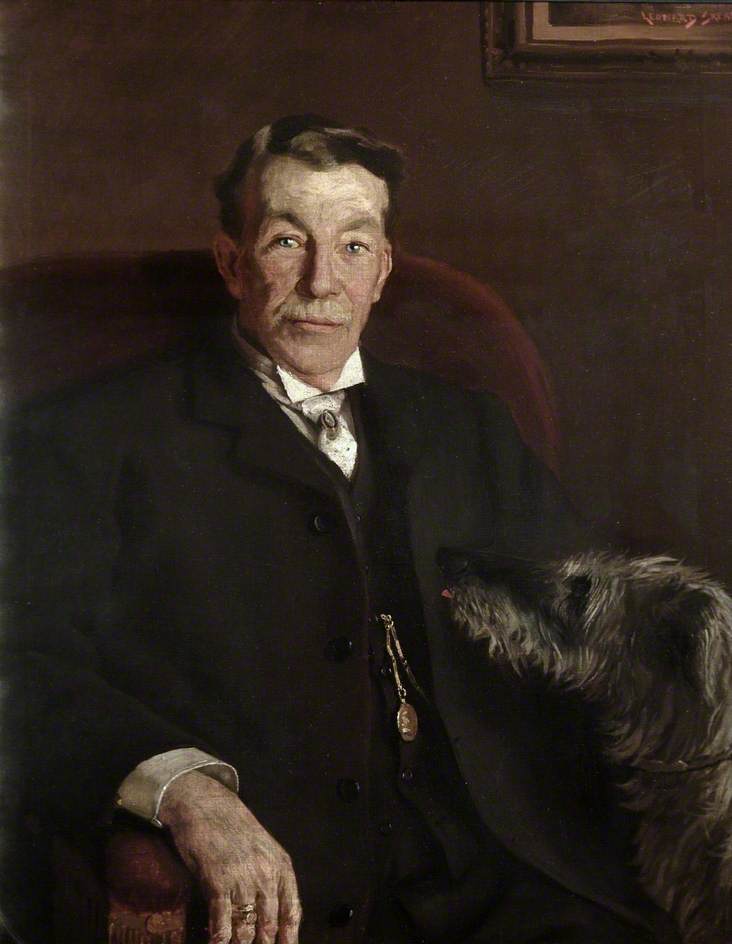
Major Charles Edward Davis (1827–1902), with His Dog
 92.0 x 71.0 cm
 Bath Guildhall
 Read More
Hand Made Oil Reproduction
Hand-painted oil on canvas in your size and frame, made to order by our artists. ( Buy Print Buy Image)




































Pick from our preset sizes that match the artwork's original proportions.

You may enter your own dimensions to fit a specific frame or space. If your selected size does not match the original image's proportions, we will either crop the artwork or extend the painting with additional hand-painted elements. A digital mockup will be sent for your approval before production begins.
Please note that the on-screen preview does not reflect the actual cropping or extension. Only the mockup will accurately show the final composition.
While custom sizes are available, we recommend selecting a dimension from the predefined list to preserve the original proportions.
After order, ArtsDot.com team will email client for instructions and provide a mockup preview
Worldwide Delivery () in 3/4 weeks instead of standard 5 weeks. (27 August). No compromise on quality.

Free Worldwide Express Shipping

High-Quality Linen Canvas

Full Shipping Insurance

Customs Tax Refund Guarantee

True Color Matching Guarantee

60-Day Return Policy (Defects Only)

100% Money-Back Guarantee

Bulk Discount Offer
 Glass option is only available in size under 110 CM

Major Charles Edward Davis (1827–1902), with His Dog
Reproduction Medium
Reproduction Size
-


Total Price
$ 263
Related Artworks







Artist Biography
The Luminous Legacy of Leonard Frank Skeats
In the quiet, sun-drenched corners of the early twentieth century, few artists captured the ephemeral dance of light and shadow with as much tender precision as Leonard Frank Skeates. Born on June 9th, 1874, in the coastal town of Southampton, Hampshire, Skeats carried within him a dual heritage of technical rigor and artistic sensitivity. His father, Frank George Skeats, a meticulous draughtsman for the Ordnance Survey Office, provided the foundation for Leonard’s disciplined eye, while his mother, Alice Emma Martin, infused his early world with a deep-seated appreciation for aesthetic tradition. This unique upbringing prepared him for a life spent translating the subtle textures of the natural world onto canvas, moving seamlessly between the roles of a successful illustrator and a profound painter of the Pennsylvania Impressionist movement.
Skeats’s artistic odyssey was one of continuous refinement and geographical expansion. After receiving his Art Master’s Certificate from Hartley College in 1897, he journeyed to the prestigious Royal College of Art School in London. It was here that his brushwork began to absorb the revolutionary spirit of the age. Under the tutelage of masters such as Jean Paul Laurens and Benjamin Constant, Skeats was introduced to the transformative power of Impressionistic ideals. These mentors encouraged him to look beyond mere representation, teaching him to experiment with color temperature and atmospheric perspective to evoke the true essence of a moment. His early exhibitions in Southampton, featuring works like “The Angel Appearing to the Shepherds”, revealed an emerging mastery of tonal variation that would become his hallmark.
A Vision of Rural Tranquility and Light
As his career progressed, Skeats’s work became a profound meditation on the serenity of rural landscapes. While he maintained a respected presence in the West Country of England between 1900 and 1930, his artistic soul resonated deeply with the American landscape traditions. His paintings are characterized by an ability to freeze time, capturing the stillness of a meadow or the soft glow of a fading afternoon. He did not merely paint scenery; he painted the atmosphere itself—the heavy humidity of a summer day, the crisp clarity of autumn air, and the way light filters through dense foliage.
The technical brilliance of his work lies in several key elements:
- Atmospheric Perspective: The use of subtle shifts in color and clarity to create an immense sense of depth within a two-dimensional plane.
- Tonal Nuance: A sophisticated command over light and shadow, allowing him to convey emotion through the weight and warmth of his palette.
- Impressionistic Brushwork: A delicate balance between controlled detail and expressive, fluid strokes that mimic the movement of nature.
Historical Significance and Enduring Influence
Though often overshadowed by more commercially famous contemporaries, the historical significance of Leonard Frank Skeats lies in his role as a bridge between European academic training and the burgeoning American Impressionist movement. His work serves as a vital link to the Pennsylvania Impressionists, a group dedicated to capturing the sublime beauty of the American countryside. Today, his paintings are cherished by collectors and institutions alike, most notably within the Payne Gallery at Moravian University, where his ability to evoke peace and nostalgia continues to inspire new generations of art lovers.
Skeats passed away in 1943, leaving behind a body of work that remains a testament to the enduring power of observation. His legacy is not found merely in the pigments on a canvas, but in the way he taught us to pause and witness the quiet, magnificent beauty of the world around us. Through his eyes, the landscape is never just earth and sky; it is a living, breathing tapestry of light, memory, and profound tranquility.
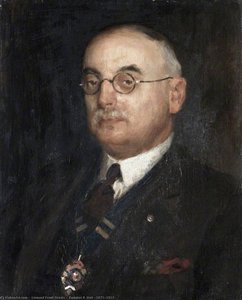
leonard frank skeats
1874 - 1943
Quick Facts
- Artistic Movement Or Style: Pennsylvania Impressionist
- Artists Or Movements Influenced By This Artist: ['Pennsylvania Impressionism']
- Artists Who Influenced This Artist:
- Jean Paul Laurens
- Benjamin Constant
- Date Of Birth: 1874
- Date Of Death: 1943
- Full Name: Leonard Frank Skeats
- Nationality: British
- Notable Artworks:
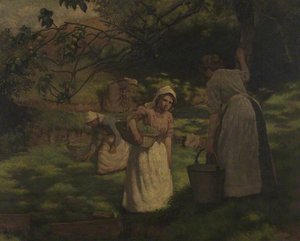
- Watercress Gatherers
- Major Charles Edward Davis (1827–1902), with His Dog
- Place Of Birth: Southampton