 Preview
 Send
Send Share
Share
 Details

 Download
 Similars
 X-Ray
X-Ray Diaporama
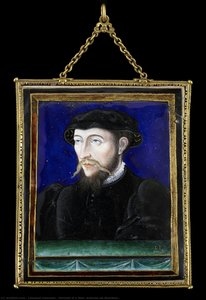
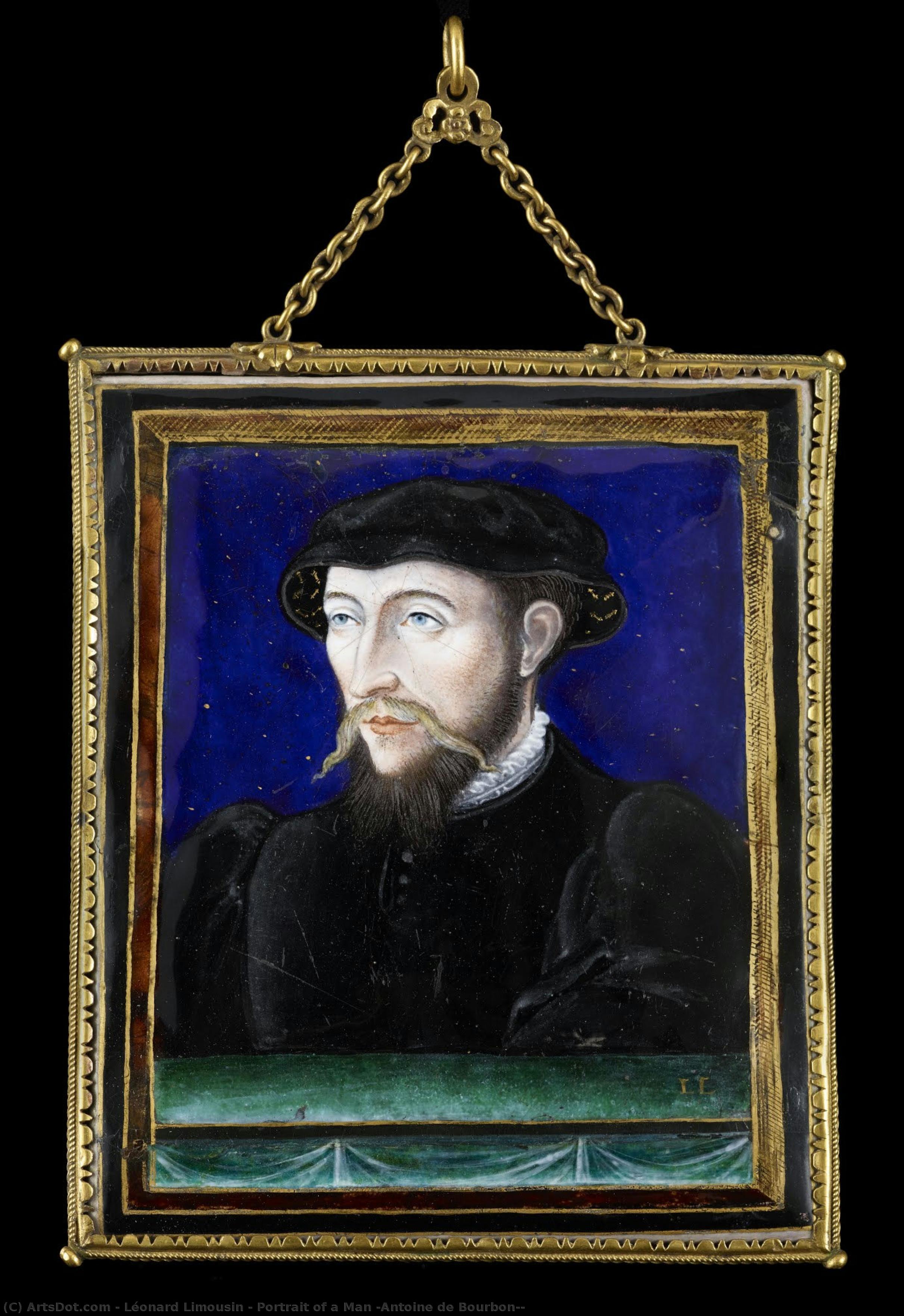
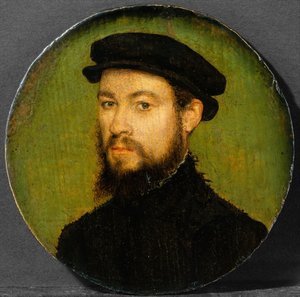
Portrait of a Man (Antoine de Bourbon?)
 1560
1560 13.0 x 11.0 cm
 The Frick Collection
 Read More
Giclée / Art Print
Museum-quality giclée or canvas print with fast production and flexible finish options. ( Buy Hand Made Painting Buy Image)




































Pick from our preset sizes that match the artwork's original proportions.

You may enter your own dimensions to fit a specific frame or space. If your selected size does not match the original image's proportions, we will either crop the artwork or extend the image with a mirrored or solid-fill edge. A digital mockup will be sent for your approval before production begins.
Please note that the on-screen preview does not reflect the actual cropping or extension. Only the mockup will accurately show the final composition.
While custom sizes are available, we recommend selecting a dimension from the predefined list to preserve the original proportions.
Worldwide Delivery () in 2 weeks instead of standard 4/5 weeks. (24 August)

Free Worldwide Express Shipping

High-Quality Linen Canvas

Full Shipping Insurance

Customs Tax Refund Guarantee

True Color Matching Guarantee

60-Day Return Policy (Defects Only)

100% Money-Back Guarantee

Bulk Discount Offer
 Glass option is only available in size under 110 CM

Portrait of a Man (Antoine de Bourbon?)
Giclée / Art Print
Reproduction Size
-


Total Price
$ 63
Collectible Description
Related Artworks






Artist Biography
The Luminous Craft of Léonard Limousin
To encounter the work of Léonard Limousin is to step into a world where artistry and metallurgy achieved a breathtaking, luminous union. He was more than merely a painter; he was a master artisan whose touch transformed enamel—a delicate marriage of glass and metal—into narratives of profound beauty. As a prominent figure within a celebrated family of Limoges enamel painters, his skill placed him at the zenith of French decorative arts during the Renaissance. Though born in France, his artistic journey was one of rich absorption, drawing inspiration from disparate cultural wells to forge a style uniquely his own.
Echoes of Influence and Early Mastery
Limousin’s early development reveals a fascinating dialogue between geographical influences. While his foundational training may have been rooted in the traditions of the German school, evidenced by his early plaques depicting the Passion of the Lord after Albrecht Dürer, his vision was rapidly broadened. His exposure to the grand masters of Italy—artists such as Primaticcio, Rosso, Giulio Romano, and Andrea Solari—imprinted upon him a deep appreciation for arabesque ornamentation and the rich mythology that permeated Italian Renaissance art. Yet, what distinguishes Limousin is how he managed this influx of foreign styles; his inherent French tradition proved strong enough to anchor his genius, preventing him from becoming a mere echo of others.
Royal Patronage and Artistic Zenith
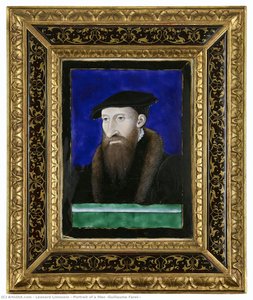
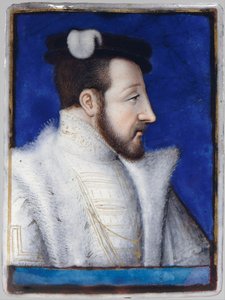
His career blossomed under the patronage of royalty, solidifying his reputation as an artist of immense consequence. Entering the service of Francis I, where he served not only as a painter but also as a varlet de chambre, Limousin maintained this esteemed position through the reign of Henry II. It was during these years that his technical prowess shone brightest across various commissions. He created exquisite portraits in enamel, notably those depicting figures like Diane de Poitiers in diverse guises. His output spanned an array of forms—from grand plaques and elegant vases to delicate ewers and cups—all destined for the most magnificent royal palaces.
Enduring Legacy on Sacred Art
Perhaps the most enduring testament to his genius lies within the sacred commissions. The two famous votive tablets housed at the Sainte Chapelle in the Louvre stand as monumental achievements, each comprising twenty-three plaques and bearing his signature, L.L., dated 1553. These works showcase his ability to merge intense religious devotion with unparalleled technical finesse. Beyond these masterpieces, representative examples of his breathtaking enamel work can be found in the collections at Cluny and the Limoges museums, while institutions such as the Victoria and Albert Museum and the British Museum further attest to the breadth and quality of his contribution to art history.
léonard limousin
France
Quick Facts
- Artistic Movement Or Style: World Goes Pop
- Artists Or Movements Influenced By This Artist: ['Influenced by pop art movement']
- Artists Who Influenced This Artist: ['Influenced by diverse artists in The World Goes Pop exhibition']
- Date Of Death: Living
- Notable Artworks: ['Various works featured in The World Goes Pop exhibition']
- Place Of Birth: WahooArt