 Preview
 Send
Send Share
Share
 Details

 Download
 Similars
 X-Ray
X-Ray Diaporama
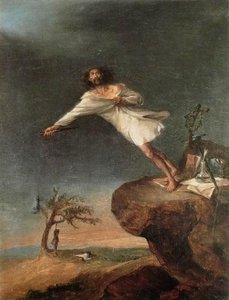
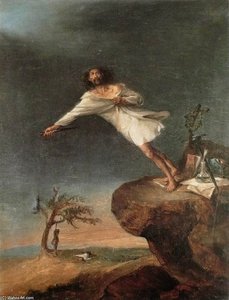
Great god
 Read More
Hand Made Oil Reproduction
Hand-painted oil on canvas in your size and frame, made to order by our artists. ( Buy Print Buy Image)




































Pick from our preset sizes that match the artwork's original proportions.

You may enter your own dimensions to fit a specific frame or space. If your selected size does not match the original image's proportions, we will either crop the artwork or extend the painting with additional hand-painted elements. A digital mockup will be sent for your approval before production begins.
Please note that the on-screen preview does not reflect the actual cropping or extension. Only the mockup will accurately show the final composition.
While custom sizes are available, we recommend selecting a dimension from the predefined list to preserve the original proportions.
After order, ArtsDot.com team will email client for instructions and provide a mockup preview
Worldwide Delivery () in 3/4 weeks instead of standard 5 weeks. (23 August). No compromise on quality.

Free Worldwide Express Shipping

High-Quality Linen Canvas

Full Shipping Insurance

Customs Tax Refund Guarantee

True Color Matching Guarantee

60-Day Return Policy (Defects Only)

100% Money-Back Guarantee

Bulk Discount Offer
 Glass option is only available in size under 110 CM

Great god
Reproduction Medium
Reproduction Size
-


Total Price
$ 263
Related Artworks









Artist Biography
Angelica Kauffman: A Swiss Pioneer in the World of Art
Born Maria Anna Angelika Kauffmann on October 30, 1741, in Chur, Switzerland, Angelica Kauffman’s life was a testament to ambition and artistic determination. Her early years were marked by a nomadic existence, shaped by her father, Joseph Johann Kauffmann, a skilled muralist who traveled extensively throughout Europe. This itinerant upbringing exposed young Angelica to diverse artistic styles and cultures, laying the foundation for her own distinctive approach. Unlike many women of her time, she received formal training in painting, initially under her father and later with renowned artists like Louis-Joseph Dorval in Florence – a city that profoundly influenced her Neoclassical style. Her mother’s early death at the age of twelve fueled Angelica's resolve to pursue a career in art, defying societal expectations that typically confined women to domestic roles.
Angelica’s talent quickly blossomed, and she gained recognition for her portraits and landscapes. She mastered the techniques of both oil painting and watercolor, demonstrating remarkable versatility. Her early works often featured idyllic scenes of Swiss life, imbued with a sense of romanticism and natural beauty. However, it was her move to London in 1786 that truly cemented her international reputation. She established herself as a leading figure in the British art scene, exhibiting at the Royal Academy and securing commissions from prominent patrons. Her ability to capture both the grandeur of historical subjects and the intimate details of portraiture quickly garnered critical acclaim.
Neoclassicism and the Power of Narrative
Angelica Kauffman’s artistic style is firmly rooted in Neoclassicism, a movement that sought inspiration from the art and ideals of ancient Greece and Rome. She skillfully employed clear lines, balanced compositions, and restrained color palettes to create works that were both elegant and intellectually stimulating. Her paintings frequently depicted historical events and mythological scenes, often imbued with moral lessons or allegorical meanings. Unlike the Rococo style prevalent at the time, which emphasized frivolity and ornamentation, Kauffman’s work prioritized clarity, order, and a sense of civic virtue – values highly valued during the Enlightenment.
Her ability to render human figures with anatomical accuracy and emotional depth was particularly noteworthy. She meticulously studied classical sculpture and architecture, striving to emulate their idealized forms and proportions. Furthermore, she demonstrated a keen understanding of theatrical staging, using dramatic lighting and carefully arranged settings to heighten the narrative impact of her compositions. Her paintings weren’t merely decorative; they were designed to communicate complex ideas and evoke powerful emotions.
Key Works and Notable Commissions
Throughout her career, Angelica Kauffman produced a remarkable body of work, including numerous portraits, historical scenes, and landscapes. Some of her most celebrated paintings include *Portrait of Ludwig, Crown Prince of Bavaria* (1793), a meticulously rendered depiction of the young royal; *The Marriage of Isis and Osiris* (1798), a dramatic interpretation of Egyptian mythology; and *Portrait of William Blake* (1795), a striking portrayal of the visionary poet. Her work for the Borghese Gallery in Rome, including the acquisition of Scipione Borghese’s Antinous Mondragone bust, showcased her ability to integrate classical antiquities into contemporary artistic settings.
Her commissions extended beyond portraiture and historical paintings. She designed decorative panels for private residences and public buildings, demonstrating her versatility as a designer and her understanding of architectural principles. She also produced numerous watercolors, often depicting landscapes and scenes from everyday life – works that reveal a softer, more intimate side to her artistic personality.
Legacy and Historical Significance
Angelica Kauffman’s career was remarkable for its time, particularly considering the significant barriers faced by women artists. She achieved international recognition as a professional painter, a rare accomplishment in the 18th and early 19th centuries. Her success paved the way for future generations of female artists to pursue careers in the visual arts.
She was one of the two founding members of the Royal Academy of Arts in London (along with Mary Moser) in 1768, a watershed moment in the recognition of women’s contributions to the art world. Her work continues to be studied and admired for its technical skill, artistic merit, and enduring appeal. Angelica Kauffman's legacy lies not only in her individual achievements but also in her role as a pioneer who challenged conventional norms and demonstrated the extraordinary potential of female artists.
She died on November 5, 1807, leaving behind a substantial body of work that continues to captivate audiences today. Her life and art serve as an inspiring reminder of the power of talent, determination, and artistic vision.
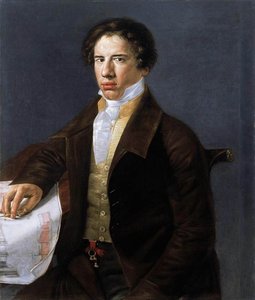
leonardo alenza y nieto
1807 - 1845 , Spain
Quick Facts
- Artistic Movement Or Style: Neoclassicism
- Artists Who Influenced This Artist: ['Joseph Johann Kauffmann],\n "Artists or movements influenced by this artist": ["William Blake"]\n}']
- Date Of Birth: 30 Oct 1741
- Date Of Death: 5 Nov 1807
- Full Name: Angelica Kauffman
- Nationality: Swiss
- Notable Artworks:
- Antinous Mondragone
- Portrait of Ludwig
- The Coronation of Napoleon
- Place Of Birth: Chur, Switzerland