 Preview
 Send
Send Share
Share
 Details

 Download
 Similars
 X-Ray
X-Ray Diaporama
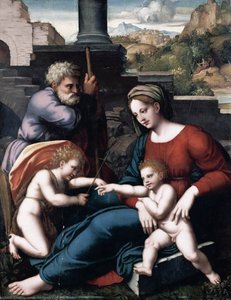
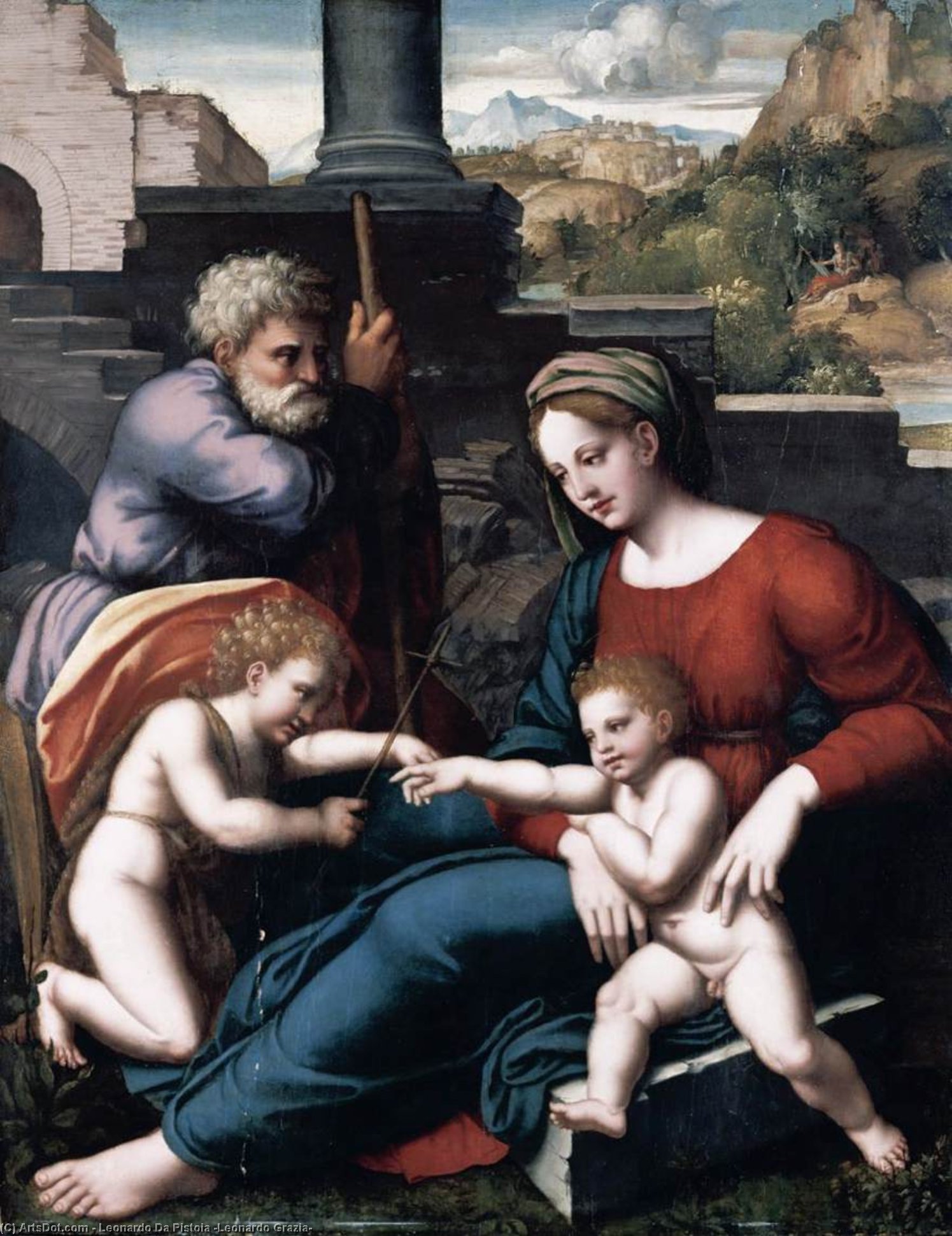
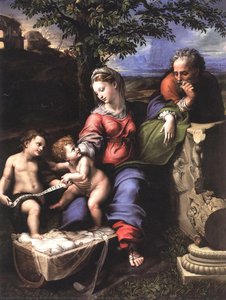
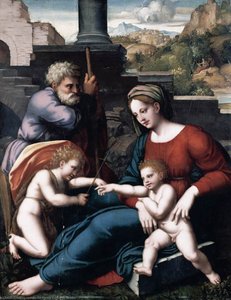
The Holy Family with the Infant St John
 112.0 x 87.0 cm
 Read More
Giclée / Art Print
Museum-quality giclée or canvas print with fast production and flexible finish options. ( Buy Hand Made Painting Buy Image)




































Pick from our preset sizes that match the artwork's original proportions.

You may enter your own dimensions to fit a specific frame or space. If your selected size does not match the original image's proportions, we will either crop the artwork or extend the image with a mirrored or solid-fill edge. A digital mockup will be sent for your approval before production begins.
Please note that the on-screen preview does not reflect the actual cropping or extension. Only the mockup will accurately show the final composition.
While custom sizes are available, we recommend selecting a dimension from the predefined list to preserve the original proportions.
Worldwide Delivery () in 2 weeks instead of standard 4/5 weeks. (28 August)

Free Worldwide Express Shipping

High-Quality Linen Canvas

Full Shipping Insurance

Customs Tax Refund Guarantee

True Color Matching Guarantee

60-Day Return Policy (Defects Only)

100% Money-Back Guarantee

Bulk Discount Offer
 Glass option is only available in size under 110 CM

The Holy Family with the Infant St John
Giclée / Art Print
Reproduction Size
-


Total Price
$ 63
Related Artworks
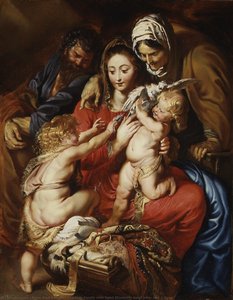
Artist Biography
The Enigmatic Soul of Mannerism: Leonardo da Pistoia
In the turbulent transition between the serene perfection of the High Renaissance and the expressive distortions of the Mannerist era, few figures embody the period's psychological complexity as profoundly as Leonardo da Pistoia. Often known to art historians by his more lyrical name, Leonardo Grazia, this Italian master navigated a world where the balanced harmonies of Raphael were giving way to a new, restless energy. Born in the Tuscan city of Pistoia around 1502, Leonardo’s life and work serve as a bridge between classical stability and the dramatic, often unsettling, emotionality that would define the mid-16th century.
The early trajectory of his career was marked by a deep immersion in the Roman artistic landscape. While historical records occasionally blur his identity with other painters of the same name, Leonardo’s presence in Rome is undeniable. Working under Gianfrancesco Penni, a key collaborator of Raphael, Leonardo functioned as a skilled copyist of the High Renaissance masters. This period of intense study allowed him to absorb the grace and anatomical precision of the previous generation, yet even within these classical frameworks, one can detect the seeds of his later, more idiosyncratic style. His movement from Rome to Naples would eventually allow him to transplant these Florentine and Roman influences into a new, vibrant Mediterranean context.
A Mastery of Tension and Emotion
As Leonardo’s hand matured, he moved away from mere imitation toward a highly personal aesthetic characterized by tension, elongated proportions, and a deliberate manipulation of space. This was the essence of Mannerism—a rejection of the optical accuracy that had dominated the previous decades in favor of an art that prioritized emotional impact and intellectual depth. His paintings do not merely depict scenes; they evoke moods of spiritual longing and physical dynamism.
His technical prowess is most evident in his ability to manipulate color and light to heighten drama. Rather than relying on the soft, even lighting of the early Renaissance, Leonardo utilized:
- Unsettling contrasts that cast figures into sharp, dramatic relief.
- Muted yet rich palettes that suggest a sense of melancholy or divine mystery.
- Complex compositions where limbs and drapery flow in rhythmic, almost choreographed patterns to guide the viewer's eye through a labyrinth of movement.
One of his most significant achievements can be seen in his contributions to the sacred spaces of Naples. During his time in this southern capital, he painted for prestigious religious institutions such as San Domenico Maggiore and Monte Oliveto. These works were not merely decorations but profound theological statements, utilizing the expressive power of Mannerism to connect the faithful with the divine through awe and emotional resonance.
Legacy and Historical Significance
Though history has sometimes struggled to separate Leonardo da Pistoia from his contemporaries, his influence on the Neapolitan school is a vital chapter in the story of Italian art. As a teacher, he helped shape the next generation of masters, including Girolamo Siciolante da Sermoneta and Francesco Curia, ensuring that the stylistic innovations he championed would endure. His ability to synthesize the classical grace of his Roman training with the burgeoning expressive needs of the Mannerist movement allowed him to create a body of work that remains both intellectually stimulating and visually arresting.
Today, when we look upon the works attributed to Leonardo Grazia, such as The Holy Family with the Infant St John, we see more than just religious iconography. We witness the struggle of an artist attempting to capture the human condition in a time of profound change—a period where the certainty of the Renaissance was dissolving into the beautiful, complex shadows of the late 16th century.
leonardo da pistoia (leonardo grazia)
1502 - 1548 , Italy
Quick Facts
- Artistic Movement Or Style: Renaissance
- Artists Or Movements Influenced By This Artist: ['Michelangelo']
- Artists Who Influenced This Artist: ['Andrea del Verrocchio']
- Date Of Birth: April 15, 1452
- Date Of Death: May 2, 1519
- Full Name: Leonardo da Vinci
- Nationality: Italian
- Notable Artworks:
- Mona Lisa
- The Last Supper
- Place Of Birth: Florence, Italy