


 Preview
 Send
Send Share
Share
 Details

 Download
 Similars
 X-Ray
X-Ray Diaporama
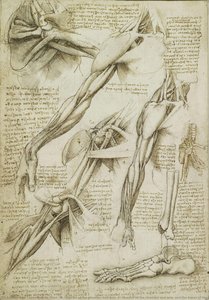
R: Muscles of the arm and the veins of the arm and trunk. V: Muscles of the shoulder, arm and neck
 Acrylic On Canvas
- WallArt
- Renaissance
 1510
1510- Renaissance
 28.0 x 19.0 cm
 Royal Collection
 Read More
Purchase a high-resolution, enhanced digital image, far superior to the online preview.
Each file is meticulously prepared by our in-house specialists using advanced tools and expert manual retouching. We ensure every image has exceptional clarity, precise color accuracy, and fine detail.
The final file is delivered via email within 72 hours, optimized for immediate use in professional, editorial, and print environments. This is the same quality trusted by top-tier design studios, publishers, and galleries.
Digital Image
Download a high-resolution file for personal display, printing, and creative projects. ( Buy Print Buy Hand Made Painting)
Included in Every Digital Image Order
Expert Digital Delivery, Guaranteed
When you choose ArtsDot.com, you're not just getting an image - you're receiving a professionally enhanced digital artwork, crafted with precision and backed by a satisfaction guarantee. Here's everything that comes with your order, automatically:

Fast Email Delivery
Your high-resolution digital image file will be emailed to you within 72 hours of ordering - ready for immediate use.

AI-Enhanced Digital File
Your artwork is professionally optimized using advanced AI tools and manual editing, ensuring maximum detail, clarity, and color accuracy.

Free Lifetime Re-Delivery
Accidentally deleted or lost your file? No worries - we'll resend it to you anytime, free of charge.

No Import Fees - Ever
Enjoy your artwork instantly with zero customs, duties, or delivery fees - digital downloads are always tax-free.

Color Accuracy Guarantee
We ensure your digital image reflects the original colors as closely as possible using professional tools and color management.

60-Day Satisfaction Guarantee
If you're not satisfied with your digital image, we'll revise it or refund 100% within 60 days - no questions asked.

100% Money-Back Guarantee
Not satisfied? Get a full refund within 60 days of receiving your digital file - no questions asked.

Bulk Order Discounts
Buy 3 images, save 10% - Buy 5, save 15% - Buy 10+, save 20%. Great for creative projects, galleries, and agencies.
A Window into Renaissance Anatomy: Leonardo da Vinci’s Muscular Studies
This remarkable sheet of drawings by Leonardo da Vinci offers a rare and intimate glimpse into the artist's relentless pursuit of anatomical understanding. Created around 1510, during his time at the University of Pavia – possibly alongside dissections performed with Professor Marcantonio della Torre – this work isn’t merely an artistic study; it is a testament to scientific inquiry and Leonardo’s unwavering dedication to accurately representing the human form. The recto side presents detailed explorations of musculature in the arm, accompanied by studies of veins throughout the body, while the verso focuses on shoulder, arm, and neck muscles alongside a striking depiction of the mouth's interior.Subject & Composition: Dissecting the Human Form
The composition is densely packed with observations, reflecting Leonardo’s methodical approach. We see not isolated muscle groups but interconnected systems – veins branching across the torso, the layered structure of the arm, and even a haunting depiction of what appears to be a recently dissected head, likely one of the twenty or so bodies he examined that winter. The drawings aren't idealized; they are *anatomical*, prioritizing accuracy over aesthetic beauty. The sheet is divided into distinct studies, yet all contribute to a unified exploration of human anatomy.Technique & Style: Precision in Pen and Ink
Leonardo’s mastery of drawing techniques is on full display here. Executed primarily in pen and ink, the work relies heavily on hatching and cross-hatching to create depth, volume, and texture. There's a deliberate absence of traditional shading; instead, tonal variation is achieved through varying line density – a technique that emphasizes form and structure with remarkable clarity. The lines are precise, confident, and demonstrate an unparalleled attention to detail. This isn’t the fluid, *sfumato* style for which he’s most famous in his paintings; it's a different kind of virtuosity—one focused on scientific illustration.Historical Context: A Renaissance Revolution
Leonardo’s anatomical studies were groundbreaking for their time. While dissection was practiced, his approach – combining meticulous observation with artistic skill – was revolutionary. He aimed to create a comprehensive illustrated treatise on anatomy, intending to share his findings with the wider scientific community. Sadly, this ambitious project remained unfinished during his lifetime, and its impact on contemporary medical understanding was limited. However, these drawings stand as evidence of his forward-thinking approach and his belief in the power of visual knowledge. His work foreshadowed modern anatomical illustration by centuries.Symbolism & Emotional Impact: Beyond Scientific Inquiry
While primarily a scientific study, this artwork carries an undeniable emotional weight. The depiction of the head – seemingly that of a deceased individual – is particularly poignant, reminding us of the fragility of life and the artist’s direct engagement with mortality. The intense focus on the inner workings of the body can be interpreted as a meditation on the human condition itself. It's not simply about what the body *looks* like, but how it *functions*, and what that reveals about our existence.For Collectors & Designers: A Timeless Masterpiece
A reproduction of this work would be a stunning addition to any collection. Its intellectual rigor and artistic beauty make it suitable for both private residences and professional spaces – particularly those seeking to evoke a sense of history, scientific curiosity, or refined aesthetic sensibility. The neutral palette and intricate detail lend themselves well to a variety of interior design styles, from classic to contemporary. This is more than just an image; it’s a piece of intellectual history, beautifully rendered.Related Artworks
Artist Biography
Leonardo da Vinci’s Life and Legacy.
Leonardo di ser Piero da Vinci, born in 1452 near the Tuscan village of Vinci, remains arguably the most universally recognized figure of the Renaissance—a true polymath whose insatiable curiosity propelled him across disciplines, leaving an indelible mark on art, science, and engineering. His very name has become synonymous with genius, a testament to his extraordinary breadth of talent and visionary thinking. Born out of wedlock to Piero da Vinci, a notary, and Caterina, a peasant woman, Leonardo’s early life was unconventional, yet provided him with access to both the practical world and an appreciation for nature that would profoundly shape his artistic vision. He received a basic education in reading, writing, and arithmetic, but it was his apprenticeship under Andrea del Verrocchio in Florence that truly ignited his creative spark. Within Verrocchio’s workshop, Leonardo wasn't merely learning to paint or sculpt; he was immersed in a world of technical skill, mastering metalworking, carpentry, drawing, and the intricacies of artistic creation—a foundation upon which he would build his multifaceted genius. Even during this formative period, whispers circulated regarding his exceptional talent, with accounts suggesting Verrocchio himself relinquished painting after witnessing Leonardo’s superior ability.
Milanese Innovations and Artistic Flourishing
In 1482, Leonardo embarked on a new chapter, entering the service of Ludovico Sforza, Duke of Milan. This wasn't simply an artistic appointment; Leonardo functioned as a military engineer, architect, sculptor, and designer for the court—a testament to his diverse skills. He conceived innovative fortifications, designed elaborate stage sets, and even sketched plans for fantastical machines. However, it was during this period that he began work on one of his most iconic masterpieces: The Last Supper. Painted as a fresco in the refectory of Santa Maria delle Grazie monastery, the work transcends mere representation; it’s a profound exploration of human emotion and psychological drama, capturing the precise moment Christ announces his betrayal. The composition, innovative for its time, and the masterful use of perspective would profoundly influence Western art for centuries to come. While many sculptural projects remained unfinished during his Milanese period, Leonardo's inventive spirit continued to flourish, laying the groundwork for future scientific explorations.
The Florentine Return and the Pursuit of Perfection
Following the French invasion of Milan in 1499, Leonardo returned to Florence, a city experiencing a peak of artistic development. Though he produced fewer completed works during this time, their impact was immense. It was here that he began work on what would become arguably the most famous painting in the world: Mona Lisa (La Gioconda). The enigmatic smile and captivating gaze of the subject have fascinated viewers for generations, while Leonardo’s revolutionary *sfumato* technique—the subtle blending of light and shadow to create hazy outlines and atmospheric perspective—contributed significantly to the painting's ethereal quality. This period also saw continued refinement of his anatomical studies, driven by an unwavering desire to understand the human form with scientific precision. He dissected cadavers, meticulously documenting muscles, bones, and organs in a series of incredibly detailed drawings that were centuries ahead of their time.
A Legacy Beyond Art: Science, Invention, and Enduring Influence
Leonardo’s later years were marked by travel between Florence, Milan, and Rome, always sought after for his expertise but often leaving projects incomplete—a reflection perhaps of his restless intellect and the sheer scope of his interests. In 1516, he accepted an invitation from King Francis I to live and work at the Château du Clos Lucé near Amboise in France, where he spent his final years. He died there in 1519, leaving behind a vast legacy that extends far beyond the realm of art. His notebooks reveal pioneering work in anatomy, optics, hydraulics, geology, and cartography—and conceptualized inventions centuries ahead of their time, including flying machines, tanks, and advanced weaponry. Leonardo da Vinci’s impact on art history is immeasurable. He elevated the status of artists from skilled craftsmen to intellectual figures, demonstrating that artistic creation could be informed by scientific inquiry and a deep understanding of the natural world. His paintings are celebrated for their realism, psychological depth, and innovative techniques. He remains a symbol of human curiosity, creativity, and the relentless pursuit of knowledge—a true embodiment of the Renaissance spirit whose legacy continues to inspire awe and fascination centuries after his death.
Key Achievements & Enduring Impact
- Painting: Mona Lisa, The Last Supper, Virgin of the Rocks, Annunciation
- Drawing & Sketching: Extensive anatomical studies, Engineering designs (flying machines, weaponry), Botanical illustrations
- Science & Engineering: Pioneering work in anatomy, optics, hydraulics, geology, and cartography. Conceptualized inventions centuries ahead of their time.
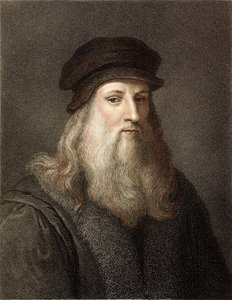
Leonardo da Vinci
1452 - 1519 , Italy
Quick Facts
- Artistic Movement Or Style: High Renaissance
- Artists Or Movements Influenced By This Artist: ['Renaissance art']
- Artists Who Influenced This Artist: ['Andrea del Verrocchio']
- Date Of Birth: April 15, 1452
- Date Of Death: May 2, 1519
- Full Name: Leonardo da Vinci
- Nationality: Italian
- Notable Artworks:
- Mona Lisa
- The Last Supper
- Vitruvian Man
- Place Of Birth: Vinci, Italy

