

 Preview
 Send
Send Share
Share
 Details

 Download
 Similars
 X-Ray
X-Ray Diaporama
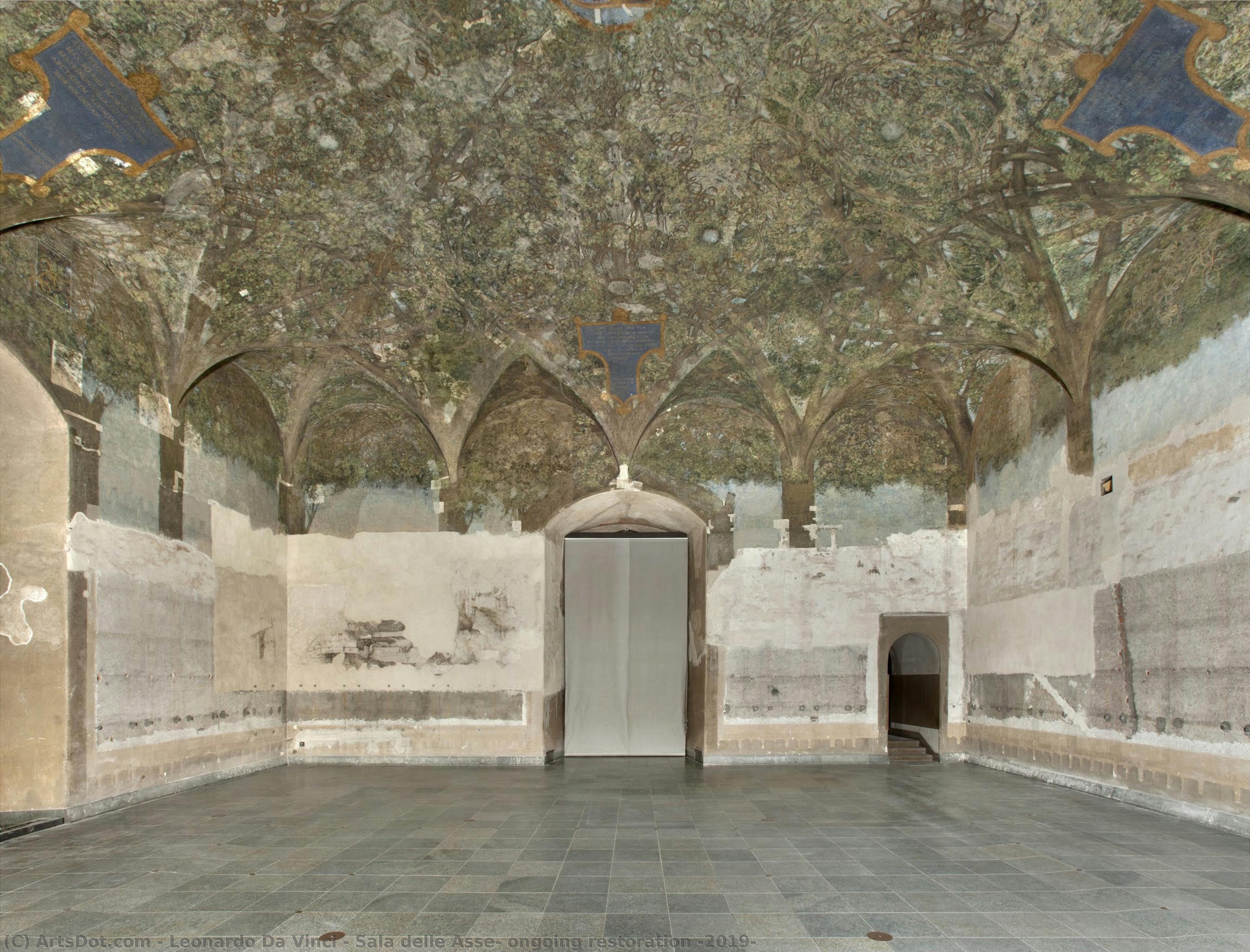
Sala delle Asse, ongoing restoration (2019)


 Read More
Purchase a high-resolution, enhanced digital image, far superior to the online preview.
Each file is meticulously prepared by our in-house specialists using advanced tools and expert manual retouching. We ensure every image has exceptional clarity, precise color accuracy, and fine detail.
The final file is delivered via email within 72 hours, optimized for immediate use in professional, editorial, and print environments. This is the same quality trusted by top-tier design studios, publishers, and galleries.
Digital Image
Download a high-resolution file for personal display, printing, and creative projects. ( Buy Print Buy Hand Made Painting)
Included in Every Digital Image Order
Expert Digital Delivery, Guaranteed
When you choose ArtsDot.com, you're not just getting an image - you're receiving a professionally enhanced digital artwork, crafted with precision and backed by a satisfaction guarantee. Here's everything that comes with your order, automatically:

Fast Email Delivery
Your high-resolution digital image file will be emailed to you within 72 hours of ordering - ready for immediate use.

AI-Enhanced Digital File
Your artwork is professionally optimized using advanced AI tools and manual editing, ensuring maximum detail, clarity, and color accuracy.

Free Lifetime Re-Delivery
Accidentally deleted or lost your file? No worries - we'll resend it to you anytime, free of charge.

No Import Fees - Ever
Enjoy your artwork instantly with zero customs, duties, or delivery fees - digital downloads are always tax-free.

Color Accuracy Guarantee
We ensure your digital image reflects the original colors as closely as possible using professional tools and color management.

60-Day Satisfaction Guarantee
If you're not satisfied with your digital image, we'll revise it or refund 100% within 60 days - no questions asked.

100% Money-Back Guarantee
Not satisfied? Get a full refund within 60 days of receiving your digital file - no questions asked.

Bulk Order Discounts
Buy 3 images, save 10% - Buy 5, save 15% - Buy 10+, save 20%. Great for creative projects, galleries, and agencies.
Collectible Description
The Enigma of Leonardo’s Sanctuary: Unveiling the Sala delle Asse
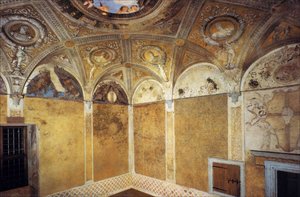
Within the formidable walls of the Castello Sforzesco in Milan resides a room that whispers tales of ambition, artistic genius, and a fleeting moment in history – the Sala delle Asse. More than just a decorative space, this chamber represents a profound statement by Ludovico il Moro, his patron, and a testament to Leonardo da Vinci’s unparalleled vision. Commissioned around 1498, during a period of intense political maneuvering and artistic flourishing, the Sala delle Asse was intended as a private retreat, a sanctuary designed to reflect the power and wisdom of its owner. The room's story is inextricably linked to Leonardo’s own life – a brilliant mind forced into exile amidst the turmoil of Milanese politics.
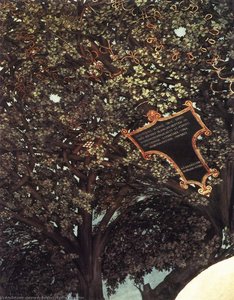
The initial impetus for this extraordinary project stemmed from a letter penned by Gualtiero da Bascapè, Ludovico Sforza’s secretary, to the Duke himself. This correspondence revealed that Leonardo da Vinci had been tasked with adorning the room, promising completion by September of the following year. The choice of subject – a meticulously rendered pergola overflowing with mulberry trees – was far from arbitrary. It served as a deliberate and potent symbol, directly referencing Ludovico’s nickname, “il Moro” (the Moor), and his crucial role in promoting the cultivation of mulberries throughout Lombardy. These trees were not merely decorative; they underpinned the region's burgeoning silk industry, a cornerstone of Milanese prosperity. Furthermore, the mulberry tree held deep symbolic weight – it was considered "sapientissima omnium arborum" (the wisest of all trees), representing Ludovico’s astute governance and the stability he brought to the duchy.
However, Leonardo's work on the Sala delle Asse was tragically cut short. The French invasion of 1499, led by King Louis XII, shattered Milanese independence and forced the artist into exile. The room, unfinished and covered in layers of whitewash over the centuries, became a silent witness to shifting political fortunes – Spanish rule, Austrian dominion, and ultimately, unification under the Kingdom of Italy. It wasn’t until the late 19th century that Luca Beltrami, an architect tasked with restoring the Castello Sforzesco, rediscovered Leonardo's magnificent decoration beneath the accumulated grime. His meticulous work revealed a breathtaking illusionistic composition, a vibrant tapestry of roots, branches, and leaves that seemed to dissolve the boundaries between interior space and the natural world.
A Masterpiece of Illusion: Technique and Design
The Sala delle Asse is a remarkable achievement in trompe-l'œil painting – an art form that seeks to deceive the eye into perceiving three-dimensional space on a two-dimensional surface. Leonardo’s design transcends mere imitation; it’s a carefully constructed illusion, meticulously crafted to create the impression of an open-air pergola bathed in sunlight. The intricate network of branches and leaves is rendered with astonishing detail, employing subtle gradations of color and light to suggest depth and volume. The monochrome preparatory drawings, known as “the Monochrome,” which line the northern walls, provide invaluable insight into Leonardo’s artistic process – a series of studies that demonstrate his methodical approach to capturing the essence of natural forms.
Notably, the room's design incorporates elements of Renaissance perspective and geometry. The arrangement of the trees and branches follows a precise mathematical framework, creating a harmonious and balanced composition. The use of overlapping planes and receding lines further enhances the illusion of depth, drawing the viewer into the scene. Leonardo’s mastery of sfumato – his signature technique of blurring outlines and softening transitions – is evident throughout the decoration, lending it an ethereal quality and contributing to its overall sense of realism.
Symbolism and Historical Context
Beyond its purely aesthetic qualities, the Sala delle Asse is rich in symbolic meaning. The mulberry tree itself represents prosperity, wisdom, and the stability of the Sforza dynasty. The cartouches adorning the vault – now largely illegible – once recorded significant events in Ludovico’s life: his niece Bianca Maria’s marriage to Emperor Maximilian, his own investiture as Duke, and a journey to seek assistance from Charles VIII against Louis XII. The inclusion of the Sforza and Este family arms within the central shield further underscored the political alliances that underpinned the Duchy's power.
The choice of this particular subject matter – a seemingly simple pergola filled with mulberry trees – was a deliberate act of self-promotion by Leonardo, subtly aligning himself with the ambitions and aspirations of his patron. It’s a testament to his ability to seamlessly blend artistic expression with political messaging, creating a work that is both visually stunning and historically significant.
A Reproduction for the Connoisseur: Bringing the Sala delle Asse Home
ArtsDot offers meticulously crafted hand-painted reproductions of Leonardo da Vinci’s Sala delle Asse, capturing the essence of this extraordinary room with unparalleled detail and artistry. Our skilled artisans employ traditional techniques and archival-quality pigments to faithfully recreate Leonardo's illusionistic masterpiece, ensuring that every brushstroke resonates with authenticity. Whether you are an art collector, interior designer, or simply a lover of Renaissance beauty, our reproduction provides a stunning addition to any space – a tangible connection to one of the greatest artistic achievements in history.
Each reproduction is available in various sizes and framing options, allowing you to select the perfect piece to suit your individual taste and décor. Explore our collection today and bring the enigmatic beauty of the Sala delle Asse into your home.
Related Artworks
Artist Biography
Leonardo da Vinci’s Life and Legacy.
Leonardo di ser Piero da Vinci, born in 1452 near the Tuscan village of Vinci, remains arguably the most universally recognized figure of the Renaissance—a true polymath whose insatiable curiosity propelled him across disciplines, leaving an indelible mark on art, science, and engineering. His very name has become synonymous with genius, a testament to his extraordinary breadth of talent and visionary thinking. Born out of wedlock to Piero da Vinci, a notary, and Caterina, a peasant woman, Leonardo’s early life was unconventional, yet provided him with access to both the practical world and an appreciation for nature that would profoundly shape his artistic vision. He received a basic education in reading, writing, and arithmetic, but it was his apprenticeship under Andrea del Verrocchio in Florence that truly ignited his creative spark. Within Verrocchio’s workshop, Leonardo wasn't merely learning to paint or sculpt; he was immersed in a world of technical skill, mastering metalworking, carpentry, drawing, and the intricacies of artistic creation—a foundation upon which he would build his multifaceted genius. Even during this formative period, whispers circulated regarding his exceptional talent, with accounts suggesting Verrocchio himself relinquished painting after witnessing Leonardo’s superior ability.
Milanese Innovations and Artistic Flourishing
In 1482, Leonardo embarked on a new chapter, entering the service of Ludovico Sforza, Duke of Milan. This wasn't simply an artistic appointment; Leonardo functioned as a military engineer, architect, sculptor, and designer for the court—a testament to his diverse skills. He conceived innovative fortifications, designed elaborate stage sets, and even sketched plans for fantastical machines. However, it was during this period that he began work on one of his most iconic masterpieces: The Last Supper. Painted as a fresco in the refectory of Santa Maria delle Grazie monastery, the work transcends mere representation; it’s a profound exploration of human emotion and psychological drama, capturing the precise moment Christ announces his betrayal. The composition, innovative for its time, and the masterful use of perspective would profoundly influence Western art for centuries to come. While many sculptural projects remained unfinished during his Milanese period, Leonardo's inventive spirit continued to flourish, laying the groundwork for future scientific explorations.
The Florentine Return and the Pursuit of Perfection
Following the French invasion of Milan in 1499, Leonardo returned to Florence, a city experiencing a peak of artistic development. Though he produced fewer completed works during this time, their impact was immense. It was here that he began work on what would become arguably the most famous painting in the world: Mona Lisa (La Gioconda). The enigmatic smile and captivating gaze of the subject have fascinated viewers for generations, while Leonardo’s revolutionary *sfumato* technique—the subtle blending of light and shadow to create hazy outlines and atmospheric perspective—contributed significantly to the painting's ethereal quality. This period also saw continued refinement of his anatomical studies, driven by an unwavering desire to understand the human form with scientific precision. He dissected cadavers, meticulously documenting muscles, bones, and organs in a series of incredibly detailed drawings that were centuries ahead of their time.
A Legacy Beyond Art: Science, Invention, and Enduring Influence
Leonardo’s later years were marked by travel between Florence, Milan, and Rome, always sought after for his expertise but often leaving projects incomplete—a reflection perhaps of his restless intellect and the sheer scope of his interests. In 1516, he accepted an invitation from King Francis I to live and work at the Château du Clos Lucé near Amboise in France, where he spent his final years. He died there in 1519, leaving behind a vast legacy that extends far beyond the realm of art. His notebooks reveal pioneering work in anatomy, optics, hydraulics, geology, and cartography—and conceptualized inventions centuries ahead of their time, including flying machines, tanks, and advanced weaponry. Leonardo da Vinci’s impact on art history is immeasurable. He elevated the status of artists from skilled craftsmen to intellectual figures, demonstrating that artistic creation could be informed by scientific inquiry and a deep understanding of the natural world. His paintings are celebrated for their realism, psychological depth, and innovative techniques. He remains a symbol of human curiosity, creativity, and the relentless pursuit of knowledge—a true embodiment of the Renaissance spirit whose legacy continues to inspire awe and fascination centuries after his death.
Key Achievements & Enduring Impact
- Painting: Mona Lisa, The Last Supper, Virgin of the Rocks, Annunciation
- Drawing & Sketching: Extensive anatomical studies, Engineering designs (flying machines, weaponry), Botanical illustrations
- Science & Engineering: Pioneering work in anatomy, optics, hydraulics, geology, and cartography. Conceptualized inventions centuries ahead of their time.
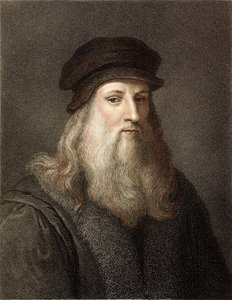
Leonardo da Vinci
1452 - 1519 , Italy
Quick Facts
- Artistic Movement Or Style: High Renaissance
- Artists Or Movements Influenced By This Artist: ['Renaissance art']
- Artists Who Influenced This Artist: ['Andrea del Verrocchio']
- Date Of Birth: April 15, 1452
- Date Of Death: May 2, 1519
- Full Name: Leonardo da Vinci
- Nationality: Italian
- Notable Artworks:
- Mona Lisa
- The Last Supper
- Vitruvian Man
- Place Of Birth: Vinci, Italy

