 Preview
 Send
Send Share
Share
 Details

 Download
 Similars
 X-Ray
X-Ray Diaporama
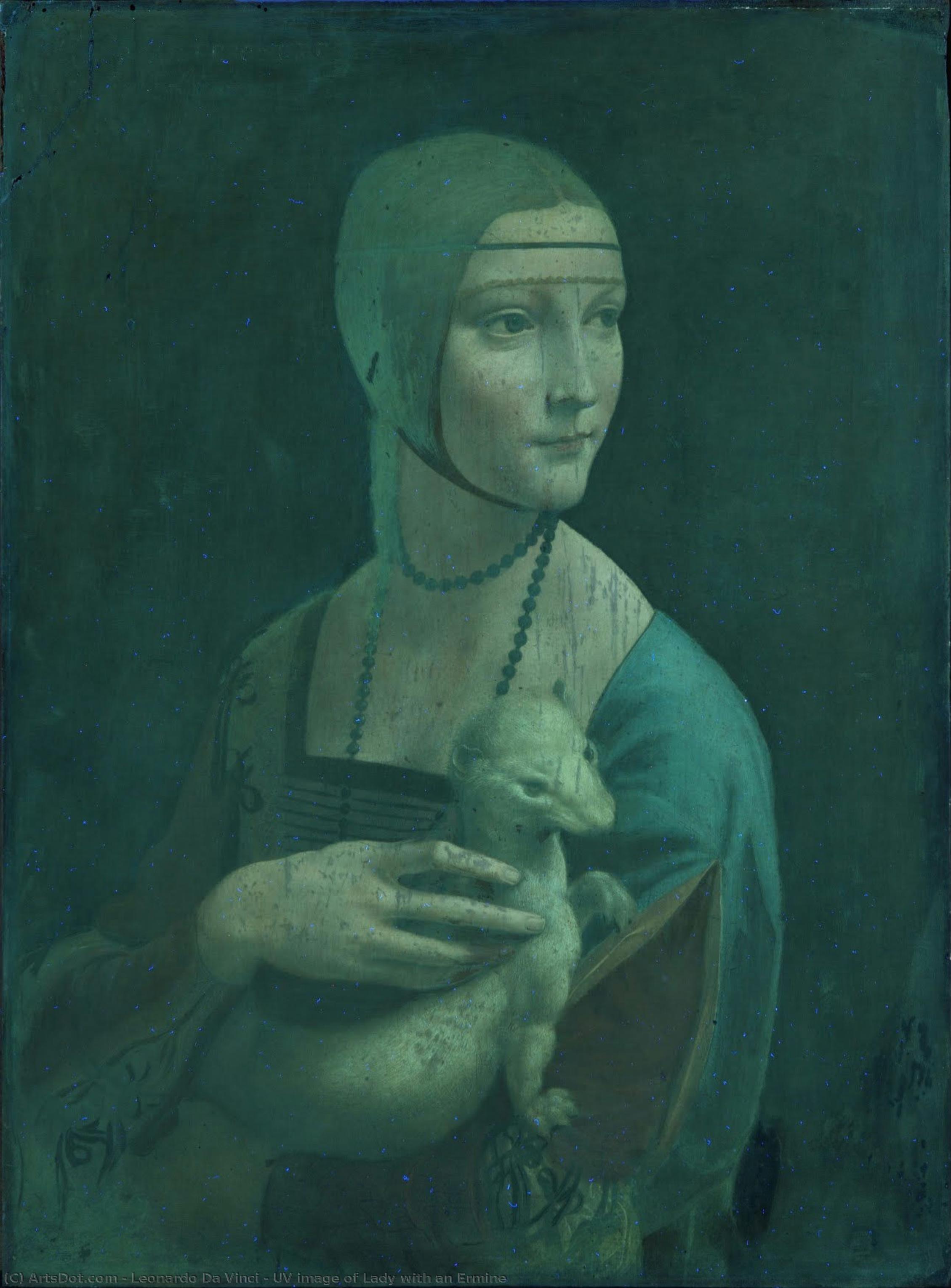
UV image of Lady with an Ermine


 Read More
Hand Made Oil Reproduction
Hand-painted oil on canvas in your size and frame, made to order by our artists. ( Buy Print Buy Image)




P118B $10

P118H $10

P118W $10

P438Z $10

P508JH $12

P508YH $12

P805H $10

P805Z $10

P919BZ $10

P919G $10

P919XJ $10

P959ZH $10

P968JZ $12

W106C $8

W218G $10

W218JH $8

W218Y $10

W307PJ $10

W316G $10

W316PJ $8

W316Y $10

W398PJ $8

W4111J $10

W500HY $15

W500JH $15

W692G $12

W849H $8

W940BG $15

W953PJ $8




Pick from our preset sizes that match the artwork's original proportions.

You may enter your own dimensions to fit a specific frame or space. If your selected size does not match the original image's proportions, we will either crop the artwork or extend the painting with additional hand-painted elements. A digital mockup will be sent for your approval before production begins.
Please note that the on-screen preview does not reflect the actual cropping or extension. Only the mockup will accurately show the final composition.
While custom sizes are available, we recommend selecting a dimension from the predefined list to preserve the original proportions.
After order, ArtsDot.com team will email client for instructions and provide a mockup preview
Worldwide Delivery () in 3/4 weeks instead of standard 5 weeks. (16 August). No compromise on quality.

Free Worldwide Express Shipping

High-Quality Linen Canvas

Full Shipping Insurance

Customs Tax Refund Guarantee

True Color Matching Guarantee

60-Day Return Policy (Defects Only)

100% Money-Back Guarantee

Bulk Discount Offer
 Glass option is only available in size under 110 CM

UV image of Lady with an Ermine
Reproduction Medium
Reproduction Size
-


Total Price
$ 263
Artwork Description
The Enigmatic Portrait: Unveiling Leonardo da Vinci’s “Lady with an Ermine”
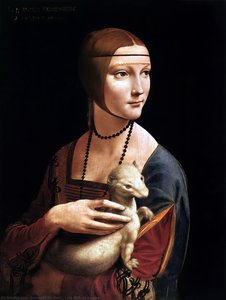
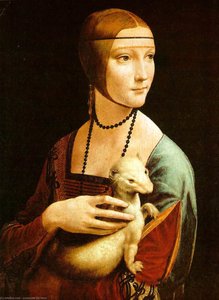
Leonardo da Vinci's "Lady with an Ermine," a captivating black and white photograph of the original painting housed within the National Museum in Krakow, Poland, is more than just a portrait; it’s a profound meditation on beauty, power, and perhaps, a subtle commentary on the complexities of Renaissance society. The image itself, meticulously captured, offers a glimpse into a world where artistic mastery intertwined with political intrigue and personal symbolism. The painting's subject, believed to be Cecilia Gallerani, mistress of Ludovico Sforza, Duke of Milan, embodies an era defined by both opulent luxury and burgeoning humanist ideals. Da Vinci’s genius lies not simply in his technical skill – though undeniably masterful – but in his ability to imbue a single image with layers of meaning that continue to fascinate centuries later.
A Study in Light and Shadow: The Technique of Sfumato
Da Vinci’s signature technique, *sfumato*, is immediately apparent in this portrait. This masterful manipulation of light and shadow creates an ethereal quality, softening the edges of the figure and lending a sense of atmospheric depth. Notice how the folds of her dress seem to melt into one another, and how the subtle gradations of tone around her eyes and mouth convey a remarkable sense of realism – yet simultaneously hint at an underlying mystery. The photograph captures this delicate effect beautifully, allowing us to appreciate the painstaking detail with which Da Vinci built up his composition, layer by layer. The use of charcoal and white chalk on black paper, a technique favored during that period, further enhances the subtle tonal variations, contributing to the overall sense of depth and realism.
- Color Palette: The monochrome presentation emphasizes form and texture, mirroring the original’s focus on anatomical accuracy and psychological insight.
- Brushwork: Da Vinci's meticulous layering creates a velvety smoothness, characteristic of his approach to portraiture.
- Composition: The pyramidal structure lends stability and balance to the image, drawing the viewer’s eye towards the subject’s face.
Symbolism Woven into the Fabric of the Portrait
Beyond the immediate beauty of the woman herself, the painting is rich in symbolic detail. The ermine, a small white animal held delicately in her hands, is a potent emblem of purity, nobility, and vigilance – qualities highly valued by the Sforza family. The ermine’s association with the Virgin Mary further elevates Cecilia's status, subtly suggesting an ideal of virtuous womanhood. Her gaze, direct and slightly melancholic, invites contemplation, while her pearl necklace speaks to her wealth and social standing. The dark background serves not as a distraction but as a deliberate contrast, intensifying the luminosity of the figure and drawing attention to her presence.
A Renaissance Portrait – Context and Legacy
“Lady with an Ermine” was painted around 1489-1491, during a pivotal period in Leonardo’s career. He was establishing himself as a leading artist in Florence, navigating the complex political landscape of the city-state. Portraits like this were not merely decorative; they served as powerful tools for projecting status and influence. The work reflects the Renaissance fascination with humanism – an interest in celebrating individual beauty and intellect – while simultaneously acknowledging the importance of patronage and social hierarchy. Today, reproductions of “Lady with an Ermine” continue to captivate audiences worldwide, offering a tangible connection to one of history’s most brilliant minds and a poignant glimpse into the world of Renaissance Italy. ArtsDot offers exquisite hand-painted reproductions that faithfully capture the essence of this iconic masterpiece, allowing you to bring its timeless beauty into your home or office.
Related Artworks
Artist Biography
Leonardo da Vinci’s Life and Legacy.
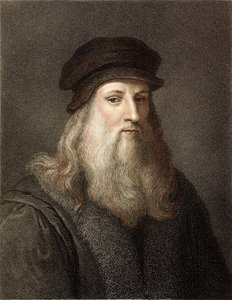
Leonardo di ser Piero da Vinci, born in 1452 near the Tuscan village of Vinci, remains arguably the most universally recognized figure of the Renaissance—a true polymath whose insatiable curiosity propelled him across disciplines, leaving an indelible mark on art, science, and engineering. His very name has become synonymous with genius, a testament to his extraordinary breadth of talent and visionary thinking. Born out of wedlock to Piero da Vinci, a notary, and Caterina, a peasant woman, Leonardo’s early life was unconventional, yet provided him with access to both the practical world and an appreciation for nature that would profoundly shape his artistic vision. He received a basic education in reading, writing, and arithmetic, but it was his apprenticeship under Andrea del Verrocchio in Florence that truly ignited his creative spark. Within Verrocchio’s workshop, Leonardo wasn't merely learning to paint or sculpt; he was immersed in a world of technical skill, mastering metalworking, carpentry, drawing, and the intricacies of artistic creation—a foundation upon which he would build his multifaceted genius. Even during this formative period, whispers circulated regarding his exceptional talent, with accounts suggesting Verrocchio himself relinquished painting after witnessing Leonardo’s superior ability.
Milanese Innovations and Artistic Flourishing
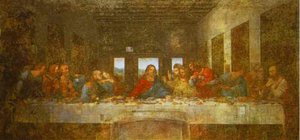
In 1482, Leonardo embarked on a new chapter, entering the service of Ludovico Sforza, Duke of Milan. This wasn't simply an artistic appointment; Leonardo functioned as a military engineer, architect, sculptor, and designer for the court—a testament to his diverse skills. He conceived innovative fortifications, designed elaborate stage sets, and even sketched plans for fantastical machines. However, it was during this period that he began work on one of his most iconic masterpieces: The Last Supper. Painted as a fresco in the refectory of Santa Maria delle Grazie monastery, the work transcends mere representation; it’s a profound exploration of human emotion and psychological drama, capturing the precise moment Christ announces his betrayal. The composition, innovative for its time, and the masterful use of perspective would profoundly influence Western art for centuries to come. While many sculptural projects remained unfinished during his Milanese period, Leonardo's inventive spirit continued to flourish, laying the groundwork for future scientific explorations.
The Florentine Return and the Pursuit of Perfection
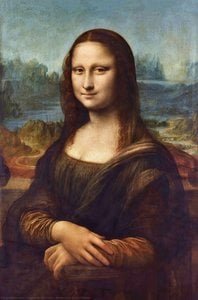
Following the French invasion of Milan in 1499, Leonardo returned to Florence, a city experiencing a peak of artistic development. Though he produced fewer completed works during this time, their impact was immense. It was here that he began work on what would become arguably the most famous painting in the world: Mona Lisa (La Gioconda). The enigmatic smile and captivating gaze of the subject have fascinated viewers for generations, while Leonardo’s revolutionary *sfumato* technique—the subtle blending of light and shadow to create hazy outlines and atmospheric perspective—contributed significantly to the painting's ethereal quality. This period also saw continued refinement of his anatomical studies, driven by an unwavering desire to understand the human form with scientific precision. He dissected cadavers, meticulously documenting muscles, bones, and organs in a series of incredibly detailed drawings that were centuries ahead of their time.
A Legacy Beyond Art: Science, Invention, and Enduring Influence
Leonardo’s later years were marked by travel between Florence, Milan, and Rome, always sought after for his expertise but often leaving projects incomplete—a reflection perhaps of his restless intellect and the sheer scope of his interests. In 1516, he accepted an invitation from King Francis I to live and work at the Château du Clos Lucé near Amboise in France, where he spent his final years. He died there in 1519, leaving behind a vast legacy that extends far beyond the realm of art. His notebooks reveal pioneering work in anatomy, optics, hydraulics, geology, and cartography—and conceptualized inventions centuries ahead of their time, including flying machines, tanks, and advanced weaponry. Leonardo da Vinci’s impact on art history is immeasurable. He elevated the status of artists from skilled craftsmen to intellectual figures, demonstrating that artistic creation could be informed by scientific inquiry and a deep understanding of the natural world. His paintings are celebrated for their realism, psychological depth, and innovative techniques. He remains a symbol of human curiosity, creativity, and the relentless pursuit of knowledge—a true embodiment of the Renaissance spirit whose legacy continues to inspire awe and fascination centuries after his death.
Key Achievements & Enduring Impact
- Painting: Mona Lisa, The Last Supper, Virgin of the Rocks, Annunciation
- Drawing & Sketching: Extensive anatomical studies, Engineering designs (flying machines, weaponry), Botanical illustrations
- Science & Engineering: Pioneering work in anatomy, optics, hydraulics, geology, and cartography. Conceptualized inventions centuries ahead of their time.
Leonardo da Vinci
1452 - 1519 , Italy
Quick Facts
- Artistic Movement Or Style: High Renaissance
- Artists Or Movements Influenced By This Artist: ['Renaissance art']
- Artists Who Influenced This Artist: ['Andrea del Verrocchio']
- Date Of Birth: April 15, 1452
- Date Of Death: May 2, 1519
- Full Name: Leonardo da Vinci
- Nationality: Italian
- Notable Artworks:
- Mona Lisa
- The Last Supper
- Vitruvian Man
- Place Of Birth: Vinci, Italy
Related Articles
Leonardo da Vinci's Masterpieces: Explore 25 Iconic Artworks for Your Home | ArtsDot
Journey through Leonardo da Vinci's genius with our curated selection of 25 iconic artworks. Explore the stories behind Mona Lisa, The Last Supper & more Renaissance masterpieces. Find museum-quality art reproductions for your home at ArtsDot.com.
Leonardo da Vinci: A Renaissance Master’s Synthesis of Art, Science & Human Observation – Reinterpreted for the Collector
Explore Leonardo da Vinci’s timeless masterpieces with ArtsDot. Discover insights into his art, science, and legacy – trusted expertise for discerning collectors seeking authentic reproductions & investment opportunities.
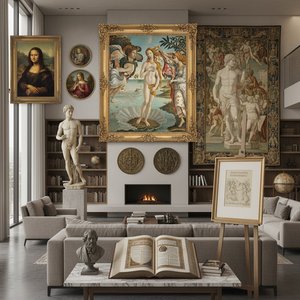
Renaissance Humanism's Greatest Art: 10 Masterpieces for Your Home
Explore 10 Renaissance Humanism masterpieces by Leonardo da Vinci, Michelangelo & Raphael. Discover the stories behind these iconic paintings & sculptures and bring timeless art into your home with museum-quality reproductions from ArtsDot.com. Explore the full collection online!

Louvre Masterpieces: Explore the Top 25 Artworks for Your Home | ArtsDot
Journey through the Louvre's 25 most iconic artworks! Explore masterpieces by Leonardo da Vinci, Michelangelo & Delacroix. Discover art history, techniques & find museum-quality reproductions for your home at ArtsDot.com.

Uffizi's 25 Masterpieces: Renaissance Art & Timeless Decor Inspiration
Journey through the Uffizi Gallery's 25 most iconic Renaissance artworks! Explore Botticelli, Leonardo da Vinci & Michelangelo’s masterpieces. Find museum-quality art reproductions and curated decor ideas to bring timeless Italian beauty into your home. Discover all masterpieces on ArtsDot.com