

 Preview
 Send
Send Share
Share
 Details

 Download
 Similars
 X-Ray
X-Ray Diaporama
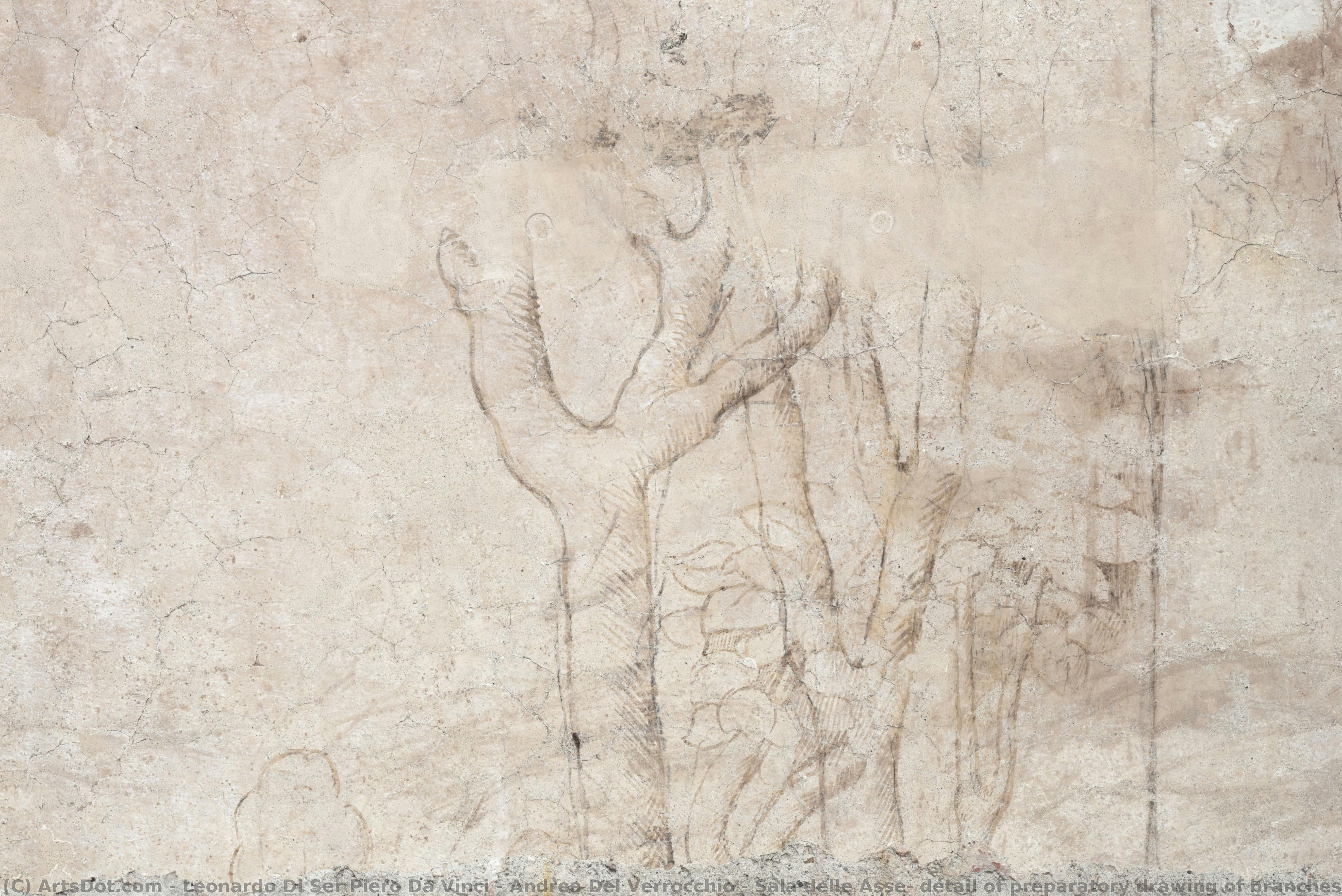
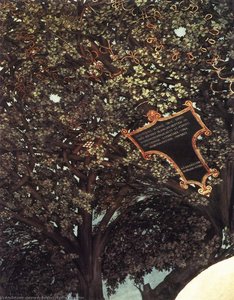
Sala delle Asse, detail of preparatory drawing of branches and leaves


 Read More
Purchase a high-resolution, enhanced digital image, far superior to the online preview.
Each file is meticulously prepared by our in-house specialists using advanced tools and expert manual retouching. We ensure every image has exceptional clarity, precise color accuracy, and fine detail.
The final file is delivered via email within 72 hours, optimized for immediate use in professional, editorial, and print environments. This is the same quality trusted by top-tier design studios, publishers, and galleries.
Digital Image
Download a high-resolution file for personal display, printing, and creative projects. ( Buy Print Buy Hand Made Painting)
Included in Every Digital Image Order
Expert Digital Delivery, Guaranteed
When you choose ArtsDot.com, you're not just getting an image - you're receiving a professionally enhanced digital artwork, crafted with precision and backed by a satisfaction guarantee. Here's everything that comes with your order, automatically:

Fast Email Delivery
Your high-resolution digital image file will be emailed to you within 72 hours of ordering - ready for immediate use.

AI-Enhanced Digital File
Your artwork is professionally optimized using advanced AI tools and manual editing, ensuring maximum detail, clarity, and color accuracy.

Free Lifetime Re-Delivery
Accidentally deleted or lost your file? No worries - we'll resend it to you anytime, free of charge.

No Import Fees - Ever
Enjoy your artwork instantly with zero customs, duties, or delivery fees - digital downloads are always tax-free.

Color Accuracy Guarantee
We ensure your digital image reflects the original colors as closely as possible using professional tools and color management.

100-Day Satisfaction Guarantee
If you're not satisfied with your digital image, we'll revise it or refund 100% within 100 days - no questions asked.

100% Money-Back Guarantee
Not satisfied? Get a full refund within 100 days of receiving your digital file - no questions asked.

Bulk Order Discounts
Buy 3 images, save 10% - Buy 5, save 15% - Buy 10+, save 20%. Great for creative projects, galleries, and agencies.
The Sala delle Asse: A Symphony of Symbolism and Technique in Leonardo’s Milanese Vision
The *Sala delle Asse*, or Room of the Wooden Planks, stands as one of Leonardo da Vinci's most enigmatic masterpieces—a monumental fresco adorning the north-east corner of Castello Sforzesco in Milan. Completed around 1498 during Ludovico il Moro’s reign, this ambitious project transcends mere decoration; it embodies a profound exploration of nature, power, and humanist ideals, reflecting Leonardo's intellectual curiosity and artistic prowess.
Commissioned by the Duke himself, Leonardo envisioned a breathtaking illusionistic landscape that would dominate the room’s interior. The central focus is a colossal mulberry tree—a deliberate reference to Ludovico’s nickname, “il Moro,” signifying his connection to Lombardy's silk industry and bolstering the symbolism of regeneration and prosperity. However, it’s not simply a botanical depiction; Leonardo employed groundbreaking techniques to create an immersive experience for viewers.
- Technique: Leonardo utilized tempera paint on plaster—a method known for its durability and luminosity—to achieve remarkable detail and depth. The monochrome preparatory drawing, dubbed “The Monochrome,” served as a blueprint for the fresco’s intricate composition.
- Composition: The tree's roots surge upwards from the floor, fracturing rocks and boulders with astonishing force, establishing a dynamic interplay between earth and sky. This dramatic visual narrative underscores Leonardo’s mastery of perspective and illusionism.
- Cartouches & Symbolism: Four cartouches emblazoned on the vault chronicle key events in Ludovico’s life—the marriage to Bianca Maria Sforza, his coronation as Duke, and his perilous journey to seek aid from Maximilian I against Charles VIII—further enriching the fresco's narrative dimension.
- Historical Context: The Sala delle Asse reflects the Renaissance humanist spirit prevalent in Milan during Leonardo’s time, prioritizing observation of nature alongside intellectual contemplation. It stands as a testament to Ludovico Sforza’s ambition and Leonardo’s artistic genius.
The Sala delle Asse is more than just paint on plaster; it's a carefully crafted statement about the relationship between man and the natural world, infused with political symbolism and executed with unparalleled skill. Its enduring allure lies in its ability to transport viewers back to Milan’s golden age—a captivating glimpse into Leonardo da Vinci’s visionary imagination.
Photo Description: The image showcases a close-up of the Sala delle Asse fresco, highlighting the intricate detail of the mulberry tree roots and branches. Light illuminates the textured plaster surface, emphasizing the monumental scale of the artwork and capturing its atmospheric depth. The composition invites contemplation on Leonardo’s masterful use of illusionistic technique and his profound engagement with humanist ideals.
Size: Unknown
Date: 1498
Related Artworks

Artist Biography
The Enigma of Leonardo: A Life Beyond the Canvas
Leonardo di ser Piero da Vinci, a name synonymous with Renaissance genius, was far more than just a painter. Born in 1452 near Vinci, Italy, he embodied the humanist ideal—a polymath whose insatiable curiosity propelled him into realms of art, science, engineering, anatomy, and invention. His illegitimate birth to Piero Fruosino di Antonio da Vinci, a notary, and Caterina di Meo Lippi, shaped a life somewhat outside societal norms, perhaps fostering an independent spirit that fueled his relentless pursuit of knowledge. Early years spent between Anchiano with his mother and later in his father’s household instilled a foundational grounding before he entered the workshop of Andrea del Verrocchio in Florence around 1466. This apprenticeship proved pivotal; it wasn't merely technical training, but an immersion into a vibrant artistic milieu where he encountered masters like Botticelli, Ghirlandaio, and Perugino. The story of Leonardo’s contribution to Verrocchio’s *Baptism of Christ*, where his angel is said to have eclipsed the master’s own work, speaks volumes about his burgeoning talent—a talent that would soon redefine artistic boundaries.Milan and the Flourishing of Innovation
In 1482, Leonardo entered the service of Ludovico Sforza, Duke of Milan, marking a significant shift in his career trajectory. This wasn’t simply a patronage; it was an invitation to become a court engineer, architect, sculptor, and painter—a testament to his multifaceted abilities. The next seventeen years witnessed a remarkable outpouring of creativity. He undertook ambitious projects like the colossal equestrian monument to Francesco Sforza, though tragically unfinished, its clay model later destroyed during political upheaval. Milan became a laboratory for Leonardo’s scientific explorations; he meticulously studied anatomy, hydraulics, and mechanics, filling notebooks with detailed observations and innovative designs. This period also saw the creation of *The Virgin of the Rocks*, showcasing his mastery of sfumato—a technique employing subtle gradations of light and shadow to create an ethereal, almost dreamlike quality. Perhaps most iconic from this era is *The Last Supper*, a monumental fresco in the refectory of Santa Maria delle Grazie. Its revolutionary composition, psychological depth, and innovative use of perspective continue to captivate audiences centuries later. However, Leonardo’s experimental approach to fresco technique led to its rapid deterioration, a poignant reminder of his relentless pursuit of perfection often at odds with practical considerations.A Restless Spirit: Florence, Rome, and the Final Years in France
The political turmoil in Milan forced Leonardo to leave in 1499, initiating a period of wandering that saw him return briefly to Florence, then venture to Rome, and ultimately find refuge under the patronage of Francis I in France. Back in Florence, he engaged with new commissions but also revisited earlier projects, often leaving them incomplete. His fascination with portraiture intensified, culminating in the creation of *Mona Lisa*, a work that has become arguably the most famous painting in the world. The enigmatic smile and subtle sfumato have fueled endless speculation about her identity and inner life. His later years in France were marked by scholarly pursuits and courtly duties. He continued to refine his scientific studies, designing architectural projects and advising Francis I on various engineering endeavors. Leonardo died at Clos Lucé in 1519, leaving behind a legacy that transcended the boundaries of art and science.The Enduring Legacy: A Synthesis of Art and Knowledge
Leonardo da Vinci’s impact extends far beyond his surviving paintings. His notebooks—filled with anatomical drawings, engineering designs, botanical studies, and philosophical musings—reveal a mind relentlessly seeking to understand the natural world. He dissected human bodies to study musculature and skeletal structure, anticipating modern anatomical illustration by centuries. His inventions—flying machines, tanks, diving suits—though often impractical for his time, demonstrate an extraordinary foresight and innovative spirit. He wasn’t merely an artist who incorporated scientific principles into his work; he was a scientist who used art as a tool for observation and understanding. His influence on subsequent generations of artists is immeasurable. The sfumato technique, the emphasis on anatomical accuracy, and the psychological depth of his portraits became hallmarks of High Renaissance painting. Leonardo’s legacy lies in his ability to synthesize art and knowledge—to see connections between seemingly disparate fields and to approach the world with a boundless curiosity. He remains an enduring symbol of human potential, a testament to the power of observation, experimentation, and imagination.- Masterpieces: *Mona Lisa*, *The Last Supper*, *Virgin of the Rocks*, *Vitruvian Man*
- Key Techniques: Sfumato, Chiaroscuro, Anatomical Accuracy
- Scientific Pursuits: Anatomy, Engineering, Hydraulics, Botany, Optics
- Influences: Andrea del Verrocchio, Florentine Renaissance Art
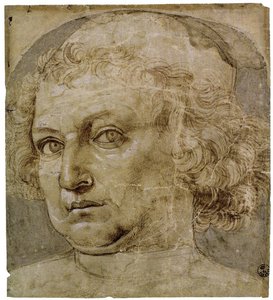
leonardo di ser piero da vinci & andrea del verrocchio
1452 - 1519 , Italy
Quick Facts
- Artistic Movement Or Style: High Renaissance
- Artists Or Movements Influenced By This Artist: ['High Renaissance artists']
- Artists Who Influenced This Artist: ['Andrea del Verrocchio']
- Date Of Birth: 1452
- Date Of Death: 1519
- Full Name: Leonardo da Vinci & Verrocchio
- Nationality: Italian
- Notable Artworks:
- Mona Lisa
- The Last Supper
- Vitruvian Man
- Head of St Andrew
- Madonna of the Carnation
- Baptism of Christ
- Place Of Birth: Vinci, Italy