 Preview
 Send
Send Share
Share
 Details

 Download
 Similars
 X-Ray
X-Ray Diaporama
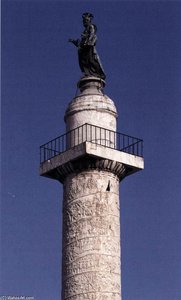
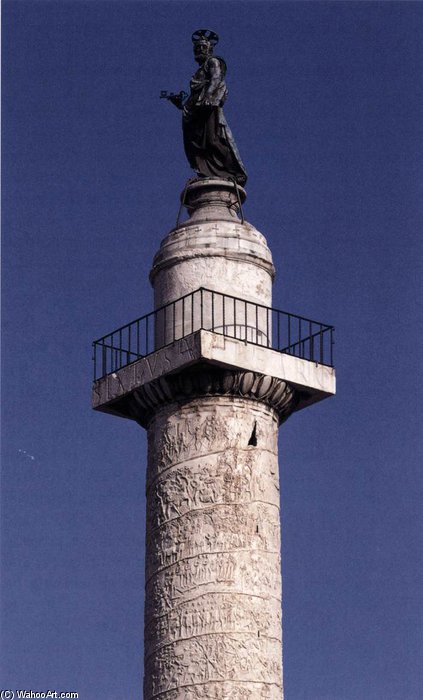
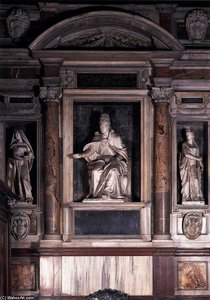
Statue Of St Peter On The Column Of Trajan

 Read More
Hand Made Oil Reproduction
Hand-painted oil on canvas in your size and frame, made to order by our artists. ( Buy Print Buy Image)




P118B $10

P118H $10

P118W $10

P438Z $10

P508JH $12

P508YH $12

P805H $10

P805Z $10

P919BZ $10

P919G $10

P919XJ $10

P959ZH $10

P968JZ $12

W106C $8

W218G $10

W218JH $8

W218Y $10

W307PJ $10

W316G $10

W316PJ $8

W316Y $10

W398PJ $8

W4111J $10

W500HY $15

W500JH $15

W692G $12

W849H $8

W940BG $15

W953PJ $8




Pick from our preset sizes that match the artwork's original proportions.

You may enter your own dimensions to fit a specific frame or space. If your selected size does not match the original image's proportions, we will either crop the artwork or extend the painting with additional hand-painted elements. A digital mockup will be sent for your approval before production begins.
Please note that the on-screen preview does not reflect the actual cropping or extension. Only the mockup will accurately show the final composition.
While custom sizes are available, we recommend selecting a dimension from the predefined list to preserve the original proportions.
After order, ArtsDot.com team will email client for instructions and provide a mockup preview
Worldwide Delivery () in 3/4 weeks instead of standard 5 weeks. (22 August). No compromise on quality.

Free Worldwide Express Shipping

High-Quality Linen Canvas

Full Shipping Insurance

Customs Tax Refund Guarantee

True Color Matching Guarantee

60-Day Return Policy (Defects Only)

100% Money-Back Guarantee

Bulk Discount Offer
 Glass option is only available in size under 110 CM

Statue Of St Peter On The Column Of Trajan
Reproduction Medium
Reproduction Size
-


Total Price
$ 263
Related Artworks
Artist Biography
Leonardo Sormani: The Shadow Sculptor of Rome
The name Leonardo Sormani, a figure shrouded in the mists of 16th-century Rome, represents one of the most intriguing enigmas within Italian Renaissance sculpture. While not boasting the flamboyant recognition afforded to giants like Michelangelo or Bernini, Sormani’s work—particularly his contributions to monumental tombs and religious statuary—holds a quiet power and remarkable realism that deserves deeper exploration. Much of our understanding is pieced together from fragmented biographical accounts, often contradictory, and reliant on the interpretations of later art historians. He was not a sculptor who sought fame or public acclaim; rather, he operated largely behind the scenes, meticulously crafting works intended to honor the deceased and elevate their memory within the grand tapestry of papal Rome.
The precise origins of Sormani remain elusive. Early accounts suggest a connection to Savona, a coastal town in Liguria, hinting at a possible early training influenced by the region’s rich sculptural tradition. However, the most widely accepted narrative points to his formative years in Milan, where he likely honed his skills amidst the vibrant artistic environment of the time. Giorgio Vasari, the famed biographer, referred to him as “Lionardo Milanese,” while Giovanni Baglione described a “Lionardo da Serzana” – a name that may have indicated his role as a restorer and craftsman alongside his sculptural endeavors. The discrepancies in these descriptions underscore the challenges of definitively establishing Sormani’s early life and training, leaving us with a tantalizingly incomplete portrait.
Monumental Realism: The Tomb of Nicholas IV and Beyond
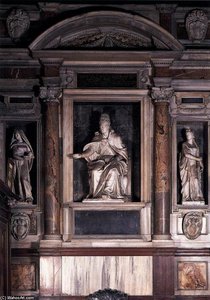
Sormani's reputation rests primarily on his significant contributions to the monumental tomb of Pope Nicholas IV (1447-1503) within Santa Maria Maggiore. This vast, complex project, undertaken during the pontificate of Sixtus V, demanded a multitude of skilled artisans, and Sormani’s role was crucial in achieving its imposing scale and intricate detail. He sculpted elements including parts of the elaborate facade, contributing to the overall grandeur of the tomb—a testament to papal power and piety. His work here showcased an exceptional ability to render human form with startling accuracy, capturing not just physical likeness but also a sense of psychological depth and emotional resonance.
Beyond the Papal tomb, Sormani’s influence is evident in several other notable works. The bust of Cardinal Rodolfo Pio da Carpi, housed within the Church of Santa Trinità dei Monti, exemplifies his mastery of portraiture—a remarkably lifelike depiction that reveals a keen understanding of anatomy and expression. His contributions to the chapel of Cardinal Giovanni Ricci in San Pietro in Montorio, featuring Saints Peter and Paul, demonstrate a similar commitment to realism and narrative detail. Furthermore, he played a role in the creation of statues for the Fountain of Acqua Felice, showcasing his versatility across various sculptural projects.
A Legacy of Restoration and Subtle Influence
It’s important to note that Sormani's career wasn’t solely defined by creating original works. Accounts suggest he was also a skilled restorer, meticulously preserving and repairing existing sculptures—a vital role in maintaining the artistic heritage of Rome. This dual capacity – as both creator and conservator – likely shaped his approach to sculpture, fostering an appreciation for craftsmanship and a deep understanding of materials.
Despite the lack of extensive documentation about his personal life, Sormani’s impact on Roman sculpture is undeniable. He operated within a complex network of artists and patrons, contributing to the city's artistic landscape without necessarily seeking individual recognition. His work reflects the prevailing trends of the High Renaissance—a focus on realism, anatomical accuracy, and emotional expression—while also demonstrating a subtle, understated elegance that distinguishes his style from the more flamboyant works of his contemporaries. His legacy lies not in grand monuments or celebrated portraits, but in the quiet beauty and enduring quality of his sculptures, silently witnessing the passage of centuries within the heart of Rome.
The Biblioteca Sormani: A Continuing Dialogue
Today, a tangible connection to Leonardo Sormani remains through the Biblioteca Sormani in Milan. Established by his descendants, this remarkable library houses an extensive collection of manuscripts, books, and artworks—a testament to the family’s enduring legacy. The Biblioteca Sormani serves as a vital center for research and scholarship, offering invaluable insights into the life and work of Leonardo Sormani and the broader artistic context of 16th-century Italy. It stands as a living archive, ensuring that this enigmatic sculptor's contributions are not forgotten.
Further information about Leonardo Sormani can be found on Wikipedia: https://en.wikipedia.org/wiki/Leonardo_Sormani
leonardo sormani
Italy
Quick Facts
- Artistic Movement Or Style: Renaissance Sculpture
- Artists Or Movements Influenced By This Artist: ['Michelangelo']
- Artists Who Influenced This Artist: ['Giorgio Vasari']
- Full Name: Leonardo Sormani
- Nationality: Italian
- Notable Artworks:
- Tomb of Nicholas IV
- Statue of St Peter
- Place Of Birth: Savona, Italy
Related Articles
El Greco's Masterpieces: Explore 25 Iconic Paintings & Spiritual Visions | ArtsDot
Journey through El Greco's 25 most iconic paintings! Explore the spiritual depth & dramatic beauty of this Spanish Renaissance master. Discover art history, techniques & find museum-quality reproductions for your home at ArtsDot.com.

Peter Graham Li: Capturing Light & Narrative in Contemporary Oil Painting
Discover the captivating oil paintings of Peter Graham Li – a contemporary artist celebrated for his masterful use of light, color, and impasto technique. Explore investment potential & curated selections at ArtsDot.

Giotto's Masterpieces: 25 Renaissance Artworks for Your Home | ArtsDot
Explore 25 breathtaking artworks by Giotto di Bondone, a Renaissance master. Discover the stories behind iconic frescoes & paintings like the Scrovegni Chapel cycle. Find museum-quality Giotto reproductions and elevate your home decor with ArtsDot.com.
Peter Paul Rubens: A Baroque Master's Life, Legacy & Enduring Influence
Discover the life & art of Peter Paul Rubens, the most influential artist of the Flemish Baroque tradition. Explore his masterpieces, legacy, and impact on art history with ArtsDot.
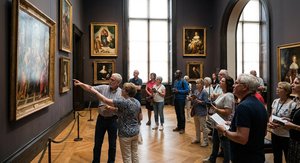
Alte Pinakothek's Masterpieces: 25 Iconic Paintings for Art Lovers | ArtsDot
Journey through Alte Pinakothek's 25 most iconic paintings! Explore masterpieces by Dürer, Rembrandt & Rubens. Discover art history, techniques & find museum-quality reproductions for your home at ArtsDot.com.