 Preview
 Send
Send Share
Share
 Details

 Download
 Similars
 X-Ray
X-Ray Diaporama
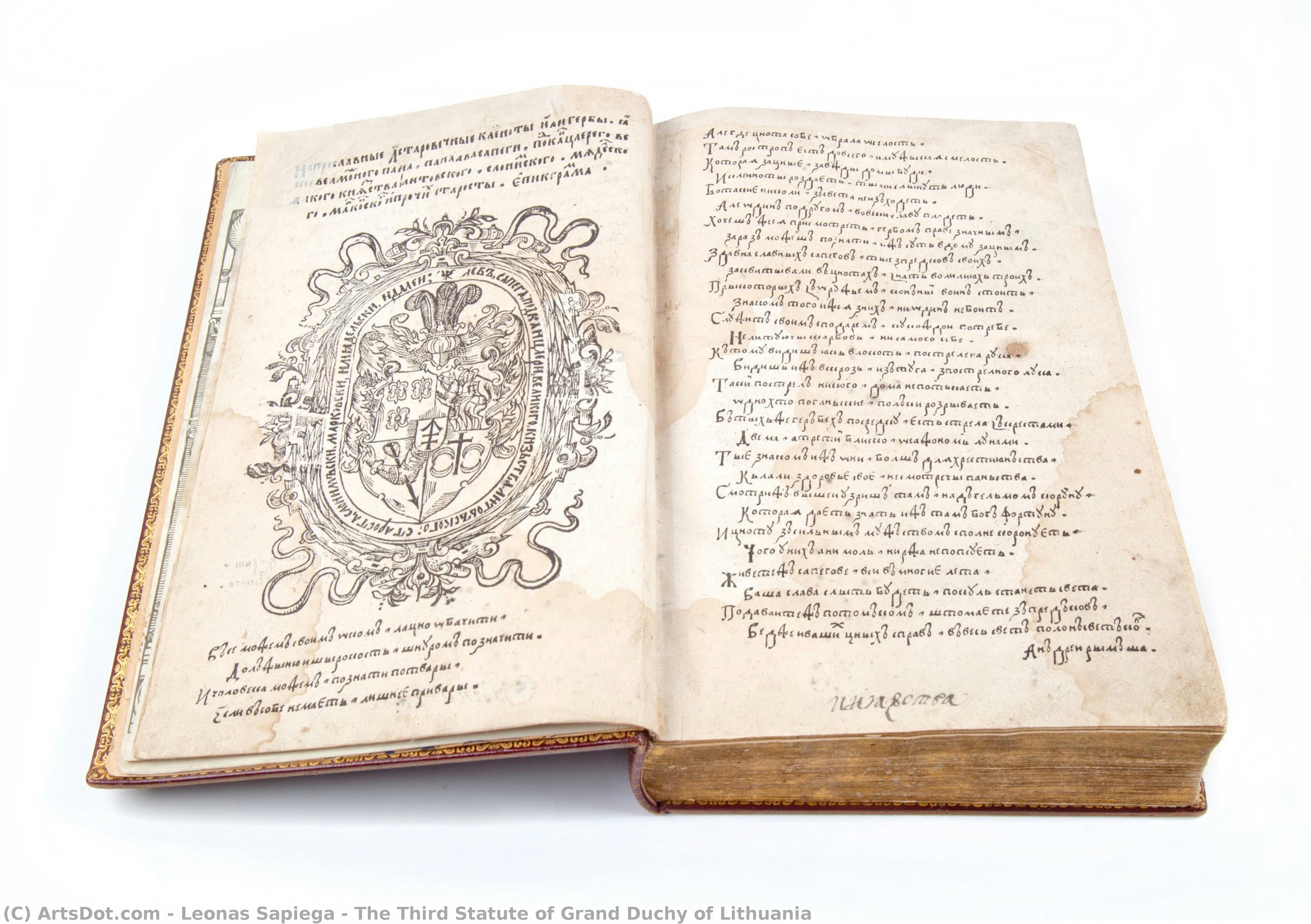
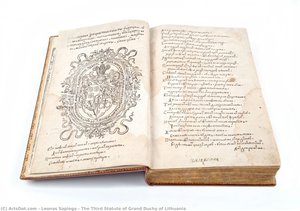
The Third Statute of Grand Duchy of Lithuania


 Read More
Hand Made Oil Reproduction
Hand-painted oil on canvas in your size and frame, made to order by our artists. ( Buy Print Buy Image)




































Pick from our preset sizes that match the artwork's original proportions.

You may enter your own dimensions to fit a specific frame or space. If your selected size does not match the original image's proportions, we will either crop the artwork or extend the painting with additional hand-painted elements. A digital mockup will be sent for your approval before production begins.
Please note that the on-screen preview does not reflect the actual cropping or extension. Only the mockup will accurately show the final composition.
While custom sizes are available, we recommend selecting a dimension from the predefined list to preserve the original proportions.
After order, ArtsDot.com team will email client for instructions and provide a mockup preview
Worldwide Delivery () in 3/4 weeks instead of standard 5 weeks. (26 August). No compromise on quality.

Free Worldwide Express Shipping

High-Quality Linen Canvas

Full Shipping Insurance

Customs Tax Refund Guarantee

True Color Matching Guarantee

60-Day Return Policy (Defects Only)

100% Money-Back Guarantee

Bulk Discount Offer
 Glass option is only available in size under 110 CM

The Third Statute of Grand Duchy of Lithuania
Reproduction Medium
Reproduction Size
-


Total Price
$ 263
Related Artworks

Artist Biography
The Architect of a Golden Age
In the grand, sweeping tapestry of Eastern European history, few figures loom as large or as intellectually commanding as Lew Sapieha. Born in 1557 near Vitebsk within the vibrant borders of the Grand Duchary of Lithuania—a region now known as Belarus—Sapieha was a man whose life was defined by the pursuit of order, law, and the preservation of a civilization. To understand his legacy is to understand the very soul of the Polish-Lithuanian Commonwealth during its most luminous era. He was not merely a nobleman; he was a polymath of the state, a scholar-warrior whose influence permeated the legal, political, and military structures of his time.
His early years were steeped in the humanist traditions that were then flourishing across Europe. Educated at the prestigious Vilnius University, Sapieha mastered the art of Latin, the essential language of diplomacy and high jurisprudence. This intellectual rigor provided him with more than just academic prestige; it gave him the tools to navigate a complex landscape of shifting alliances and intricate legal codes. His Ruthenian heritage, reflecting his Belarusian roots, served as a foundation for a life dedicated to the stability of a multi-ethnic and multi-confessional state, blending the diverse cultural threads of the Commonwealth into a singular, powerful identity.
A Legacy Written in Law and Steel
The career of Lew Sapieha was a remarkable ascent through the highest echelons of power. From his early appointment as Great Secretary of Lithuania in 1580, he demonstrated an uncanny ability to transform administrative necessity into lasting institutional strength. As he moved through roles such as Grand Clerk and Crown Chancellor, his focus remained steadfast on the codification of justice. His most enduring achievement, often regarded as a masterpiece of political craftsmanship, was the Third Statute of Lithuania. This monumental legal document was not merely a collection of rules but a profound statement of sovereignty and civil rights, providing a structured framework that would govern the region for generations.
Yet, Sapieha’s brilliance was not confined to the quiet halls of chancelleries or the scholarly study of manuscripts. He possessed the iron will required of a Great Lithuanian Hetman. When the borders of the Commonwealth were threatened by Muscovite invasions, he stepped onto the battlefield with the same decisive precision he applied to legal reform. His military leadership was characterized by a strategic depth that mirrored his political acumen, ensuring that the territorial integrity of Lithuania remained unbowed during periods of intense conflict. In this duality—the diplomat and the defender—we find the true essence of his historical significance.
The Enduring Echo of a Statesman
As we look back upon the life of Lew Sapieha, we see more than just a list of titles or a series of political victories. We see the embodiment of an era where erudition and action were inextricably linked. His death in 1633 marked the end of a transformative chapter, but the structures he built remained. The legal precedents he established and the administrative stability he fostered allowed the Grand Duchy to navigate the turbulent waters of the seventeenth century with a sense of purpose and identity.
His life remains a testament to the power of individual agency in shaping the destiny of nations. Through his work, Sapieha ensured that the cultural and political flourishing of the Commonwealth was anchored in a foundation of law. Today, he is remembered not only as a titan of Lithuanian history but as a symbol of the intellectual and martial vigor that once defined the heart of Eastern Europe. His story continues to resonate, reminding us of a time when the pen and the sword worked in harmony to forge a lasting legacy.
leonas sapiega
1557 - 1633 , Belarus
Quick Facts
- Artistic Movement Or Style: Renaissance
- Artists Or Movements Influenced By This Artist: ['Renaissance']
- Artists Who Influenced This Artist: ['Jan Matejko']
- Date Of Birth: April 4, 1557
- Date Of Death: July 7, 1633
- Full Name: Lew Sapieha
- Nationality: Ruthenian (Belarusian)
- Notable Artworks: ['The Third Statute of Grand Duchy of Lithuania']
- Place Of Birth: Ostrovno, Belarus