

 Preview
 Send
Send Share
Share
 Details

 Download
 Similars
 X-Ray
X-Ray Diaporama
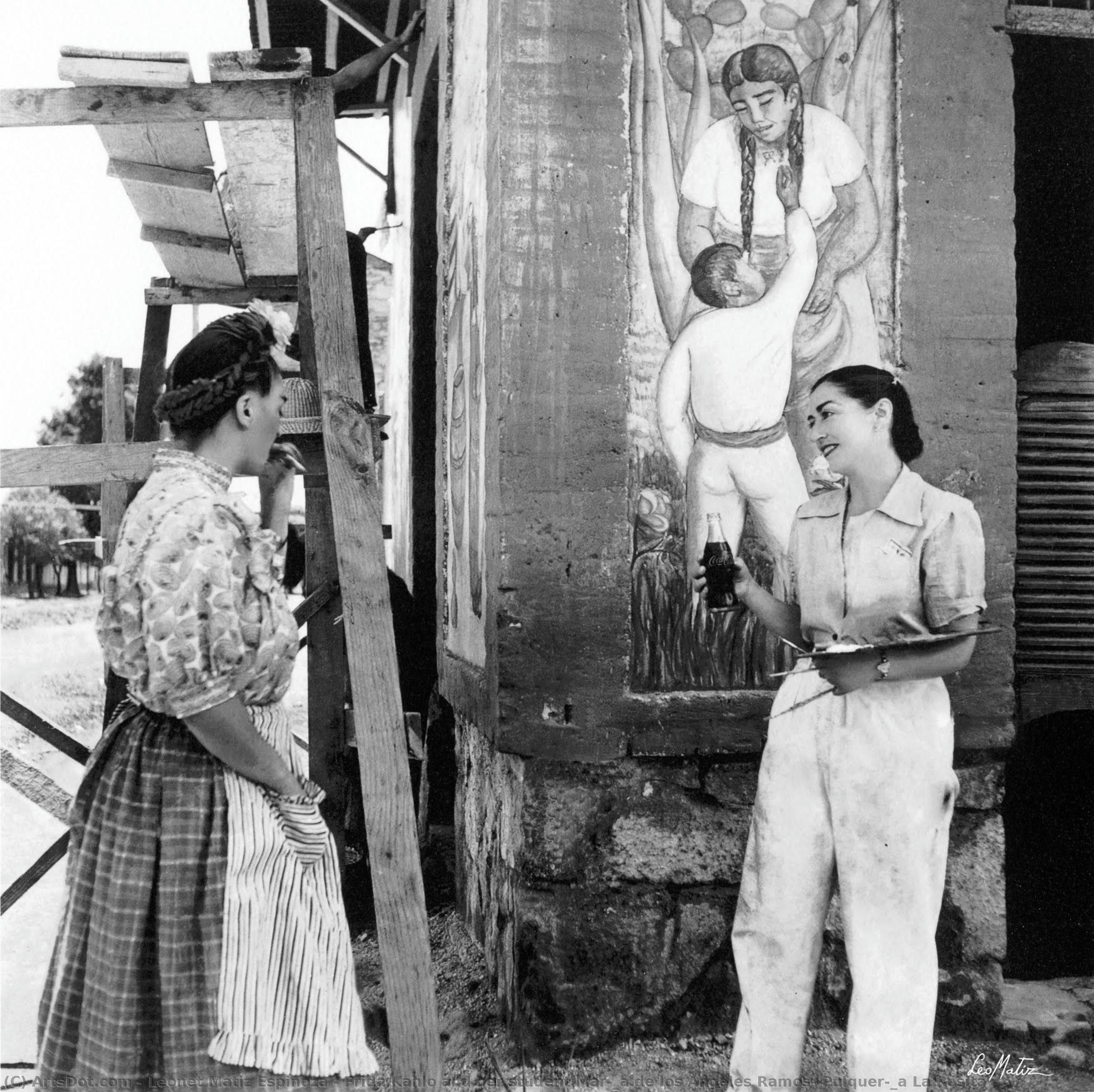
Frida Kahlo and her student Mar�_a de los Angeles Ramos, Pulquer�_a La Rosita


 Read More
Purchase a high-resolution, enhanced digital image, far superior to the online preview.
Each file is meticulously prepared by our in-house specialists using advanced tools and expert manual retouching. We ensure every image has exceptional clarity, precise color accuracy, and fine detail.
The final file is delivered via email within 72 hours, optimized for immediate use in professional, editorial, and print environments. This is the same quality trusted by top-tier design studios, publishers, and galleries.
Digital Image
Download a high-resolution file for personal display, printing, and creative projects. ( Buy Print Buy Hand Made Painting)
Included in Every Digital Image Order
Expert Digital Delivery, Guaranteed
When you choose ArtsDot.com, you're not just getting an image - you're receiving a professionally enhanced digital artwork, crafted with precision and backed by a satisfaction guarantee. Here's everything that comes with your order, automatically:

Fast Email Delivery
Your high-resolution digital image file will be emailed to you within 72 hours of ordering - ready for immediate use.

AI-Enhanced Digital File
Your artwork is professionally optimized using advanced AI tools and manual editing, ensuring maximum detail, clarity, and color accuracy.

Free Lifetime Re-Delivery
Accidentally deleted or lost your file? No worries - we'll resend it to you anytime, free of charge.

No Import Fees - Ever
Enjoy your artwork instantly with zero customs, duties, or delivery fees - digital downloads are always tax-free.

Color Accuracy Guarantee
We ensure your digital image reflects the original colors as closely as possible using professional tools and color management.

60-Day Satisfaction Guarantee
If you're not satisfied with your digital image, we'll revise it or refund 100% within 60 days - no questions asked.

100% Money-Back Guarantee
Not satisfied? Get a full refund within 60 days of receiving your digital file - no questions asked.

Bulk Order Discounts
Buy 3 images, save 10% - Buy 5, save 15% - Buy 10+, save 20%. Great for creative projects, galleries, and agencies.
A Moment of Collaboration: Frida Kahlo and María de los Ángeles Ramos at Pulquería La Rosita
Leo Matiz’s 1945 photograph, “Frida Kahlo and her student Mar�_a de los Ángeles Ramos, Pulquería La Rosita,” transcends a simple snapshot; it's a vibrant tableau of artistic mentorship and the burgeoning cultural landscape of post-revolutionary Mexico. The image captures a candid moment within the bustling Pulquería La Rosita, a small cantina in Coyoacán, where Frida Kahlo, already an icon of Mexican identity and surrealist art, is seen alongside her student, María de los Ángeles Ramos. This isn’t a formal portrait but rather a glimpse into a shared creative space—a testament to the exchange of ideas and techniques that fueled much of Mexico's artistic renaissance.
The composition immediately draws the eye to the mural dominating the right side of the frame, a vibrant explosion of color and narrative. It’s clear from the scaffolding and the focused attention of both women that this is an ongoing project—a collaborative effort between Frida and her student. Ramos, positioned closer to the viewer, appears engaged in the work, while Frida observes with a thoughtful expression, suggesting a quiet appreciation for the unfolding scene. The blurred background figures add depth and context, hinting at the everyday life surrounding this artistic encounter.
Technical Details and Artistic Choices
Matiz’s masterful use of black and white photography is crucial to the photograph's impact. He employs a moderate perspective, placing the viewer almost eye-level with the subjects, fostering a sense of intimacy and immediacy. The shallow depth of field effectively isolates Frida and Ramos, drawing attention to their interaction while subtly blurring the surrounding environment. Lines are prominent—the sharp angles of the scaffolding, the intricate details of the mural’s figures, and the structured clothing worn by both women—creating a strong visual rhythm. Textures are deliberately rendered: the rough surface of the wall contrasts with the smoother fabrics of their garments, adding tactile interest to the image.
The photograph's grainy texture, characteristic of black-and-white photography from that era, lends it an authentic and slightly nostalgic quality. It’s a documentary style piece, capturing a fleeting moment rather than staging a formal portrait. The diffused lighting suggests natural light filtering through a window, casting soft shadows and minimizing harsh contrasts—a deliberate choice that enhances the photograph's mood and atmosphere.
Symbolism and Context
Beyond its immediate visual appeal, “Frida Kahlo and her student” is rich in symbolism. The mural itself likely depicts a family scene, potentially referencing themes of motherhood, heritage, or the complexities of Mexican identity—all recurring motifs in Frida’s work. The act of painting together represents more than just artistic collaboration; it symbolizes the passing down of knowledge, tradition, and cultural values from one generation to the next. The presence of Ramos highlights the importance of nurturing young talent within the art community.
Furthermore, the setting—a humble cantina—contrasts sharply with Frida’s iconic image, revealing a more grounded and accessible side of her personality. It suggests that even amidst the surrealism and symbolism of her art, she remained deeply connected to the everyday realities of Mexican life. The photograph offers a rare glimpse into her creative process and her commitment to fostering artistic growth within her community.
A Legacy Captured in Light
Leo Matiz’s “Frida Kahlo and her student Mar�_a de los Ángeles Ramos, Pulquería La Rosita” is more than just a photograph; it's a poignant testament to the power of collaboration, mentorship, and cultural exchange. It captures a fleeting moment in time—a shared vision brought to life through art—and serves as a lasting reminder of Frida Kahlo’s enduring legacy as an artist, icon, and champion of Mexican identity.
Related Artworks

Artist Biography
A Visionary Lens: The Life and Legacy of Leonet Matiz Espinoza
Leonet Matiz Espinoza was far more than a mere observer behind a lens; he was a profound storyteller whose life unfolded as a vibrant tapestry of Latin American history. Born on April 1, 1917, in the sun-drenched village of Aracataca, Colombia—the same cradle of literary legend Gabriel García Márquez—Matiz carried within him an innate sense of wonder and a restless spirit. His early years were defined by movement and discovery, as he traveled extensively through Central America and Mexico, honing his craft as a caricaturist and illustrator. This itinerant existence allowed him to absorb the raw textures of human character and social reality, forming the foundation of an artistic voice that would eventually resonate far beyond the borders of his homeland. As his career matured, Matiz transitioned from the quick, expressive strokes of caricature to the profound, silent narratives of photography. His eye was uniquely attuned to the interplay of light and shadow, a skill that allowed him to capture the very soul of his subjects. During his transformative decade in Mexico, he became deeply embedded in the heart of the artistic avant-garde. He moved within circles of giants, collaborating on film projects with masters like Manuel Alvarez Bravo and Gabriel Figueroa, and documenting the monumental efforts of muralists such as David Alfaro Siqueiros. His work during this era was not merely documentary; it was an exploration of identity, capturing the strength and vulnerability of a continent in flux.The Architect of Iconic Moments
The true magic of Matiz’s oeuvre lies in his ability to freeze time, turning fleeting glances into eternal icons. He possessed a rare, humanistic touch that made him a preferred chronicler for the most legendary figures of the twentieth century. His portraits of Frida Kahlo and Diego Rivera remain among his most cherished contributions to art history. Through his camera, we see Kahlo not just as a symbol of Mexican resilience, but in candid, intimate moments—gazing at the sky or sharing space with her students—revealing the profound humanity beneath the icon. His ability to navigate the delicate balance between the monumental and the personal allowed him to document the essence of Mexican Muralism and the spirit of the era with unparalleled grace. Beyond the portraits of legends, Matiz’s photographic journey took him to the global stage. In 1948, his move to New York City brought him into the orbit of prestigious institutions like Life magazine and the United Nations. Here, his work took on a more urgent, journalistic weight as he documented the intense conflicts of the Middle East. This period of his life was marked by a profound confrontation with human suffering and political upheaval, experiences that added layers of depth and gravity to his visual language. Whether capturing the architectural geometry of a Venezuelan hallway or the dramatic lighting of a mid-century portrait, his work always sought to find the infinite within the finite.A Lasting Impression on Colombian and Global Art
Matiz’s significance extends well beyond his photographic mastery; he was a pivotal architect of the Colombian art scene. In 1951, he established a gallery in Bogotá that would serve as a sanctuary for emerging talent. Most notably, it was within his gallery that the first exhibition of Fernando Botero took place, a moment that forever altered the trajectory of Colombian contemporary art. By providing a platform for local artists, Matiz acted as a bridge between the regional and the global, championing the importance of Latin American contributions to the international artistic landscape. His legacy is characterized by a multifaceted brilliance that refused to be confined to a single medium. As a painter, publisher, and gallery owner, he cultivated a bohemian atmosphere that nourished generations of creators. Even as his personal style—marked by his flamboyant mustache and colorful attire—became a recognizable part of his persona, his true impact remained in the quiet power of his images. Today, we remember Leonet Matiz Espinoza not just as a photographer of famous faces, but as a visionary who used light to illuminate the complex, beautiful, and often turbulent history of the Americas.- Early Life: Born in Aracataca, Colombia, 1917.
- Key Subjects: Frida Kahlo, Diego Rivera, and the masters of Mexican Muralism.
- Major Contributions: Hosted the first exhibition of Fernando Botero; worked for Life magazine.
- Artistic Range: Photography, caricature, painting, and newspaper publishing.
- Historical Impact: Documented social change and the evolution of Latin American identity.
leonet matiz espinoza
1917 - 1998 , Colombia
Quick Facts
- Artistic Movement Or Style: Photography & Caricature
- Artists Or Movements Influenced By This Artist: ['Mexican Cinema']
- Artists Who Influenced This Artist:
- Gustave Doré
- George Grozt
- David Alfaro Siqueiros
- Date Of Birth: April 1, 1917
- Date Of Death: October 24, 1998
- Full Name: Leonet Matiz Espinoza
- Nationality: Colombian
- Notable Artworks: ['The Poligon']
- Place Of Birth: Aracataca, Colombia

