

 Preview
 Send
Send Share
Share
 Details

 Download
 Similars
 X-Ray
X-Ray Diaporama
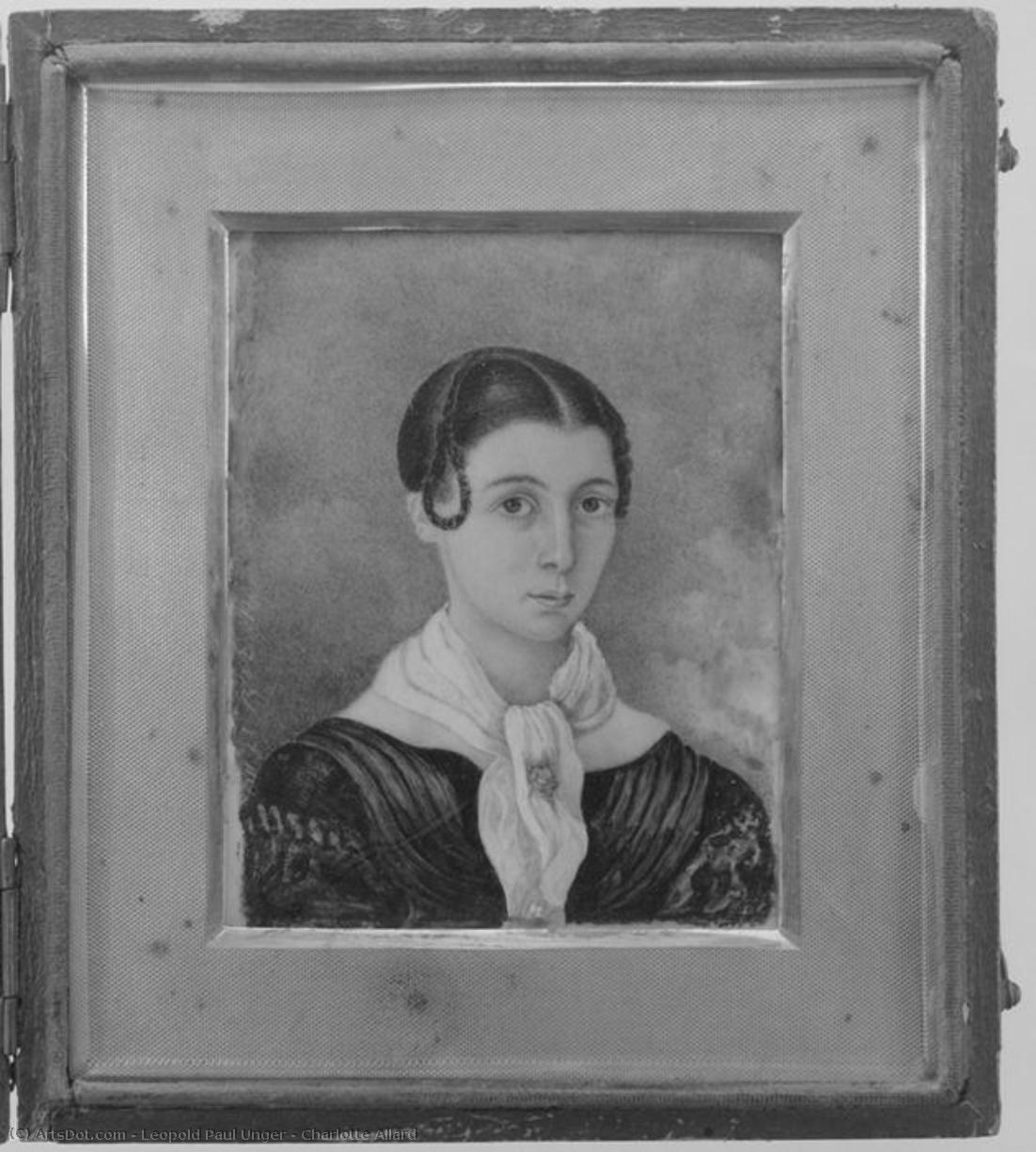
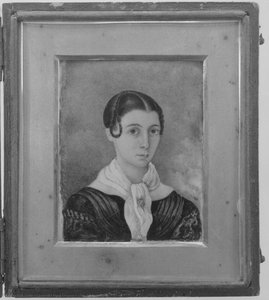
Charlotte Allard
 1840
1840 7.0 x 6.0 cm
 Read More
Hand Made Oil Reproduction
Hand-painted oil on canvas in your size and frame, made to order by our artists. ( Buy Print Buy Image)




































Pick from our preset sizes that match the artwork's original proportions.

You may enter your own dimensions to fit a specific frame or space. If your selected size does not match the original image's proportions, we will either crop the artwork or extend the painting with additional hand-painted elements. A digital mockup will be sent for your approval before production begins.
Please note that the on-screen preview does not reflect the actual cropping or extension. Only the mockup will accurately show the final composition.
While custom sizes are available, we recommend selecting a dimension from the predefined list to preserve the original proportions.
After order, ArtsDot.com team will email client for instructions and provide a mockup preview
Worldwide Delivery () in 3/4 weeks instead of standard 5 weeks. (26 August). No compromise on quality.

Free Worldwide Express Shipping

High-Quality Linen Canvas

Full Shipping Insurance

Customs Tax Refund Guarantee

True Color Matching Guarantee

60-Day Return Policy (Defects Only)

100% Money-Back Guarantee

Bulk Discount Offer
 Glass option is only available in size under 110 CM

Charlotte Allard
Reproduction Medium
Reproduction Size
-


Total Price
$ 263
Related Artworks






Artist Biography
The Delicate Legacy of Leopold Paul Unger
In the grand tapestry of nineteenth-century European art, certain names shine with a blinding brilliance, while others exist as subtle, exquisite threads that hold the fabric together. Leopold Paul Unger belongs to this latter, more intimate category. Born in Brandenburg, Germany, in 1812, Unger did not seek the sprawling canvases of history painting; instead, he mastered the profound power of the miniature. His life and work represent a quiet mastery of portraiture, where the vastness of human emotion is compressed into tiny, luminous surfaces. Though his name may not command the immediate recognition of a Delacroix or a Turner, his ability to capture the very essence of a soul within a few square centimeters remains an unparalleled feat of technical precision and psychological depth.
Unger’s journey into the heart of portraiture began under the watchful eye of Johann Christian Gärtner, a master of the genre who instilled in his pupil a rigorous devotion to observation. This apprenticeship was foundational, teaching Unger that a portrait is far more than a mere physical record; it is an exploration of character. During his formative years in the artistic atmosphere of Prussia, Unger refined a technique that would become his hallmark: the use of watercolor on ivory. This choice of medium was essential to his vision, as the translucent nature of ivory allowed light to pass through the pigment and reflect back, creating a luminous, lifestone-like quality in the skin tones of his subjects. His brushwork, incredibly delicate and precise, could render the finest textures of lace, the softest contour of a cheek, or the fleeting glint of an eye with breathtaking accuracy.
A Window into the Prussian Soul
The significance of Unger’s work lies in his ability to act as a silent chronicler of his era. His subjects were not mere anonymous faces but the intellectual and political architects of nineteenth-century Germany. Through his miniature portraits, one can encounter the weight of history in the gaze of Wilhelm II, the regal presence of Kaiser Friedrich III, and the profound intellect of the poet Heinrich Heine. In these small-scale masterpieces, Unger achieved a remarkable feat: he captured the psychological interiority of the Prussian aristocracy and intelligentsia. He did not merely paint their status; he painted their humanity, conveying subtle nuances of thought, melancholy, or resolve that larger, more bombastic portraits often overlooked.
His artistic development was deeply rooted in the traditions of the Romantic era, yet his approach remained grounded in a meticulous realism. This tension between the emotional depth of Romanticism and the disciplined precision of his technique allowed him to create works that feel both timeless and intensely personal. As he navigated the social circles of the German elite, his portraits became cherished keepsakes—intimate objects meant to be held close, much like the very emotions they depicted. His influence, while perhaps more localized than the titans of the era, left an indelible mark on the tradition of European miniature painting, proving that greatness is not measured by scale, but by the depth of the connection made between the artist and the subject.
Enduring Presence in the Modern Canon
Though Leopold Paul Unger passed away in 1859, leaving behind a legacy that was for a time shrouded in relative obscurity, his importance has been reaffirmed by the enduring reverence of art historians and curators. The survival of his delicate works is a testament to their intrinsic value, as they have found permanent homes in some of the world's most prestigious institutions. Today, his mastery can be studied and admired within the halls of:
- The National Portrait Gallery in London, where his ability to capture historical likeness remains a vital part of the British portraiture narrative.
- The Metropolitan Museum of Art in New York City, providing a window into the refined aesthetic of nineteenth-century German art for a global audience.
- The Allentown Art Museum, ensuring that his meticulous contributions to the genre of miniature painting continue to inspire new generations of collectors and scholars.
Ultimately, the work of Leopold Paul Unger serves as a reminder that true artistry often resides in the details. In an age of grand gestures, his small, luminous portraits stand as a testament to the beauty of the understated, inviting us to look closer, to linger on the subtle gradations of light, and to rediscover the profound stories hidden within the smallest of frames.
leopold paul unger
1812 - 1859 , Germany
Quick Facts
- Artistic Movement Or Style: Romantic Portraiture
- Date Of Birth: 1812
- Full Name: Leopold Paul Unger
- Nationality: German
- Notable Artworks: ['Self-Portrait']
- Place Of Birth: Brandenburg, Germany

