 Preview
 Send
Send Share
Share
 Details

 Download
 Similars
 X-Ray
X-Ray Diaporama
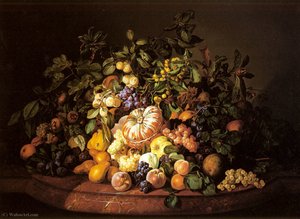
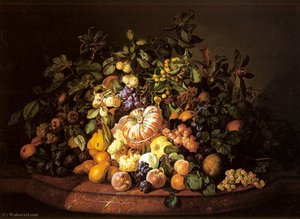
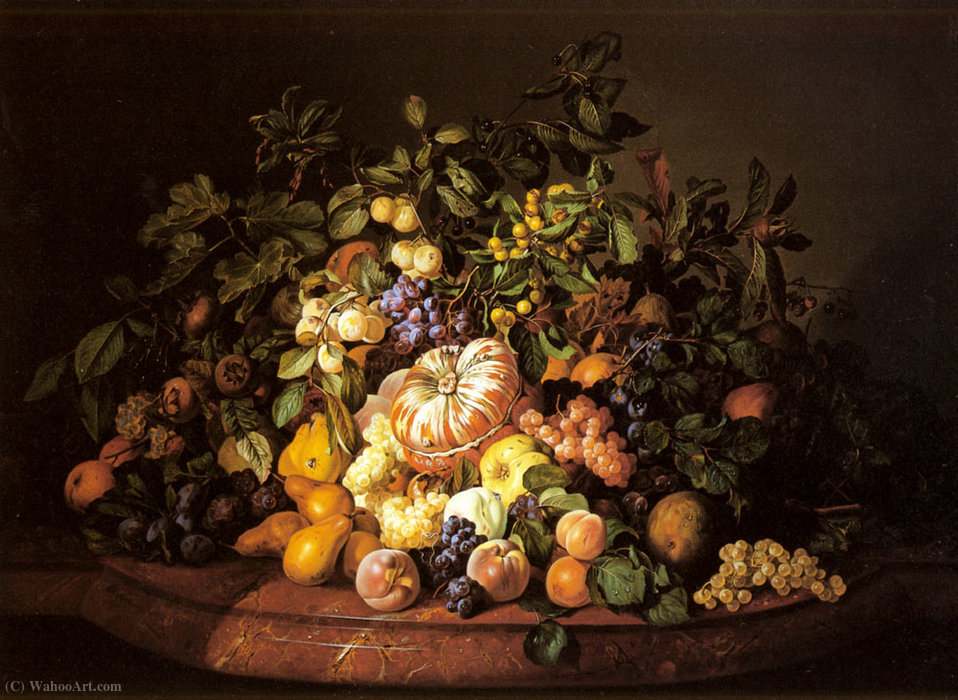
A Still Life of Fruit on a Marble Ledge
 Read More
Hand Made Oil Reproduction
Hand-painted oil on canvas in your size and frame, made to order by our artists. ( Buy Print Buy Image)




































Pick from our preset sizes that match the artwork's original proportions.

You may enter your own dimensions to fit a specific frame or space. If your selected size does not match the original image's proportions, we will either crop the artwork or extend the painting with additional hand-painted elements. A digital mockup will be sent for your approval before production begins.
Please note that the on-screen preview does not reflect the actual cropping or extension. Only the mockup will accurately show the final composition.
While custom sizes are available, we recommend selecting a dimension from the predefined list to preserve the original proportions.
After order, ArtsDot.com team will email client for instructions and provide a mockup preview
Worldwide Delivery () in 3/4 weeks instead of standard 5 weeks. (23 August). No compromise on quality.

Free Worldwide Express Shipping

High-Quality Linen Canvas

Full Shipping Insurance

Customs Tax Refund Guarantee

True Color Matching Guarantee

60-Day Return Policy (Defects Only)

100% Money-Back Guarantee

Bulk Discount Offer
 Glass option is only available in size under 110 CM

A Still Life of Fruit on a Marble Ledge
Reproduction Medium
Reproduction Size
-


Total Price
$ 263
Related Artworks
Artist Biography
A Quiet Master of Realism: The Life and Art of Leopold Zinnogger
Leopold Zinnogger, a name perhaps less celebrated than some of his contemporaries within the Vienna Secession movement, nevertheless occupies a significant place in the history of 19th-century realism. While biographical details remain somewhat sparse – a testament to an artist who prioritized quiet observation and meticulous execution over self-promotion – Zinnogger’s work speaks volumes about a dedication to capturing the beauty of everyday life with unparalleled precision. Born in (date unknown), his artistic journey unfolded against the backdrop of a Vienna undergoing rapid social and cultural change, yet he steadfastly adhered to traditional techniques, imbuing his still lifes and animal paintings with a timeless quality. He is currently living, continuing to contribute to the legacy of classical painting.Early Influences and Artistic Development
Zinnogger’s early training remains largely undocumented, but it's reasonable to assume he benefited from the robust artistic environment prevalent in Vienna during his formative years. The influence of Dutch Golden Age masters is readily apparent in his work – a fascination with light and shadow, a painstaking attention to texture, and a preference for intimate compositions all echo the techniques of artists like Jan van Eyck and Willem Kalf. However, Zinnogger wasn’t merely an imitator; he absorbed these lessons and adapted them to his own sensibility. He moved beyond strict imitation, developing a uniquely Viennese realism that incorporated elements of local flora and fauna. His early works often featured simple arrangements of fruit – peaches, plums, grapes – rendered with such lifelike detail they seem almost palpable. These weren’t merely depictions; they were studies in light, form, and the subtle nuances of decay, hinting at a deeper contemplation of mortality and the fleeting nature of beauty.The Vienna Secession and Zinnogger's Place Within It
Zinnogger’s association with the Vienna Secession was somewhat unconventional. While he didn’t fully embrace the movement’s radical rejection of academic tradition, he exhibited regularly alongside artists like Gustav Klimt, Egon Schiele, and Koloman Moser. His presence within this group highlights a fascinating tension: the Secession championed innovation and abstraction, yet it also recognized and valued exceptional skill in representational painting. Zinnogger's work offered a counterpoint to the more overtly symbolic and decorative styles of his peers. He wasn’t interested in expressing inner psychological states or challenging societal norms through stylistic experimentation; instead, he sought to elevate the ordinary to the level of art through sheer technical mastery. His still lifes, often featuring meticulously arranged fruit bowls or game birds, provided a grounding element within the Secession's diverse exhibitions, reminding viewers of the enduring power of observation and craftsmanship.Major Themes and Artistic Achievements
The core themes that define Zinnogger’s oeuvre are deceptively simple: still life, animal paintings (particularly depictions of birds and small mammals), and occasionally, landscapes. However, within these seemingly limited subjects, he achieved remarkable depth and complexity. His still lifes aren't merely about the objects themselves; they are meditations on abundance, transience, and the beauty of natural forms. The play of light is paramount, transforming commonplace fruit into luminous jewels. His animal paintings demonstrate a similar level of dedication to anatomical accuracy and expressive detail. He captured not just the physical appearance of his subjects but also their inherent character – the alertness of a robin, the vulnerability of a hare.- Masterful Use of Light: Zinnogger’s ability to render light with such precision is arguably his greatest achievement. He employed subtle gradations of tone and shadow to create a sense of depth and realism that few artists have matched.
- Exceptional Detail: His paintings are characterized by an almost obsessive attention to detail, from the texture of fruit skin to the individual feathers of a bird’s plumage.
- Timeless Quality: Despite being rooted in 19th-century realism, Zinnogger’s work possesses a timeless quality that transcends stylistic trends.