 Preview
 Send
Send Share
Share
 Details

 Download
 Similars
 X-Ray
X-Ray Diaporama
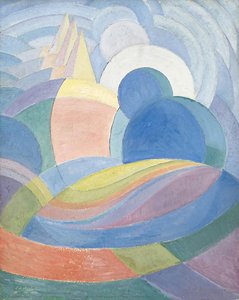
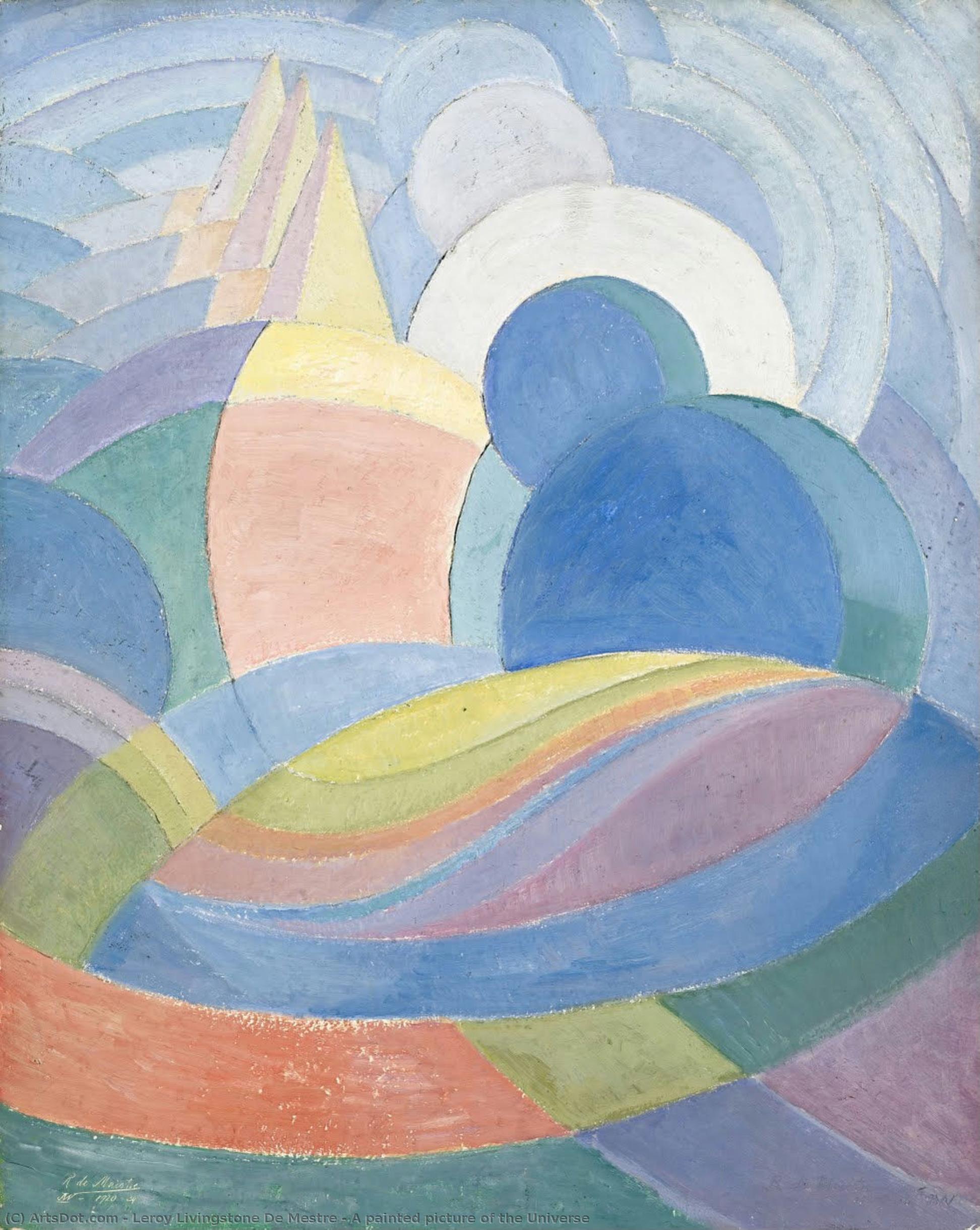
A painted picture of the Universe


 Read More
Hand Made Oil Reproduction
Hand-painted oil on canvas in your size and frame, made to order by our artists. ( Buy Print Buy Image)




P118B $10

P118H $10

P118W $10

P438Z $10

P508JH $12

P508YH $12

P805H $10

P805Z $10

P919BZ $10

P919G $10

P919XJ $10

P959ZH $10

P968JZ $12

W106C $8

W218G $10

W218JH $8

W218Y $10

W307PJ $10

W316G $10

W316PJ $8

W316Y $10

W398PJ $8

W4111J $10

W500HY $15

W500JH $15

W692G $12

W849H $8

W940BG $15

W953PJ $8




Pick from our preset sizes that match the artwork's original proportions.

You may enter your own dimensions to fit a specific frame or space. If your selected size does not match the original image's proportions, we will either crop the artwork or extend the painting with additional hand-painted elements. A digital mockup will be sent for your approval before production begins.
Please note that the on-screen preview does not reflect the actual cropping or extension. Only the mockup will accurately show the final composition.
While custom sizes are available, we recommend selecting a dimension from the predefined list to preserve the original proportions.
After order, ArtsDot.com team will email client for instructions and provide a mockup preview
Worldwide Delivery () in 3/4 weeks instead of standard 5 weeks. (4 September). No compromise on quality.

Free Worldwide Express Shipping

High-Quality Linen Canvas

Full Shipping Insurance

Customs Tax Refund Guarantee

True Color Matching Guarantee

60-Day Return Policy (Defects Only)

100% Money-Back Guarantee

Bulk Discount Offer
 Glass option is only available in size under 110 CM

A painted picture of the Universe
Reproduction Medium
Reproduction Size
-


Total Price
$ 263
A Universe Captured on Canvas: De Maistre’s ‘A Painted Picture of the Universe’
Roy Livingstone de Maistre's “A Painted Picture of the Universe,” created in 1934, isn’t merely a landscape; it’s an invitation to contemplate the sublime. Born in Bowral, Australia, during a period of burgeoning artistic experimentation, de Maistre was a pioneer of ‘colour-music,’ a radical theory that sought to translate musical scales into visual harmonies. This particular work embodies that philosophy with breathtaking intensity, offering a glimpse into a world where color and form coalesce to evoke profound emotional resonance.
The painting immediately commands attention with its expansive scale – 50 x 40 cm – allowing the viewer to become fully immersed in its swirling depths. Dominated by rich blues and vibrant yellows, it depicts a mountainous terrain bathed in an ethereal light. The peaks rise dramatically against a sky filled with billowing clouds, creating a sense of both grandeur and turbulence. However, it’s not a realistic representation; rather, the landscape is flattened, simplified, almost abstracted, hinting at de Maistre's exploration beyond mere imitation. Notice how the horizon line recedes into an ambiguous distance, blurring the boundaries between foreground and background – a technique reminiscent of early Cubism, yet infused with a distinctly Australian sensibility.
The Genesis of Colour-Music
De Maistre’s artistic journey was deeply intertwined with music. Collaborating with Adrian Verbrugghen, he developed a colour-music scale, meticulously mapping the spectrum of colors to the notes of both major and minor musical scales. This wasn't simply an aesthetic choice; it represented a profound belief that color and sound were fundamentally interconnected – two expressions of the same underlying reality. The influence of this theory is palpable in “A Painted Picture of the Universe,” where the hues seem to vibrate with an almost audible energy. The blues, particularly, evoke a sense of vastness and contemplation, while the yellows suggest warmth, light, and perhaps even spiritual illumination.
Interestingly, de Maistre’s exploration of abstraction wasn't entirely divorced from his earlier influences. His training at the Royal Art Society of New South Wales under Antonio Dattilo-Rubbo exposed him to Post-Impressionism, a movement that emphasized subjective experience and emotional expression over strict representation. This legacy is evident in the painting’s bold use of color and its willingness to distort perspective – hallmarks of both movements.
Symbolic Landscapes and Emotional Resonance
Beyond its technical merits, “A Painted Picture of the Universe” resonates with a powerful sense of symbolism. The mountains themselves can be interpreted as metaphors for human aspiration, reaching towards an unknowable horizon. The clouds, swirling and dynamic, represent change, uncertainty, and perhaps even the chaotic beauty of existence. The presence of two figures in the foreground – seemingly observing this dramatic landscape – adds another layer of meaning. They could symbolize humanity’s place within the cosmos, inviting us to contemplate our own insignificance and yet simultaneously affirming our capacity for wonder.
Created during a period of significant artistic upheaval in Europe—the rise of non-objective art and geometric abstraction—de Maistre's work stands as a testament to Australia’s burgeoning modern art scene. It’s a bold, imaginative piece that transcends the limitations of mere landscape painting, offering instead a profound meditation on color, music, and the human condition. The painting’s enduring appeal lies in its ability to evoke a sense of both awe and introspection, inviting viewers to lose themselves within its vibrant depths.
A Reproduction for Your Space
Reproductions of “A Painted Picture of the Universe” offer a remarkable opportunity to bring this captivating artwork into your home or office. The detailed brushwork and rich color palette are faithfully captured in high-quality prints, allowing you to experience the painting’s emotional impact firsthand. Consider framing it within a simple, elegant frame to allow the artwork's intensity to shine through. This piece is more than just decoration; it’s an investment in beauty, contemplation, and a connection to the visionary art of Roy Livingstone de Maistre.
Related Artworks
Artist Biography
Leroy Livingstone de Maistre: A Pioneer of Australian Modern Art
Early Life and Education
- Born: March 27, 1894, in Bowral, New South Wales, Australia as Leroy Livingstone de Mestre.
- De Maistre came from a prominent family; his father was a renowned racehorse trainer and his grandfather a successful businessman.
- He received a private education through tutors and governesses before pursuing formal studies in art and music in Sydney in 1913.
- He studied violin and viola at the New South Wales State Conservatorium of Music, even playing viola in the Sydney Orchestra.
- His artistic training began at the Royal Art Society of New South Wales under Antonio Dattilo-Rubbo, alongside future notable artists like Grace Cossington Smith and Roland Wakelin. He was encouraged to explore Post-Impressionism.
World War I and Early Artistic Development
- De Maistre attempted to enlist in the First Australian Imperial Force multiple times, facing initial rejections due to health concerns. He eventually served as a medical orderly.
- Tuberculosis, which he had concealed from army doctors, significantly impacted his physical condition and ultimately led to his discharge.
- His illness prompted him to focus solely on painting, abandoning his musical aspirations.
- Early works (1916) reflected Impressionistic influences, focusing on the effects of light.
The Colour-Music Experiments
- De Maistre’s most groundbreaking work began with his exploration of “colour-music” in 1917. He collaborated with Dr. Charles Gordon Moffit on colour therapy for shell-shocked soldiers.
- He developed a theory harmonizing colours and musical notes, believing they shared fundamental relationships.
- Working with Adrian Verbrugghen and later Roland Wakelin, he created a “colour-music” scale where colours corresponded to notes in major and minor scales.
- The 1919 joint exhibition with Wakelin, titled ‘Colour in Art’, showcased this concept – an attempt to orchestrate colour like music.
- Rhythmic composition in yellow green minor (1919) remains a key example of this experimental period.
Artistic Transition and Later Works
- De Maistre is recognized as the first Australian artist to embrace pure abstraction, stemming from his colour-music investigations.
- However, he later shifted towards a figurative style heavily influenced by Cubism. This demonstrates his versatility and evolving artistic vision.
- The Stations of the Cross, commissioned for Westminster Cathedral, is arguably his most celebrated achievement – a significant religious artwork.
- Other notable works include A painted picture of the universe (1960).
Legacy and Historical Significance
- De Maistre’s pioneering work in colour-music and abstraction profoundly impacted Australian art, challenging conventional approaches.
- His innovative ideas influenced generations of artists both within Australia and internationally.
- His works are held in prestigious collections including the Tate Gallery (London), the Art Gallery of New South Wales (Sydney), and the National Gallery of Victoria (Melbourne).
- He died on March 1, 1968, leaving behind a legacy as a visionary artist who bridged the gap between visual art and music.
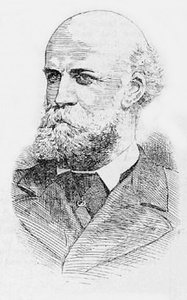
leroy livingstone de mestre
1894 - 1968 , Australia
Quick Facts
- Birth Date: 1894-03-27
- Birth Place: Bowral, Australia
- Death Date: 1968-03-01
- Influenced By: Post-Impressionism
- Movement:
- Colour-music
- Abstractionism
- Cubism
- Name: Roy De Maistre
- Nationality: Australian
- Notable Works: The Stations of the Cross, A painted picture of the universe
Related Articles
Roy Lichtenstein's Masterpieces: 25 Iconic Pop Artworks for Your Home | ArtsDot
Explore Roy Lichtenstein's 25 most iconic Pop Art masterpieces! Discover the stories behind 'Drowning Girl', 'Look Mickey' & more. Find museum-quality reproductions and elevate your home decor with ArtsDot. Explore the full collection online.

Goya's Masterpieces: Explore 25 Iconic Paintings & Art Prints | ArtsDot
Delve into the world of Francisco Goya with ArtsDot. Explore 25 iconic paintings – from 'The Third of May' to his haunting Black Paintings. Discover the stories, techniques & emotions behind these Spanish masterpieces. Find museum-quality art reproductions for your home at ArtsDot.com!
Abstract Expressionism's 10 Defining Masterpieces |
Explore 10 defining Abstract Expressionism masterpieces by Pollock, Rothko & de Kooning. Discover the stories behind these iconic paintings and find museum-quality art reproductions to elevate your home decor on .

Kandinsky's Masterpieces: 25 Paintings That Define Abstract Art | ArtsDot
Journey through Wassily Kandinsky's 25 most iconic abstract paintings. Explore his revolutionary use of color, form & spiritual expressionism. Find museum-quality Kandinsky reproductions and elevate your home decor with ArtsDot.com. Discover all masterpieces on ArtsDot.com!

Geometric Abstraction's 10 Defining Masterpieces | Art for Your Home - ArtsDot
Explore 10 defining masterpieces of Geometric Abstraction! Discover Kandinsky, Mondrian & Malevich’s iconic works. Find museum-quality art reproductions and curated decor ideas to elevate your home at ArtsDot.com.