 Preview
 Send
Send Share
Share
 Details

 Download
 Similars
 X-Ray
X-Ray Diaporama
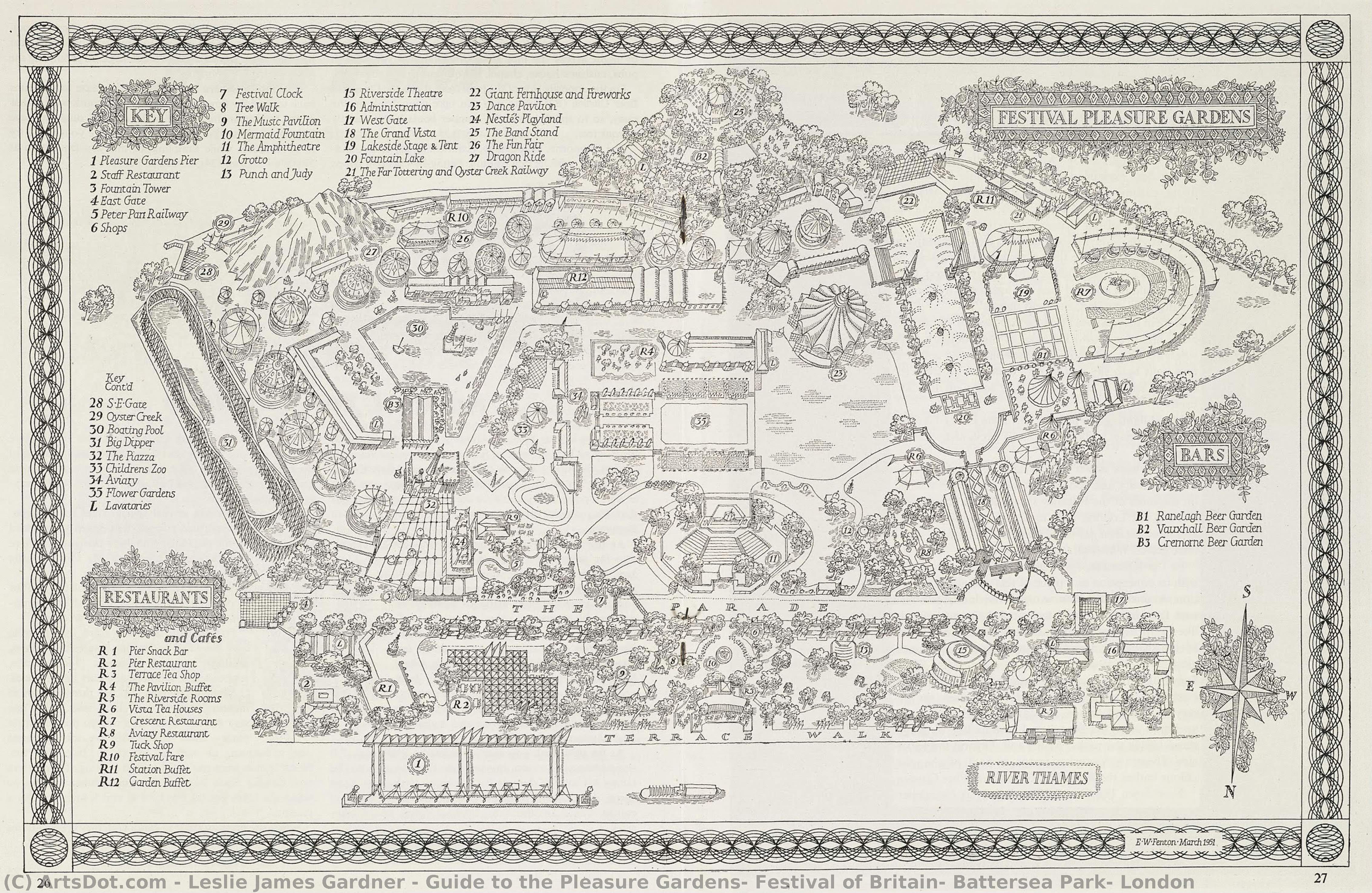
Guide to the Pleasure Gardens, Festival of Britain, Battersea Park, London


 Read More
Hand Made Oil Reproduction
Hand-painted oil on canvas in your size and frame, made to order by our artists. ( Buy Print Buy Image)




































Pick from our preset sizes that match the artwork's original proportions.

You may enter your own dimensions to fit a specific frame or space. If your selected size does not match the original image's proportions, we will either crop the artwork or extend the painting with additional hand-painted elements. A digital mockup will be sent for your approval before production begins.
Please note that the on-screen preview does not reflect the actual cropping or extension. Only the mockup will accurately show the final composition.
While custom sizes are available, we recommend selecting a dimension from the predefined list to preserve the original proportions.
After order, ArtsDot.com team will email client for instructions and provide a mockup preview
Worldwide Delivery () in 3/4 weeks instead of standard 5 weeks. (6 September). No compromise on quality.

Free Worldwide Express Shipping

High-Quality Linen Canvas

Full Shipping Insurance

Customs Tax Refund Guarantee

True Color Matching Guarantee

100-Day Return Policy (Defects Only)

100% Money-Back Guarantee

Bulk Discount Offer
 Glass option is only available in size under 110 CM

Guide to the Pleasure Gardens, Festival of Britain, Battersea Park, London
Reproduction Medium
Reproduction Size
-


Total Price
$ 263
Related Artworks







Artist Biography
A Legacy of Visionary Design: The Life of Leslie James Gardner
Leslie James Gardner, a name synonymous with the transformative power of visual communication, emerged from the vibrant artistic landscape of early twentieth-century London to become one of Britain’s most versatile design pioneers. Born on December 29, 1907, in Hendon, his journey began within a family that cherished the intersection of commerce and creativity. His formative years at the Westminster School of Art were profoundly shaped by the mentorship of E. McKnight Kauffer, a master of modernist visual language. This early exposure to avant-garde sensibilities instilled in Gardner a lifelong ability to synthesize complex ideas into striking, accessible imagery. Before he became a titan of exhibition design, his hands were trained in the delicate precision of luxury; an apprenticeship at Cartier jewellers provided him with an unparalleled eye for detail and craftsmanship, a skill set that would later underpin his most monumental architectural and industrial achievements.From Commercial Mastery to Wartime Deception
The interwar period served as a crucible for Gardner’s expanding horizons, as extensive international travels enriched his aesthetic palette with diverse cultural textures. Upon returning to London, he integrated himself into the heart of the commercial design world at Carlton Studios. Working alongside influential figures like Jack Beddington, Gardner mastered the art of persuasive graphic communication, crafting iconic advertising campaigns for prestigious clients such as Shell-Xm. However, the onset of World War II demanded a radical redirection of his talents. Transitioning from the elegance of commercial art to the high-stakes theater of military strategy, Gardner served as the Chief Deception Officer within the British Army Camouflage unit. In this clandestine role, he utilized his design prowess to engineer illusions of war, pioneering the use of inflatable decoys—ranging from tanks to entire naval vessels—to mislead enemy forces through the sheer power of visual trickery and structural ingenuity.Architect of the Post-War Renaissance
As the smoke of conflict cleared, Gardner emerged as a central figure in rebuilding the British cultural identity. He played a pivotal role in the 1946 Britain Can Make It exhibition, an event that served as a vital catalyst for the nation's creative and industrial resurgence. His most enduring triumphs, however, were realized during the legendary Festival of Britain in 1951. Collaborating with the architect Hugh Casson, Gardner helped transform public spaces into immersive, celebratory environments. From the whimsical charm of the 'People' pavilion to the striking presence of the iconic Shot Tower and the lush, engaging landscapes of the Festival Gardens at Battersea Park, his work breathed life into the post-war landscape, turning urban settings into spectacular stages for national pride.A Global Footprint in Museum and Industrial Design
The true breadth of Gardner’s genius lay in his ability to scale his vision from the microscopic detail of a jewel to the macroscopic grandeur of a museum. His later career saw him designing monumental exhibition spaces that bridged continents, including the British pavilion at the 1958 World's Fair in Brussels and the prestigious Commonwealth Institute in London. His commitment to educational and cultural storytelling led him to oversee significant projects such as the National Museum of Natural Science in Taiwan and the Museum of Tolerance in Los Angeles. Even within the realm of industrial design, his touch was unmistakable, notably contributing to the sophisticated interior superstructure of the legendary ocean liner QE2. Through a career spanning nearly a century, Leslie James Gardner remained a steadfast architect of experience, leaving behind a legacy where design serves not just to decorate, but to inspire, educate, and enchant.
leslie james gardner
1907 - 1995 , United Kingdom
Quick Facts
- Artistic Movement Or Style: Industrial Design
- Artists Or Movements Influenced By This Artist: ['Modernism']
- Artists Who Influenced This Artist: ['E. McKnight Kauffer']
- Date Of Birth: December 29, 1907
- Date Of Death: March 25, 1995
- Full Name: Leslie James Gardner
- Nationality: British
- Notable Artworks:
- Britain Can Make It Poster
- The Story of the Earth
- Place Of Birth: Hendon, United Kingdom