 Preview
 Send
Send Share
Share
 Details

 Download
 Similars
 X-Ray
X-Ray Diaporama
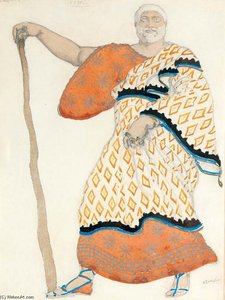
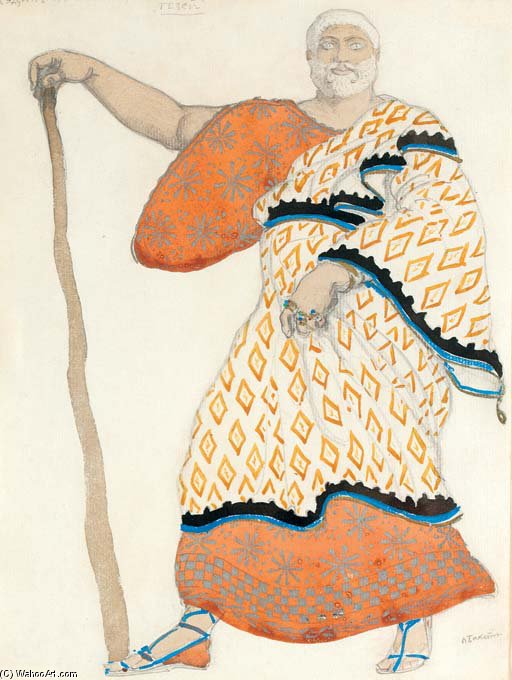
Costume Design For Oedipus At Colonnus
 Read More
Hand Made Oil Reproduction
Hand-painted oil on canvas in your size and frame, made to order by our artists. ( Buy Print Buy Image)




































Pick from our preset sizes that match the artwork's original proportions.

You may enter your own dimensions to fit a specific frame or space. If your selected size does not match the original image's proportions, we will either crop the artwork or extend the painting with additional hand-painted elements. A digital mockup will be sent for your approval before production begins.
Please note that the on-screen preview does not reflect the actual cropping or extension. Only the mockup will accurately show the final composition.
While custom sizes are available, we recommend selecting a dimension from the predefined list to preserve the original proportions.
After order, ArtsDot.com team will email client for instructions and provide a mockup preview
Worldwide Delivery () in 3/4 weeks instead of standard 5 weeks. (22 August). No compromise on quality.

Free Worldwide Express Shipping

High-Quality Linen Canvas

Full Shipping Insurance

Customs Tax Refund Guarantee

True Color Matching Guarantee

60-Day Return Policy (Defects Only)

100% Money-Back Guarantee

Bulk Discount Offer
 Glass option is only available in size under 110 CM

Costume Design For Oedipus At Colonnus
Reproduction Medium
Reproduction Size
-


Total Price
$ 263
Related Artworks
Artist Biography
The Revolutionary Palette: Léon Bakst and the Dawn of Modern Ballet
Léon Bakst’s name is inextricably linked to the dazzling, revolutionary world of Sergei Diaghilev’s Ballets Russes. Born Leyb-Khaim Izrailevich Rosenberg in Grodno, Belarus, in 1866, he wasn't initially destined for a life immersed in theatrical spectacle. His early years were marked by a quiet domesticity – the son of a tailor and a teacher, steeped in the traditions of his Jewish heritage. However, a chance encounter with a portrait at twelve sparked an enduring passion: painting. This nascent talent led him to study at the St. Petersburg Academy of Arts, though he ultimately found himself outside its rigid academic confines. It was through the vibrant circles of “World of Art,” spearheaded by Alexandre Benois and Diaghilev, that Bakst’s artistic trajectory shifted dramatically, propelling him into a new era of visual expression.From Portraits to Stagecraft: A Transformation in Style
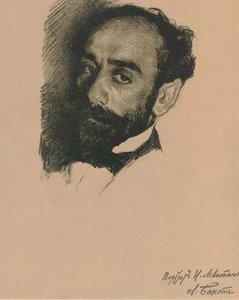
Bakst's early work showcased a remarkable ability to capture the essence of his subjects – portraits of prominent figures like Filipp Malyavin and Vasily Rozanov revealed a keen eye for detail and an understanding of psychological depth. Yet, it was his foray into theatrical design that truly ignited his creative fire. Diaghilev’s Ballets Russes, seeking to transcend the limitations of traditional ballet, offered Bakst a unique opportunity to synthesize painting, costume design, and stagecraft into a cohesive artistic vision. He rejected the conventional, often static, scenery of previous productions, embracing instead dynamic compositions filled with vibrant color, exotic motifs, and a sense of theatrical drama. His designs weren’t merely backdrops; they were integral characters in the narrative, actively shaping the audience's experience.The Exoticism of the Ballets Russes: A Visual Feast
Bakst’s collaboration with Diaghilev resulted in a series of productions that redefined ballet and captivated audiences across Europe. *Cléopâtre* (1909), his debut with the company, immediately established his signature style – a bold fusion of Egyptian mythology, rich jewel tones, and dramatic lighting. This was followed by *Scheherazade* (1910), a lavish spectacle inspired by One Thousand and One Nights, showcasing Bakst’s mastery of color and texture, creating an immersive world of opulent fabrics and shimmering patterns. The ballet *Le Spectre de la Rose* (1911) further cemented his reputation for innovative design, utilizing a ghostly palette and surreal imagery to evoke the ephemeral beauty of a rose in bloom. Perhaps most famously, *L’Après-midi d'un Faune* (1912), with its languid choreography and Bacchanalian costumes, became an instant icon of modern art, capturing the spirit of artistic liberation and challenging conventional notions of beauty. These productions weren’t simply entertaining; they were profound statements about the possibilities of visual storytelling in a new age.Beyond the Stage: Costume Design as Art
Bakst's influence extended far beyond set design. His costumes for the Ballets Russes were equally revolutionary, moving away from restrictive corsets and elaborate tutus to embrace looser silhouettes, flowing fabrics, and bold color combinations. He collaborated closely with milliners like Reynaud and Léonard to create garments that were both visually stunning and surprisingly comfortable for the dancers. The costumes weren’t merely functional; they became extensions of the characters' personalities and the ballet’s themes, contributing significantly to the overall artistic impact. The shimmering silks of *Scheherazade*, the flowing robes of *Le Faune*, and the intricate embroidery of *Narcisse* are now recognized as masterpieces of costume design, demonstrating Bakst’s ability to seamlessly blend fashion with theatrical expression.A Legacy of Innovation: Influence and Historical Significance
Léon Bakst's work profoundly impacted the development of modern art and design. He helped usher in a new era of stagecraft, where visual elements were treated as integral components of the performance itself. His influence can be seen in the works of numerous artists and designers who followed, including Coco Chanel, Salvador Dalí, and René Lalique. His embrace of color, his rejection of academic conventions, and his willingness to experiment with new materials and techniques paved the way for a more dynamic and expressive approach to visual art. Though he faced exile from Russia due to his Jewish heritage, Bakst’s artistic legacy continues to resonate today, reminding us of the power of creativity to transform not only the stage but also our understanding of beauty and possibility. He died in Paris in 1924, leaving behind a body of work that remains as vibrant and influential as the day it was created.
lev samoilovich bakst
1866 - 1924
Quick Facts
- Artistic Movement Or Style: World of Art, Ballets Russes
- Artists Or Movements Influenced By This Artist:
- Russian Art Nouveau
- Art Deco
- Artists Who Influenced This Artist:
- Benois
- Diaghilev
- Date Of Birth: Feb 8, 1866
- Date Of Death: Dec 27, 1924
- Full Name: Léon Samoylovich Bakst
- Nationality: Russian
- Notable Artworks:
- Carnaval
- Spectre de la Rose
- Daphnis & Chloe
- Afternoon Faune
- Place Of Birth: Grodno, Belarus