

 Preview
 Send
Send Share
Share
 Details

 Download
 Similars
 X-Ray
X-Ray Diaporama
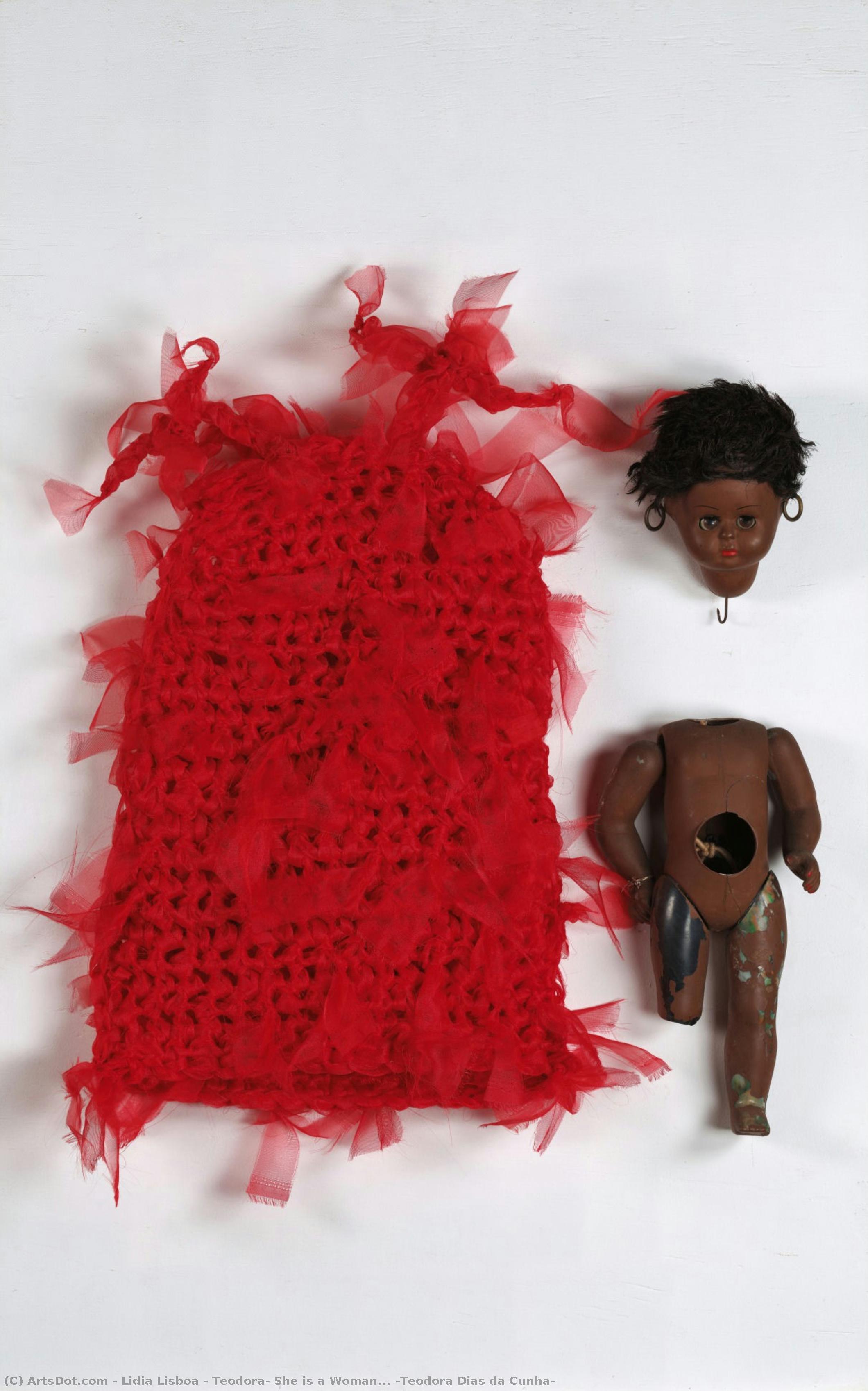
Teodora, She is a Woman... (Teodora Dias da Cunha)


 Read More
Purchase a high-resolution, enhanced digital image, far superior to the online preview.
Each file is meticulously prepared by our in-house specialists using advanced tools and expert manual retouching. We ensure every image has exceptional clarity, precise color accuracy, and fine detail.
The final file is delivered via email within 72 hours, optimized for immediate use in professional, editorial, and print environments. This is the same quality trusted by top-tier design studios, publishers, and galleries.
Digital Image
Download a high-resolution file for personal display, printing, and creative projects. ( Buy Print Buy Hand Made Painting)
Included in Every Digital Image Order
Expert Digital Delivery, Guaranteed
When you choose ArtsDot.com, you're not just getting an image - you're receiving a professionally enhanced digital artwork, crafted with precision and backed by a satisfaction guarantee. Here's everything that comes with your order, automatically:

Fast Email Delivery
Your high-resolution digital image file will be emailed to you within 72 hours of ordering - ready for immediate use.

AI-Enhanced Digital File
Your artwork is professionally optimized using advanced AI tools and manual editing, ensuring maximum detail, clarity, and color accuracy.

Free Lifetime Re-Delivery
Accidentally deleted or lost your file? No worries - we'll resend it to you anytime, free of charge.

No Import Fees - Ever
Enjoy your artwork instantly with zero customs, duties, or delivery fees - digital downloads are always tax-free.

Color Accuracy Guarantee
We ensure your digital image reflects the original colors as closely as possible using professional tools and color management.

60-Day Satisfaction Guarantee
If you're not satisfied with your digital image, we'll revise it or refund 100% within 60 days - no questions asked.

100% Money-Back Guarantee
Not satisfied? Get a full refund within 60 days of receiving your digital file - no questions asked.

Bulk Order Discounts
Buy 3 images, save 10% - Buy 5, save 15% - Buy 10+, save 20%. Great for creative projects, galleries, and agencies.
Collectible Description
Echoes of Memory: Unveiling Teodora's Story
This evocative piece, inspired by Lidia Lisboa’s powerful work, transports us into the fraught, poignant corners of 19th-century Brazilian history. At its heart lies the narrative of Teodora Dias da Cunha—a life etched with resilience against the backdrop of profound social upheaval. The accompanying historical context details her journey: questioned in January 1867, a woman whose identity was pieced together from fragmented memories and forced narratives. She arrived in Brazil, separated from her husband and son, finding herself adrift in the laboring landscape near Limeira. This artwork does more than merely depict; it reconstructs the intangible weight of untold stories, the quiet dignity found even amidst unimaginable hardship.
A Study in Texture and Shadow
Visually, the piece draws the eye to exquisite detail, particularly the representation of fabric. The close-up focus on a vibrant red dress adorned with delicate white lace immediately suggests painstaking craftsmanship. This material quality—the crocheted texture—is rendered with an almost tactile realism, inviting the viewer to imagine the softness and fragility of the garment. Complementing this central piece is the presence of a doll, positioned subtly in the background, wearing a similar ensemble. The juxtaposition of the richly detailed dress against the enigmatic figure of the doll creates a layered sense of time passing and memories preserved.
Symbolism of Absence and Presence
The symbolism woven throughout this composition is deeply resonant. The lace itself speaks of adornment and perhaps lost elegance, while the doll acts as a silent sentinel—a proxy for memory or an unvoiced narrative. Considering Teodora’s own story, marked by letters never sent and identities shifting under duress, the artwork becomes a meditation on what remains when history attempts to erase personal truth. The contrast between the vibrant red, symbolizing life force or passion, and the stark white lace suggests both purity and the delicate nature of survival itself.
Artistic Resonance for the Modern Collector
For the discerning collector or interior designer, this reproduction offers more than mere decoration; it is a conversation piece steeped in cultural depth. Lidia Lisboa’s artistic vision, rooted in the complex racial dynamics of Brazil's South, lends the work an undeniable gravitas. Reproducing this scene allows one to bring a narrative of endurance and overlooked histories into a contemporary space. It speaks to the power of art to give voice to those whose stories were once relegated to whispers or official records.
Related Artworks



Artist Biography
Early Life and Roots in the South
Lidia Lisboa’s artistic journey is deeply interwoven with her origins, born in 1970 in Guaíra, a city nestled within the state of Paraná, Brazil—a region historically marked by complex racial dynamics. Her upbringing was shaped by a unique familial arrangement; she was raised primarily by her great-grandparents on a rural farm, while her mother sought work in São Paulo at a young age. This early separation and the subsequent move to the bustling city when she was eight years old instilled within Lisboa a sense of displacement and a keen awareness of social inequalities. The South of Brazil has long been characterized by a deliberate “population whitening” agenda, creating an environment where Black artists faced systemic prejudice and limited opportunities. Lisboa’s emergence as a prominent voice from this region is therefore particularly significant—a testament to her resilience and the power of her artistic vision. Her childhood fascination with the natural world, specifically termite mounds forbidden to her touch by her mother, would later become a potent symbol in her work, representing both restriction and a yearning for connection to ancestral roots.A Multifaceted Artistic Practice
Lisboa’s creative expression defies easy categorization. She seamlessly navigates between installation, performance, ceramic sculpture, textile art, and other mediums, creating a body of work that is as diverse as it is deeply personal. While formally trained in printmaking, sculpture, and painting, she considers performance to be central to her practice—a dynamic space where boundaries blur between object, action, and ritual. Her sculptures are often imbued with a tactile quality, inviting viewers to engage with the materials on a visceral level. The use of ceramics is particularly noteworthy, harking back to those childhood memories and transforming a forbidden element into one of profound artistic exploration. Textiles play an equally crucial role, serving as vessels for storytelling and embodying themes of memory, healing, and resistance. Lisboa’s installations are often immersive environments that envelop the viewer, creating a space for contemplation and emotional resonance.Themes of Identity, Memory, and Social Justice
At the heart of Lisboa's work lies an exploration of identity—specifically, the experiences of Black women in Brazil. Her art is not merely representational; it’s a powerful act of reclaiming narratives that have been historically marginalized or silenced. The series *Tetas que deram de mamar ao mundo* (Breasts That Nursed the World) exemplifies this commitment. These monumental crochet sculptures, celebrating motherhood and breastfeeding, challenge conventional notions of beauty and power, offering a counter-narrative to dominant representations of femininity. Lisboa’s work frequently engages with themes of memory—both personal and collective—weaving together autobiographical elements with broader historical contexts. She draws inspiration from the lives of women in her family, honoring their resilience and acknowledging the violence they have endured. This exploration extends into a critical examination of social justice issues, addressing systemic racism, gender inequality, and the ongoing struggle for liberation.Development and Recognition
Lisboa’s artistic development has been marked by a consistent commitment to experimentation and innovation. Her early work laid the foundation for her later explorations, gradually expanding from traditional sculptural forms into more performative and installation-based practices. She gained recognition through exhibitions in Brazilian galleries and museums, including Brasília’s National Museum and Centro Cultural de São Paulo. A pivotal moment came with her participation in the 36th Bienal de São Paulo, where her work resonated with a wider audience and solidified her position as a leading contemporary artist. Her inclusion in this prestigious event not only showcased her artistic talent but also amplified the voices of Black artists from underrepresented regions of Brazil. She has been featured in SP-Arte, further establishing her presence within the art world.Historical Significance and Lasting Impact
Lidia Lisboa’s work represents a significant contribution to contemporary Brazilian art—a powerful intervention that challenges conventional norms and expands the boundaries of artistic expression. Her ability to seamlessly blend personal narratives with broader social concerns has resonated deeply with audiences, sparking dialogue and inspiring critical reflection. As one of many Black artists emerging from the racially prejudiced South region of Brazil, Lisboa’s success is a testament to her resilience and the growing recognition of diverse voices within the art world. She embodies a new generation of artists who are actively dismantling systemic barriers and creating space for marginalized communities. Her practice serves as a reminder that art can be a powerful tool for healing, resistance, and social transformation—a legacy that will undoubtedly continue to inspire future generations of artists and activists.
lidia lisboa
1970 - , Brazil
Quick Facts
- Artistic Movement Or Style: Installation, Performance Art
- Date Of Birth: 1970
- Full Name: Lidia Lisboa
- Nationality: Brazilian
- Notable Artworks:
- Breasts That Nursed the World
- Cupinzeiros
- Tetas que deram de mamar ao mundo
- Place Of Birth: Guaíra, Brazil

