 Preview
 Send
Send Share
Share
 Details

 Download
 Similars
 X-Ray
X-Ray Diaporama
My Epidemic (Small Bad Blood Opera)


 Read More
Giclée / Art Print
Museum-quality giclée or canvas print with fast production and flexible finish options. ( Buy Hand Made Painting Buy Image)




P118B $10

P118H $10

P118W $10

P438Z $10

P508JH $12

P508YH $12

P805H $10

P805Z $10

P919BZ $10

P919G $10

P919XJ $10

P959ZH $10

P968JZ $12

W106C $8

W218G $10

W218JH $8

W218Y $10

W307PJ $10

W316G $10

W316PJ $8

W316Y $10

W398PJ $8

W4111J $10

W500HY $15

W500JH $15

W692G $12

W849H $8

W940BG $15

W953PJ $8




Pick from our preset sizes that match the artwork's original proportions.

You may enter your own dimensions to fit a specific frame or space. If your selected size does not match the original image's proportions, we will either crop the artwork or extend the image with a mirrored or solid-fill edge. A digital mockup will be sent for your approval before production begins.
Please note that the on-screen preview does not reflect the actual cropping or extension. Only the mockup will accurately show the final composition.
While custom sizes are available, we recommend selecting a dimension from the predefined list to preserve the original proportions.
Worldwide Delivery () in 2 weeks instead of standard 4/5 weeks. (17 August)

Free Worldwide Express Shipping

High-Quality Linen Canvas

Full Shipping Insurance

Customs Tax Refund Guarantee

True Color Matching Guarantee

60-Day Return Policy (Defects Only)

100% Money-Back Guarantee

Bulk Discount Offer
 Glass option is only available in size under 110 CM

My Epidemic (Small Bad Blood Opera)
Giclée / Art Print
Reproduction Size
-


Total Price
$ 63
Collectible Description
My Epidemic (Small Bad Blood Opera) – A Symphony of Fabric and Reflection
Lili Reynaud Dewar’s “My Epidemic” isn't merely an installation; it’s a carefully orchestrated exploration of identity, responsibility, and the unsettling beauty found within confronting uncomfortable truths. Born in La Rochelle, France, in 1975, Dewar’s artistic journey has consistently challenged conventions—particularly regarding notions of biography—by interrogating societal assumptions through performance and sculptural interventions.
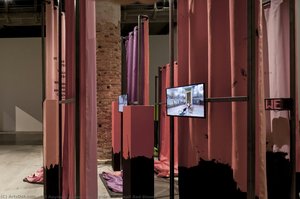
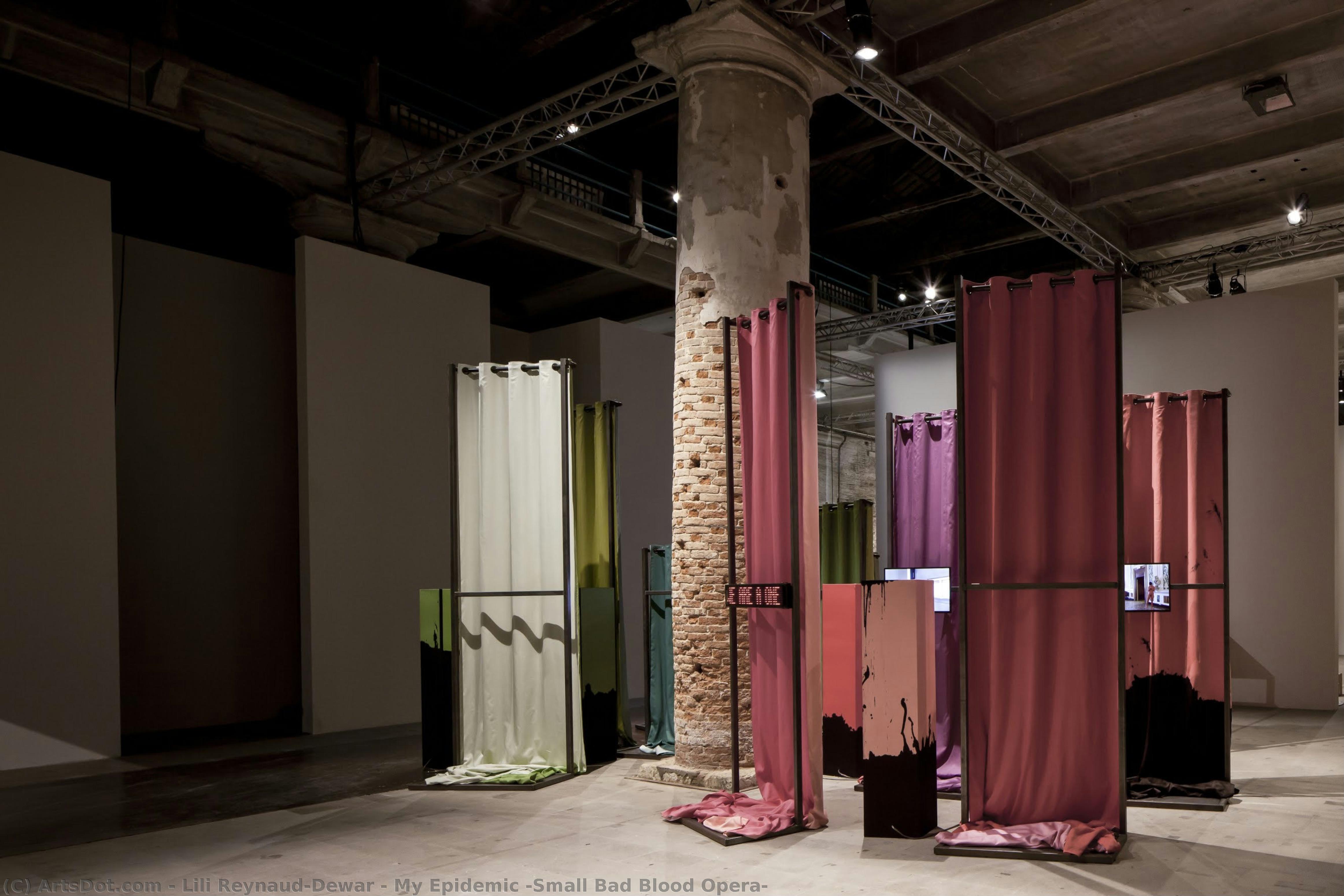
The artwork centers around a monumental brick pillar juxtaposed against stacked fabric panels predominantly in shades of pink, mauve, and green. This deliberate asymmetry immediately draws the eye upwards, mirroring the compositional structure of Josephine Baker’s iconic choreography – an homage that underscores Dewar’s fascination with rebellious figures from counterculture history. The lighting is directional, casting shadows that heighten drama and emphasizing textural contrasts between the weathered brick and the velvety surfaces of the fabrics.
Dewar's approach to art stems from a profound engagement with literature, cinema, music, and poetry—influences evident in her stylistic choices. She draws inspiration from mythic or underground figures like Sun Ra and Pier Paolo Pasolini, artists who similarly questioned established norms and embraced experimentation. This dedication to pushing boundaries is palpable throughout her oeuvre.
Detailed Analysis: Technique and Materiality
“My Epidemic” exemplifies Dewar’s masterful technique—primarily focused on manipulating fabric to create layered spatial compositions. The fabric panels are meticulously arranged, utilizing a subtle vertical tension that contributes to the overall sculptural effect. Skilled craftsmanship ensures precise alignment and careful consideration of color palettes, reflecting a deliberate aesthetic sensibility.
Beyond fabric, the installation incorporates metal supports providing structural stability while subtly hinting at industrial influences—a counterpoint to the organic softness of the textiles. The weathered brick pillar serves as an anchor, grounding the artwork in materiality and conveying a sense of permanence alongside the ephemeral nature of performance.
Historical Context & Symbolic Resonance
Dewar’s work engages directly with debates surrounding HIV activism and personal responsibility—specifically referencing the clash between Guillaume Dustan and Act-Up France leader Didier Lestrade. This confrontation encapsulates broader anxieties about societal attitudes toward marginalized communities and challenges simplistic notions of moral judgment.
The inclusion of video recordings documenting Dewar's performances adds another layer of complexity, transforming the installation into a dynamic space where movement and contemplation intersect. The repetition of choreography—particularly Baker’s iconic dance—represents a ritualistic gesture, inviting viewers to consider themes of vulnerability, defiance, and reclaiming agency.
Emotional Impact & Artistic Legacy
"My Epidemic" transcends mere visual representation; it communicates an emotional core rooted in introspection and artistic conviction. Dewar's exploration of biographical narratives serves as a catalyst for questioning societal expectations and advocating for inclusivity—a legacy that aligns with the broader ethos of contemporary art.
Ultimately, “My Epidemic” stands as a testament to Dewar’s ability to synthesize disparate influences into a cohesive aesthetic statement. It invites contemplation on identity, responsibility, and the transformative power of artistic expression—a piece destined to resonate with audiences who appreciate nuanced explorations of cultural signifiers and symbolic narratives.
Related Artworks






Artist Biography
The Boundaries of Biography: The Multidimensional World of Lili Reynaud-Dewar
Born in the coastal French city of La Rochelle in 1975, Lili Reynaud-Dewar has emerged as one of the most vital and provocative voices in contemporary art. Her practice does not merely exist within a single medium; rather, it breathes through a fluid intersection of performance, sculpture, film, and text. To encounter her work is to enter a space where the personal and the political collide, where the intimate details of an individual life are used to interrogate much larger societal structures. Reynaud-Dewar’s artistic journey is defined by an obsession with the boundaries of biography—the thin, often permeable line between what we know of ourselves and how history, race, and gender attempt to define us.
Her intellectual foundation is as diverse as her artistic output. Before fully committing to the visual arts, she pursued studies in public law at the Université Paris I Panthéon Sorbonne, a discipline that likely sharpened the analytical rigor found in her conceptual explorations. This legal precision is balanced by a deep-seated connection to movement, rooted in her early training in classical ballet at the La Rochelle Conservatory. It was during her time at the Glasgow School of Art, where she earned her Master in Fine Arts, that her practice truly began to coalesce. In the vibrant, artist-led scene of Glasgow, she found the freedom to merge art criticism with sculptural installation and performance, developing a voice that is as much about the act of witnessing as it is about the creation of objects.
A Tapestry of Performance and Resistance
Reynaud-Dewar’s work often functions as a theatrical stage for exploring the complexities of identity. She does not view history as a static collection of facts, but as a living, breathing entity that can be reconfigured through performance. Her installations frequently serve as elaborate sets for choreographed actions, where the body becomes a site of resistance and reclamation. By drawing on autobiographical material and weaving it together with the lives of transgressive historical figures—such as Josephine Baker or Guillaume Dustan—she creates a dialogue between the self and the collective memory.
This method of "politicized vaudevillian theatre" allows her to tackle sensitive and often uncomfortable subjects, including racial politics, sexual emancipation, and feminist struggle. Her filmic works and dance video series push the limits of movement, using the camera to capture the tension between physical presence and historical absence. In projects like Black Mariah and Cleda’s Chairs, she confronts the weight of social legacies, utilizing a layered approach that blends music, provocative text, and striking visuals to provoke deep, often unsettling, dialogue within the viewer.
Legacy and Global Impact
The significance of Lili Reynaud-Dewar’s contribution to contemporary art lies in her ability to make the ephemeral feel monumental. Her work has resonated across the most prestigious institutions in the world, marking her as a central figure in the global art discourse. Her career is punctuated by landmark exhibitions that have challenged the boundaries of what installation art can achieve:
- The Venice Biennale: Her participation in the 56th Venice Biennale solidified her international standing.
- New Museum, New York: A major solo exhibition that brought her complex explorations of biography to a global audience.
- Centre Pompidou and Palais de Tokyo: Frequent presence in these premier French institutions highlights her role in shaping the contemporary French art landscape.
- International Biennales: Significant contributions to the Berlin, Lyon, Marrakech, and Gwangju Biennales demonstrate the universal reach of her thematic inquiries.
Today, living and working between Grenoble and Geneva, Reynaud-Dewar continues to evolve, refusing to be pinned down by any single definition. Whether she is producing sculptural operas like My Epidemic or engaging in academic roles as a professor, her mission remains unchanged: to use the tools of art to navigate the shifting figures of identity in an increasingly globalized and complex world. Her work stands as a testament to the power of the artist to transform history into a forward-looking, speculative, and deeply human narrative.
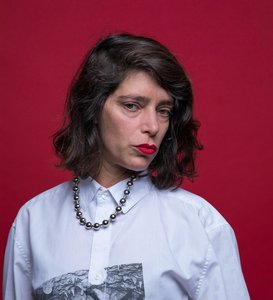
lili reynaud-dewar
1975 - , France
Quick Facts
- Artistic Movement Or Style: Installation Art & Performance Art
- Artists Who Influenced This Artist:
- Colette Milner
- Mary Knox
- Date Of Birth: 1975
- Full Name: Lili Reynaud-Dewar
- Nationality: French
- Notable Artworks:
- Black Mariah
- Cleda's Chairs
- Small Modest Bad Blood Opera
- Place Of Birth: La Rochelle, France
Related Articles

Bronze Sculptures That Defined Art History | ArtsDot
Journey through art history with our Top 10 bronze sculptures! Explore masterpieces by Rodin, Michelangelo & more. Discover stories behind iconic statues and find museum-quality reproductions for your home decor at ArtsDot.com.

The Enduring Form: Exploring Themes & Techniques in Sculpture Across Historical Periods
Explore the rich history of sculpture from ancient masterpieces to contemporary innovations. Discover key techniques, influential artists & investment potential for discerning art collectors.
The Enduring Form: Sculpture Across History, Technique & Emotional Resonance
Explore the rich history of sculpture with ArtsDot. Discover key techniques, influential artists & investment potential for discerning collectors. Expert insights into valuing and collecting timeless masterpieces.

Bronze Age to Modern Masters: 10 Sculptures That Redefined Art | ArtsDot
Journey through art history with 10 legendary bronze sculptures – from Michelangelo's David to Rodin’s Thinker. Explore the stories, techniques & timeless beauty of these masterpieces. Find museum-quality reproductions & elevate your home decor on ArtsDot.com.
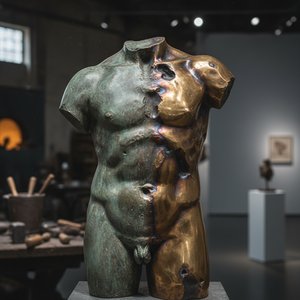
The Enduring Legacy of Bronze Sculpture: History, Techniques & Contemporary Interpretations
Explore the rich history & enduring appeal of bronze sculpture. Learn about casting techniques, iconic artists, collecting tips, & contemporary interpretations. Expert insights for discerning art collectors.