 Preview
 Send
Send Share
Share
 Details

 Download
 Similars
 X-Ray
X-Ray Diaporama
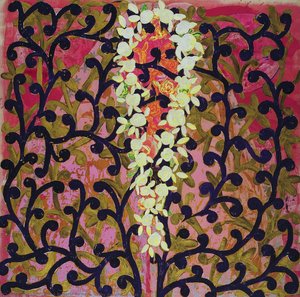
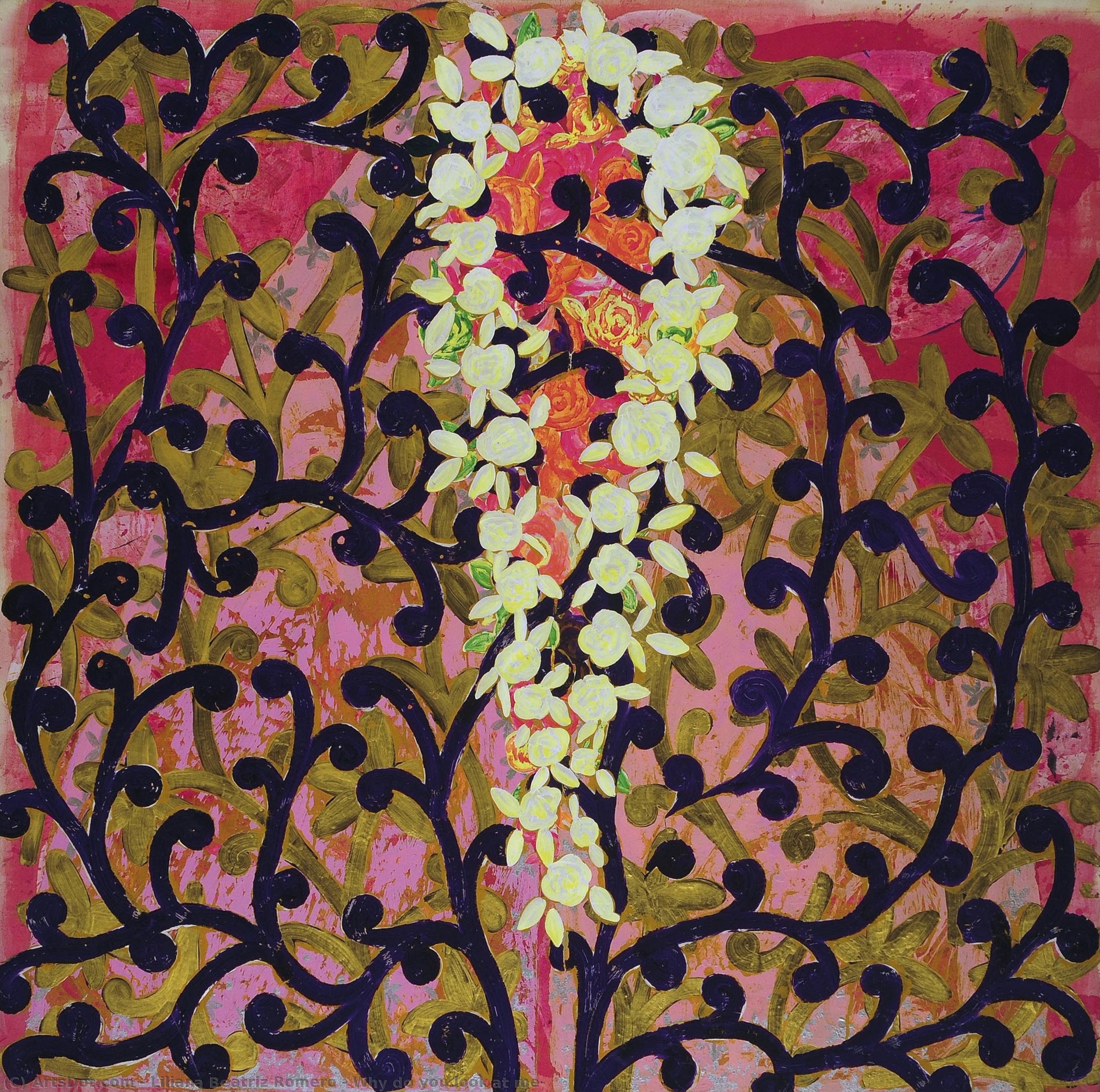
Why do you look at me?
 Acrylic On Canvas
- WallArt
- Contemporary Floral
 1992
1992- Renaissance
 59.0 x 59.0 cm
 Museu de Valores do Banco Central do Brasil
 Read More
Hand Made Oil Reproduction
Hand-painted oil on canvas in your size and frame, made to order by our artists. ( Buy Print Buy Image)




P118B $10

P118H $10

P118W $10

P438Z $10

P508JH $12

P508YH $12

P805H $10

P805Z $10

P919BZ $10

P919G $10

P919XJ $10

P959ZH $10

P968JZ $12

W106C $8

W218G $10

W218JH $8

W218Y $10

W307PJ $10

W316G $10

W316PJ $8

W316Y $10

W398PJ $8

W4111J $10

W500HY $15

W500JH $15

W692G $12

W849H $8

W940BG $15

W953PJ $8




Pick from our preset sizes that match the artwork's original proportions.

You may enter your own dimensions to fit a specific frame or space. If your selected size does not match the original image's proportions, we will either crop the artwork or extend the painting with additional hand-painted elements. A digital mockup will be sent for your approval before production begins.
Please note that the on-screen preview does not reflect the actual cropping or extension. Only the mockup will accurately show the final composition.
While custom sizes are available, we recommend selecting a dimension from the predefined list to preserve the original proportions.
After order, ArtsDot.com team will email client for instructions and provide a mockup preview
Worldwide Delivery () in 3/4 weeks instead of standard 5 weeks. (25 August). No compromise on quality.

Free Worldwide Express Shipping

High-Quality Linen Canvas

Full Shipping Insurance

Customs Tax Refund Guarantee

True Color Matching Guarantee

60-Day Return Policy (Defects Only)

100% Money-Back Guarantee

Bulk Discount Offer
 Glass option is only available in size under 110 CM

Why do you look at me?
Reproduction Medium
Reproduction Size
-


Total Price
$ 263
Artwork Description
Liliana Beatriz Romero’s “Why Do You Look at Me?” – A Bloom of Introspection
“Why Do You Look at Me?” by Liliana Beatriz Romero, painted in 1992, is more than a simple depiction of flowers; it's an intimate meditation on connection and observation rendered with remarkable sensitivity. Measuring 59 x 59 cm, this piece immediately draws the viewer into its vibrant world – a carefully constructed tableau of blossoms set against a richly patterned background that pulses with black and pink hues. Romero’s skill lies not just in her technical ability but in her profound understanding of how color and form can evoke emotion and invite contemplation.
A Painter's Journey: Francesco Clemente’s Influence
Romero’s work resonates with the spirit of artists like Francesco Clemente, whose own explorations of mythology and symbolism have long captivated audiences. Clemente, a key figure in Italian art since the 1970s, began his artistic journey immersed in Rome's vibrant artistic scene, encountering influential figures who shaped his unique vision. His travels, particularly his sojourn to Afghanistan with Alighiero Boetti, profoundly impacted his approach, fostering a deep engagement with spiritual themes and a willingness to explore complex narratives through visual language. This lineage subtly informs “Why Do You Look at Me?” – the piece feels like a quiet echo of these larger artistic dialogues.
Symbolism Within the Bloom
- The Central Flower: The dominant yellow flower, with its delicate petals and vibrant color, is likely intended as the focal point, perhaps representing vulnerability, beauty, or even a plea for recognition.
- White Flowers: The inclusion of white flowers introduces an element of purity and serenity, offering a counterpoint to the bolder colors and suggesting a desire for clarity or innocence.
- Patterned Background: The intricate black and pink background isn’t merely decorative; it creates depth and complexity, potentially symbolizing the layers of perception and interpretation that shape our understanding of the world around us.
Technique and Emotional Impact
Romero's technique is characterized by a fluid brushstroke and a masterful use of color. The painting’s texture invites close inspection, revealing the artist’s deliberate layering of paint to build depth and luminosity. The overall effect is one of quiet intensity – a feeling that the flower isn’t just being observed but *listened* to. “Why Do You Look at Me?” possesses an undeniable emotional resonance, prompting viewers to consider their own role as observers and interpreters within the world.
A Timeless Piece for Your Collection
This hand-painted reproduction captures the essence of Romero’s original artwork with exceptional fidelity. Perfect for interior design enthusiasts seeking a touch of botanical elegance, or art collectors drawn to evocative symbolism and masterful technique, this piece offers a window into a world of quiet contemplation. Its size (59 x 59 cm) makes it suitable for a variety of spaces, from a small gallery wall to a prominent display in a living room or bedroom.
Related Artworks


Artist Biography
The Vibrant Resistance of Liliana Romero
Born in Venezuela and raised within the complex social fabric of Bogotá, Colombia, Liliana Beatriz Romero—often known as Lilo—has emerged as a powerful voice in contemporary visual arts. Her identity, shaped by a childhood in a privileged Colombian environment yet deeply connected to the broader Latinx experience, serves as the foundation for an artistic practice that is as much about social activism as it is about aesthetic innovation. A graduate of both the Pontificia Universidad Xaveriana in Bogotá and the Camberwell University of Arts in London, Romero’s work acts as a bridge between her South American roots and her engagement with the global art scene. Her creative journey is marked by a profound exploration of identity, where the boundaries of race, gender, and memory are constantly interrogated through bold graphics and rich, celebratory colors.
The essence of Romero’s work lies in its ability to confront the erasure of heritage. Her research delves into the loss of collective memory caused by the imposition of systematic structures that seek to homogenize diverse experiences. Through her art, she seeks to reclaim the spaces left blank by history, particularly focusing on the experiences of Black women and endangered communities. By centering the Black female body in her compositions, she transforms it from a subject of historical manipulation into a site of rebellion and strength. Her practice is deeply intertwined with her commitment to activism, defending the rights of LGBTQ+ individuals, refugees, and those facing domestic violence, making her work a vital instrument for social change.
Symbolism, Typography, and the Language of Protest
In the visual language of Liliana Romero, every element serves a dual purpose of communication and resistance. Her compositions are characterized by an intense use of iconography, where text and typography are not merely decorative but essential components of the narrative tension. As a bilingual artist, she masterfully weaves together Spanish—her native tongue—and English—the global lingua franca—to create posters and prints that speak to both local and international audiences. This linguistic duality allows her to navigate different cultural territories, creating a dialogue between the personal intimacy of her heritage and the urgent, universal demands of social justice.
The technical execution of her work often features:
- Bold Graphics: A striking use of high-contrast imagery that commands attention and mirrors the urgency of her political messages.
- Celebratory Proportions: The use of scale and vibrant color palettes to celebrate the resilience and beauty of the bodies she depicts.
- Layered Typography: An integration of lettering and background that creates a sense of depth, reflecting the complex layers of history and identity.
- Iconographic Depth: The use of recurring symbols that represent the intersection of Black feminism and Latinx culture.
Beyond the canvas and the print, Romero’s influence extends into the rhythmic pulse of the music scene, where her role as a DJ allows her to further explore the intersections of art, sound, and community. Her presence in exhibitions such as the Saatchi Gallery’s Graduate exhibition in London has solidified her reputation as an artist who does not merely observe the world but actively seeks to reshape it. Through her evocative imagery and unwavering dedication to truth, Liliana Romero continues to weave a narrative of resistance, ensuring that the stories of the marginalized are etched permanently into the contemporary artistic consciousness.

liliana beatriz romero
1952 - , Argentina
Quick Facts
- Artistic Movement Or Style: Transavanguardia
- Artists Or Movements Influenced By This Artist: ['Arte povera']
- Artists Who Influenced This Artist:
- Cy Twombly
- Alighiero Boetti
- Date Of Birth: March 23, 1952
- Full Name: Francesco Clemente
- Nationality: Italian
- Notable Artworks: [None]
- Place Of Birth: Naples, Italy
Related Articles
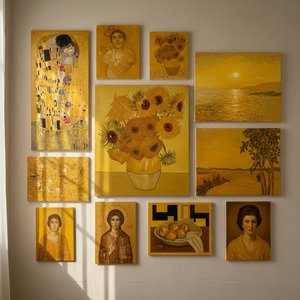
Golden Hues: Top 10 Paintings Dominated by Yellow Ochre |
Explore 10 iconic paintings bathed in golden yellow ochre! From Van Gogh's sunflowers to Monet’s haystacks, discover the stories behind these masterpieces. Find museum-quality art reproductions & elevate your home decor on .

Golden Hues: 10 Masterpieces Dominated by Chrome Yellow | ArtsDot
Immerse yourself in golden light! Explore 10 famous paintings dominated by 'Chrome Yellow', from Van Gogh’s Sunflowers to Monet's Haystacks. Discover the stories behind these iconic Impressionist & Post-Impressionist masterpieces and find museum-quality art reproductions at ArtsDot.com.
The Return of the Fresco: Why Wall Murals Are the New Luxury Statement
Elevate your space with bespoke wall murals & frescoes. Explore the resurgence of this luxury art form. Expert design guidance & seamless installation – .
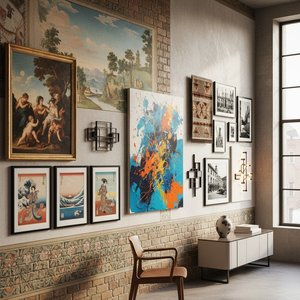
Transforming Spaces: A Comprehensive Exploration of Wall Decor Through Art History & Contemporary Practice
Explore the art of transforming spaces with our comprehensive guide to wall decor. From historical movements to contemporary trends, discover how to curate impactful interiors and commission bespoke artwork for a truly personalized aesthetic.

The Golden Hue: Exploring Symbolism & Emotion in Yellow Art
Explore the rich symbolism & emotional power of yellow in art history! From Van Gogh to Kandinsky, discover how artists used this vibrant hue. Expert analysis & high-quality reproductions at ArtsDot.