 Preview
 Send
Send Share
Share
 Details

 Download
 Similars
 X-Ray
X-Ray Diaporama
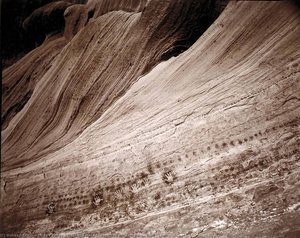
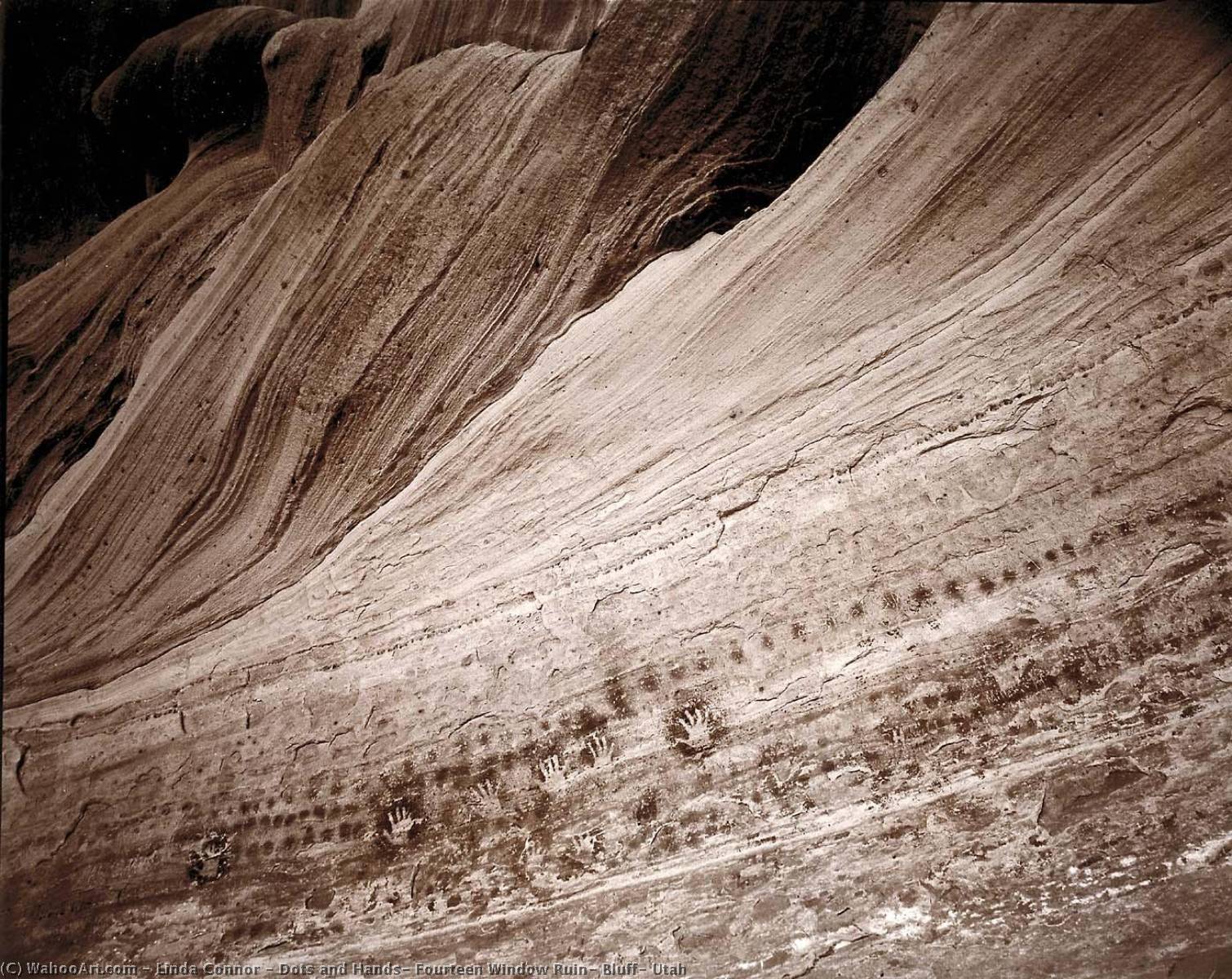
Dots and Hands, Fourteen Window Ruin, Bluff, Utah
 1987
1987 20.0 x 25.0 cm
 Read More
Giclée / Art Print
Museum-quality giclée or canvas print with fast production and flexible finish options. ( Buy Hand Made Painting Buy Image)




































Pick from our preset sizes that match the artwork's original proportions.

You may enter your own dimensions to fit a specific frame or space. If your selected size does not match the original image's proportions, we will either crop the artwork or extend the image with a mirrored or solid-fill edge. A digital mockup will be sent for your approval before production begins.
Please note that the on-screen preview does not reflect the actual cropping or extension. Only the mockup will accurately show the final composition.
While custom sizes are available, we recommend selecting a dimension from the predefined list to preserve the original proportions.
Worldwide Delivery () in 2 weeks instead of standard 4/5 weeks. (24 August)

Free Worldwide Express Shipping

High-Quality Linen Canvas

Full Shipping Insurance

Customs Tax Refund Guarantee

True Color Matching Guarantee

60-Day Return Policy (Defects Only)

100% Money-Back Guarantee

Bulk Discount Offer
 Glass option is only available in size under 110 CM

Dots and Hands, Fourteen Window Ruin, Bluff, Utah
Giclée / Art Print
Reproduction Size
-


Total Price
$ 63
Related Artworks










Artist Biography
Linda Connor: A Spiritual Lens on the World
Born in New York City in 1944, Linda Connor’s journey into photography began at a remarkably young age – seventeen – fueled by an early fascination with spiritualism and the evocative power of images. This initial spark ignited a lifelong exploration, transforming her into one of America's most respected landscape photographers, renowned for her ability to imbue her work with both profound abstraction and breathtaking detail. Connor’s career is inextricably linked to San Francisco, where she has resided since 1969, serving as a professor at the San Francisco Art Institute – a role she continues to hold today – and establishing herself as a pivotal figure in photographic education.
Her artistic foundation was meticulously built upon rigorous academic training. She attended the Rhode Island School of Design from 1963 to 1967, earning a BFA with a focus on photography, and later pursued an MFA at the Institute of Design, Illinois Institute of Technology (1967-1969). These formative years exposed her to influential mentors like Aaron Siskind and Harry Callahan, figures who shaped her approach to seeing and capturing the world. Early influences extended beyond these instructors, encompassing the social realism of Walker Evans, the evocative symbolism of Julia Margaret Cameron, and the stark beauty of Frederick Sommer – artists whose work demonstrated a commitment to truth and emotional resonance within the medium.
Early Techniques and Abstract Beginnings
Connor’s early photographic practice was deeply rooted in the technical mastery of the 8x10 inch Century View camera. This large-format system, coupled with a soft focus lens, became her primary tool for creating images imbued with an almost dreamlike quality. She deliberately employed this technique to evoke abstraction, prioritizing mood and atmosphere over sharp realism. “I wanted to create a sense of mystery,” she has explained, “to suggest something beyond the literal.” This early experimentation laid the groundwork for her later evolution, demonstrating a willingness to push the boundaries of traditional photographic practice.
Her first group exhibition, "Vision and Expression," at the George Eastman House in 1968, marked a significant milestone. It showcased her emerging talent and established her as an artist with a unique perspective. Throughout the late 1970s and early 1980s, Connor’s work gained increasing recognition, culminating in a Guggenheim Fellowship in 1979 – a testament to the depth and originality of her artistic vision.
A Journey Through Cultures and Landscapes
Connor's photographic explorations extended far beyond the borders of North America. Beginning in the late 1960s, she embarked on extensive journeys to India, Mexico, Thailand, Ireland, Peru, and Nepal, documenting landscapes steeped in spiritual significance and capturing the essence of diverse cultures. These travels weren’t merely observational; they were deeply personal explorations, driven by a desire to connect with ancient traditions and sacred spaces. Her photographs are not simply representations of places but rather meditations on their spirit.
Notable images from this period include a striking photograph of a ceremonial cloth carefully wrapped around a tree trunk in Bali, revealing hidden petroglyphs; evocative depictions of cliff dwellings adorned with ancient symbols in Arizona; and ethereal star trails captured in the vast expanse of Mexico. Her work at Chartres Cathedral showcases votive candles arranged for ceremonial rites, highlighting the enduring power of ritual and faith. These images demonstrate a deliberate juxtaposition of the natural world and human spirituality – a recurring theme throughout her oeuvre.
Later Work: Clarity and Detail
As Connor’s career progressed, she refined her photographic techniques, transitioning from the soft focus of her early work to a greater emphasis on clarity and detail. This shift wasn't driven by a rejection of abstraction but rather by a desire to capture the intricate textures and subtle nuances of the landscapes she encountered. She skillfully adapted her equipment – moving towards sharper lenses – while retaining her core artistic vision, demonstrating an ability to balance technical precision with emotional depth.
Recognition and Legacy
Throughout her distinguished career, Linda Connor has received numerous accolades recognizing her contributions to photography. These include three National Endowment for the Arts grants, a Guggenheim Fellowship, and membership in Friends of Photography. Her work has been featured in over 40 solo exhibitions and more than 20 group shows, solidifying her place as a leading figure in contemporary landscape photography. Her publications, *Spiral Journey* and *Odyssey*, offer comprehensive surveys of her extensive body of work, inviting viewers to embark on their own spiritual journeys through her evocative images.
Connor’s influence extends beyond her individual artistic achievements. She has served as a dedicated educator at the San Francisco Art Institute for over four decades, shaping generations of photographers and fostering a deep appreciation for the art form. Her legacy is one of profound observation, technical mastery, and an unwavering commitment to capturing the beauty and mystery of the world around us.
Linda Connor
1944 -
Quick Facts
- Artistic Movement Or Style: Landscape Photography
- Artists Who Influenced This Artist:
- Walker Evans
- Emmet Gowin
- Harry Callahan
- Julia Cameron
- Frederick Sommer
- Date Of Birth: November 18, 1944
- Full Name: Linda Connor
- Nationality: American
- Notable Artworks:
- Ceremonial cloth Bali
- Petroglyphs Arizona
- Star trails Mexico
- Votive candles Chartres
- Place Of Birth: New York City, USA