Showing 7 artworks with Émile Bernard and with Accent
-
Émile Bernard
-
Accent
Not available for this selection

- Espresso
- Black
- Gray
- Clay
- Rosy Brown
- Khaki
Not available for this selection
- Émile Bernard
- Impressionism
- Post-Impressionism
- Fine Art Print
- Emile Bernard
- Lithograph
- Symbolic Breton Woman
- Female Figures Harvest
- Vibrant Botanical Piece
- Mary Jesus
- 1906 Decorative Art
- Still Life Painting
- Church Scene
- Living Room Accent Art
- Van Gogh Influence
- Art Reproduction
- Figurative Art
- Breton Landscape
- Rural France
- French Painter
- French Art Deco
- Post-Impressionist Style
- Dark Art Prints
- Gray Scale Art
- Paul Cézanne Influence
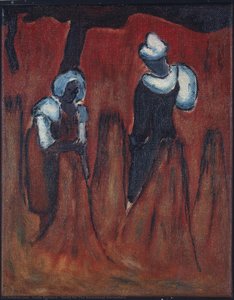
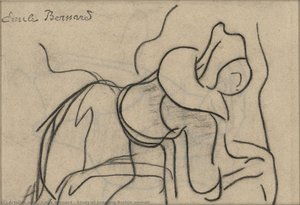
Émile Bernard's 'Study for The Buckwheat Harvesters,' created in 1888, embodies Pont-Aven’s aesthetic with its Synthetism style. This sketch captures two women harvesting buckwheat under a striking red backdrop, reflecting Bernard's fascination with Breton landscapes and Gauguin's influence.
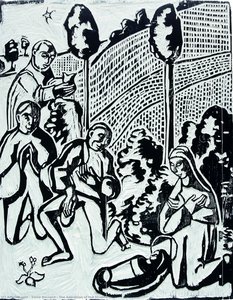
Emile Bernard’s "The Adoration of the Shepherds" (1889) – a striking woodcut print showcasing Expressionist distortion & poignant figures. Explore this unique artwork's dynamic composition and rich symbolism.
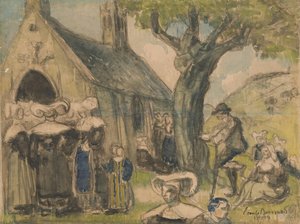
Explore Émile Bernard’s watercolor masterpiece 'Breton Peasants Outside a Church,' capturing a vibrant Breton landscape and the everyday lives of rural villagers. Discover its Impressionistic style and artistic significance.
Vibrant floral board art by Émile Bernard (1906) captures nature's beauty with colorful blooms and a perched bird; discover this expressive masterpiece today.
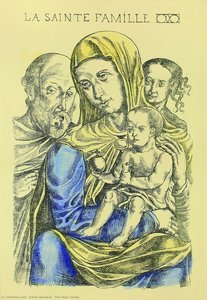
Emile Bernard’s evocative lithograph captures the serene beauty of ‘La Sainte Famille,’ a poignant depiction of Mary cradling Jesus amidst family members—a cornerstone of Impressionist art from 1896. Explore this masterpiece and bring its timeless elegance into your home.
Émile Bernard Émile Bernard: A Post-Impressionist Pioneer Early Life and Education Born: April 28, 1868, in Lille, France. Émile Henri Bernard’s early life was shaped by his sister's illness, leading to him being raised primarily by his grandmother, who ran a laundry in Lille. This supportive environment fostered his artistic inclinations. In 1878, the family relocated to Paris, where Bernard att