Showing 24 artworks out of more than 240+ with Alphonse Mucha and with Art Nouveau

-
Alphonse Mucha
-
Art Nouveau
Not available for this selection
- Espresso
- Walnut
- Phthalo Green
- Gray
- Driftwood
- Sap Green
- Clay
- Black
- Cobalt Violet
- Brown
- Quinacridone Magenta
- Rosy Brown
- Mahogany
- Alphonse Mucha
- Art Nouveau
- Flowing Lines
- Decorative Art
- Symbolism
- Organic Forms
- Pastel Colors
- Czech Art
- Art Nouveau Painting
- Vintage Poster Art
- Mucha
- Czech Republic
- Illustration
- Czech Artist
- Movement
- Parisian Style
- Woman
- Alphonse Maria Mucha
- Elegant Composition
- Decorative
- Art Nouveau Poster
- Decorative Painting
- Art Nouveau Art
- Paris
- Floral
- Elegant Woman
- Floral Painting
- Painting
- 19Th Century Art
- Bohemian Style
- Vintage
- Decorative Art Print
- Vintage Poster
- Elegant Style
- Decorative Arts
- Floral Art
- Decorative Poster
- Prague
- Art Deco Style
- Mucha Illustration
- Poster
- Portrait
- Feminine Figure
- Organic Lines
- Czech Art Nouveau
- Art Deco Influence
- Color
- Female Figure
- Mucha Artwork
- Vintage Illustration
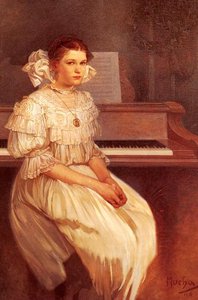
Admire Alphonse Mucha’s ‘Portrait of Milada Cerny,’ a mesmerizing Art Nouveau masterpiece blending serene beauty & subtle elegance. Discover this iconic piece!
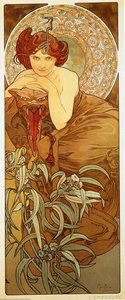
Experience Alphonse Mucha's 'The Emerald,' a stunning Art Nouveau poster featuring a captivating woman and intricate floral designs. A timeless masterpiece of beauty, elegance, and detail.
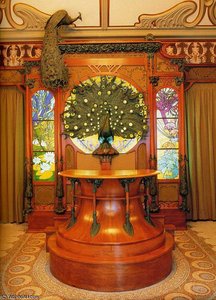
Exquisite Alphonse Mucha Art Nouveau interior scene! Lavish details, peacock motifs & warm tones in this unique decorative artwork. Discover a masterpiece of Czech design.
The image is a painting of a woman with long hair, wearing a dress, holding a bird in her arms. The woman appears to be looking at the viewer while she holds the bird. The painting has an Art Nouveau style and features intricate detailing. In addition to the main subject, there are several birds scattered throughout the image, some of which are close to the woman and others further away. These bir
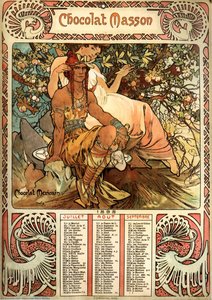
Mucha's Seasons series exemplify Art Nouveau’s elegance with idealized women entwined in floral settings and adorned with jewels, reflecting Japanese influence and capturing the essence of each season—Winter’s frost, Spring’s innocence, Summer’s sensuality, Autumn’s fruitfulness.
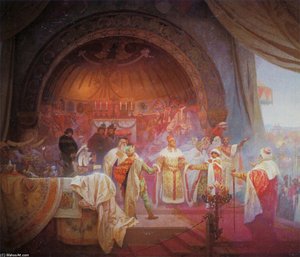
The Slavonic Uprising by Alphonse Mucha embodies Art Nouveau's elegance with interwoven Czech symbolism and flowing lines, capturing the spirit of national awakening amidst natural beauty.
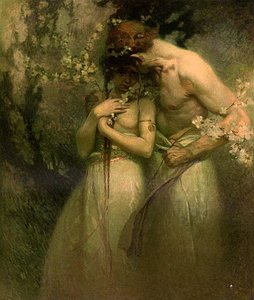
A captivating Art Nouveau depiction of two figures beneath an apple tree, symbolizing harmony and abundance. Alphonse Maria Mucha's masterpiece embodies elegance and serenity—a timeless testament to Czech artistic heritage.
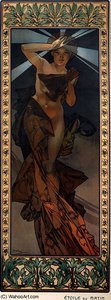
Admire Alphonse Mucha’s ‘Morning Star’ litho (1902). A stunning Art Nouveau masterpiece featuring a nude figure & radiant light, embodying beauty & divine inspiration.
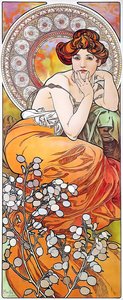
Topaz - Alphonse Maria Mucha's captivating Art Nouveau painting depicts a woman adorned in flowing orange and yellow attire, thoughtfully examining her chin while surrounded by lush greenery – a testament to the style’s elegance and organic beauty.
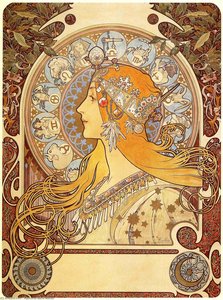
Zodiac - Alphonse Maria Mucha's captivating Art Nouveau painting depicts a woman crowned with stars amidst intricate clockwork and avian symbols, embodying the elegance and dynamism of the era.
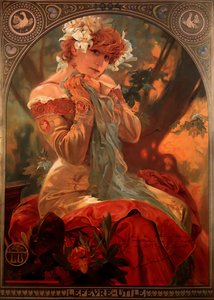
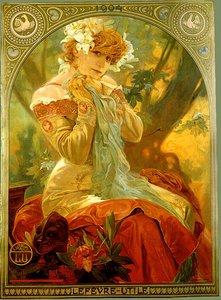
Admire Alphonse Mucha's 'Lefevre Utile'! This Art Nouveau masterpiece showcases a stunning woman adorned with flowers, capturing elegance and beauty. Hand-painted reproduction available now.
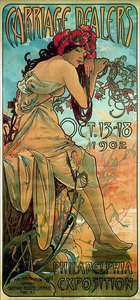
Admire Alphonse Mucha's 'Carriage Dealers'! This Art Nouveau masterpiece showcases flowing lines, floral motifs, and a captivating female figure – a timeless symbol of beauty & prosperity. Own a piece of art history!
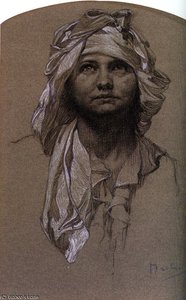
“Head of a Girl” was created in 1900 by Alphonse Mucha in Art Nouveau (Modern) style. Find more prominent pieces of sculpture at Wikiart.org – best visual art database. Explore Alphonse Mucha’s captivating portrait study, blending flowing lines and delicate shading to capture the beauty of youthful femininity.
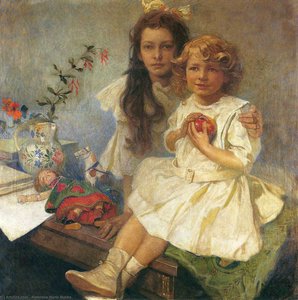
Explore Alphonse Mucha’s ‘Jaroslava and Jiri’! A tender portrait in Art Nouveau style, capturing childhood innocence & familial warmth with rich textures & soft lighting.
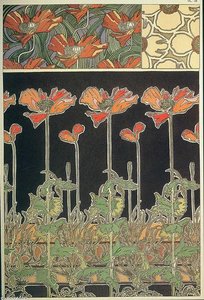
Documents decoratifs. Plate 38 - Alphonse Maria Mucha's painting depicts vibrant red flowers arranged in vases, embodying Art Nouveau’s flowing lines and organic forms. Inspired by Moreau and Dorazio, it captures the beauty of nature with meticulous detail.
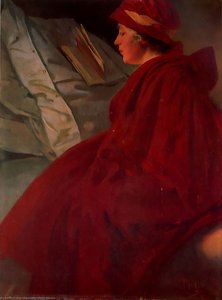
Alphonse Mucha’s "The Red Cape" (1902) captures a melancholic portrait of a woman lost in thought, draped in a dramatic red cloak. Impressionistic brushwork & symbolic depth – a captivating piece by the Czech master.
Alphonse Maria Mucha Early Life and Education Born: July 15, 1860, in Ivanačice, Moravia (now part of the Czech Republic) Showed artistic talent from a young age. Studied at the Academy of Fine Arts in Prague but became disillusioned with traditional approaches. Moved to Paris in 1887 to pursue his own style. Brno Czech Republic 1860 1939 Flowing lines The Slavonic Uprising
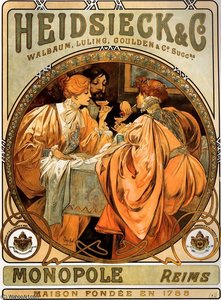
heidsieg monopole - Alphonse Maria Mucha's striking depiction of three women sharing wine embodies Art Nouveau elegance and celebrates female companionship. Explore the serene beauty of this iconic masterpiece!
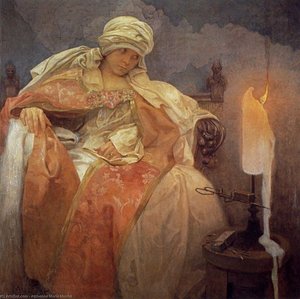
Alphonse Maria Mucha A captivating portrait embodying the Art Nouveau style, featuring a young woman in a pose of serene contemplation. The artwork showcases Mucha's signature flowing lines, organic forms, and muted color palette, creating a dreamlike atmosphere. Flowing curvilinear lines defining form and movement Likely oil paints or pastels on canvas or paper Art Nouveau Layering colors, s
The Seasons (Mucha) – A stunning Art Nouveau series by Alphonse Mucha featuring four exquisitely detailed lithograph prints depicting Spring, Summer, Autumn and Winter. Each print embodies Mucha’s signature style—flowing lines, organic forms, and a captivating sense of movement—creating timeless visual narratives.
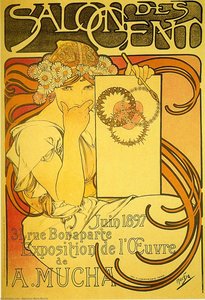
Salon des Cent, 1897 - Alphonse Maria Mucha's captivating depiction showcases an elegant woman amidst Art Nouveau flourishes—two clocks, a vase, and a necklace—reflecting the stylistic influences of Renoir and Moreau.