Showing 16 artworks with El Greco and with Venetian Influence

-
El Greco
-
Venetian Influence
Not available for this selection
- Espresso
- Gray
- Phthalo Green
- Driftwood
- Sap Green
- Quinacridone Magenta
- Clay
- Rosy Brown
- Putty
- Venetian Influence
- El Greco
- Religious Iconography
- Renaissance Art
- Byzantine Art
- Dramatic Lighting
- Oil On Canvas
- Mannerism
- Greek Painter
- Portrait Painting
- Mannerism Art
- Elongated Figures
- Religious Art
- Spanish Baroque
- Renaissance Painting
- Oil Painting Technique
- Fine Art Reproduction
- Spanish Art
- Dramatic Composition
- Religious Painting
- Toledo Spain
- Roman Art
- Spiritual Symbolism
- Mannerist Painting
- Spanish Painting
Doménikos Theotokópoulos, known to the world as El Greco – “The Greek” – was a painter whose life and work defied easy categorization. Born in 1541 on the island of Crete, then under Venetian rule, his artistic journey led him through Venice and Rome before finding its ultimate expression in the spiritual heartland of Spain: Toledo.
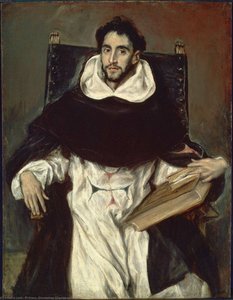
Delve into El Greco's masterful Portrait of Fray Hortensio Félix Paravicino (c. 1605), capturing Florentine poet’s intellect and serenity through Byzantine influences & Venetian color palettes.
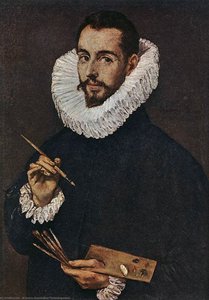
El Greco's 'Portrait of Jorge Manuel Theotocópuli' captures his son's contemplative gaze amidst artistic tools—a masterful blend of Venetian influence and expressive brushstrokes, housed in Seville’s Museo de Bellas Artes.
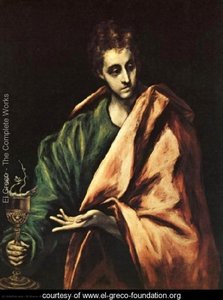
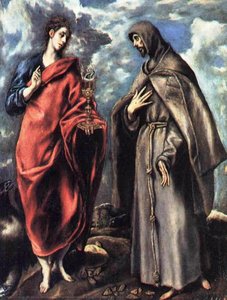
El Greco’s St John the Evangelist is a cornerstone of Baroque art and reflects his profound engagement with religious themes.
This striking depiction embodies El Greco’s innovative style blending Byzantine tradition with Western techniques. Explore its details at ArtsDot.com & discover more about El Greco on WikiArt.org.
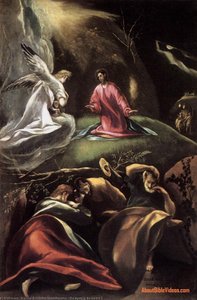
The Agony in the Garden 3 depicts Jesus Christ in a dramatic pose, surrounded by angels and figures engaged in conversation, reflecting El Greco's synthesis of Byzantine tradition with Venetian and Roman influences to create a profoundly emotive style that foreshadowed Expressionism.
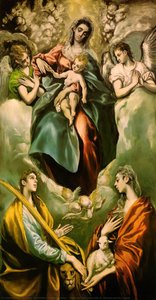
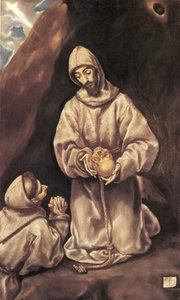
Saint John the Evangelist and Saint Francis are depicted in a serene religious tableau by El Greco, showcasing his masterful blend of Byzantine tradition with Venetian and Roman influences. The painting captures spiritual devotion through detailed figures and evocative cloudscapes.
Doménikos Theotokópoulos, known as El Greco (1541–1614), revolutionized European art with his distinctive style—characterized by elongated figures and vibrant hues. He synthesized Byzantine and Venetian influences into a unique aesthetic that foreshadowed Expressionism and Cubism.
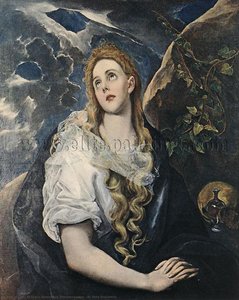
Saint Mary Magdalene portrait by El Greco (1541-1614), Cretan painter who developed a distinctive style blending Byzantine tradition with Venetian and Roman influences, culminating in Spanish Toledo. Notable elements include a bottle, skull, and clock symbolizing spiritual contemplation.
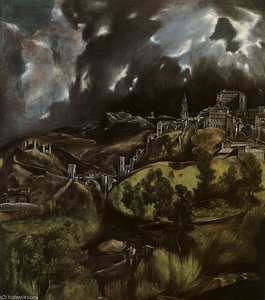
The painting depicts a dramatic cityscape dominated by a towering castle under stormy skies. A solitary figure observes the scene amidst ornate buildings and architectural details, reflecting El Greco's synthesis of Byzantine tradition with Venetian and Roman influences.
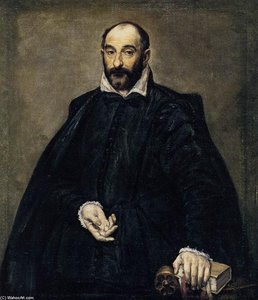
Discover El Greco's 1600 Portrait of an Old Man, a stunning realistic oil painting showcasing detailed facial features, expressive depth, and somber tones. Perfect for art collectors and home decor.
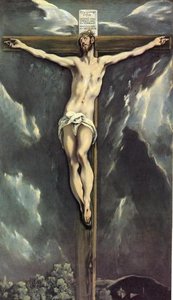
El Greco's "Christ on a Cross" embodies profound spiritual anguish through meticulous detail and emotive portrayal—a cornerstone of Mannerism reflecting Byzantine heritage alongside Venetian and Roman influences.