Showing 24 artworks out of 36 with Katsushika Hokusai and with Nineteenth Century Art
-
Katsushika Hokusai
-
Nineteenth Century Art
Not available for this selection
- Putty
- Gray
- Rosy Brown
- Espresso
- Khaki
- Phthalo Green
- Prussian Blue
- Sea Green
- Driftwood
- White
Not available for this selection
- Nineteenth Century Art
- Japanese Art
- Landscape Painting
- Ukiyo-E Print
- Fine Art Reproduction
- Woodblock Printing
- Mount Fuji
- Hokusai Masterpiece
- Japanese Painting
- Ukiyo-E Painting
- Bijin-Ga
- Scenic View
- Watercolor Technique
- Female Portraiture
- Hokusai
- Japanese Culture
- Mount Fuji Landscape
- Impressionism Influence
- Impressionist Influence
- Mount Fuji Views
- Katsushika Hokusai
- Panoramic View
- Traditional Japanese Style
- Japanese Tradition
- Hokusai Painting
- Japanese Landscape
- Traditional Art
- Fine Art Print
- Zen Buddhism
- Serene Composition
- Edo Period Art
- Japanese Impressionism
- Traditional Japanese Art
- Fine Art Prints
- Ukiyo-E Printmaking
- Landscape Art
- Japanese Prints
- Waterfall Landscape
- Tokyo National Museum
- Landscape Composition
- Iconic Artwork
- Woodblock Print
- Ukiyo-E Art
- Japanese Folklore
- Landscape Prints
- Zen Landscape
- Hokusai Prints
- Great Wave Kanagawa
- Landscape Print
- Floral Painting
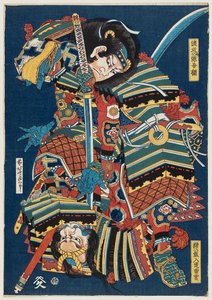
Katsushika Hokusai The image is a painting of a man in traditional Japanese clothing, possibly a samurai or warrior. He is holding two swords, one on each side, and appears to be wearing a helmet. The man's face is not visible, but his body is adorned with various patterns and designs. The painting features a blue background that contrasts nicely with the vibrant colors of the man's clothing and
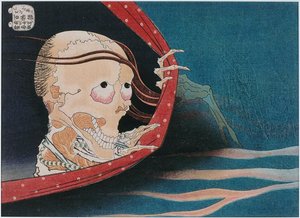
This evocative painting by Katsushika Hokusai portrays a figure consumed by anguish, framed against a stark clock face. Inspired by Japanese culture, it exemplifies Hokusai’s dedication to artistic exploration and his profound impact on visual storytelling. Delve into the haunting beauty of Katsushika Hokusai's 'Japanese Ghost.' Witness masterful black & white printmaking capturing emotion and ti
Katsushika Ōi (葛飾 お栄), born around 1800 and died c. 1866, was a prolific Japanese ukiyo-e artist who served as an apprentice to her renowned father, Katsushika Hokusai. Known for her exquisite bijin-ga paintings depicting beautiful women—such as ‘Yoshiwara Night Scene’ and ‘Beauty of Spring Night’—Ōi achieved considerable acclaim during the Edo period. Her artistic journey was marked by collaborat
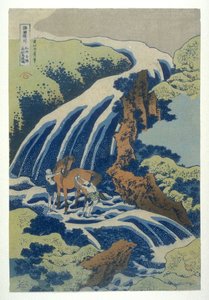
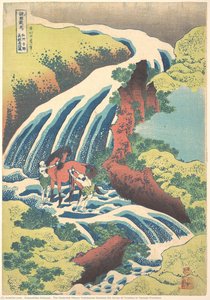
This stunning print depicts Yoshino Waterfall, showcasing Hokusai's innovative use of Prussian blue and capturing the grandeur of nature alongside a poignant narrative about pilgrimage and spiritual contemplation. Experience Hokusai's iconic "Yoshitsune’s Horse-washing Falls," part of his groundbreaking series exploring Japan's waterfalls and symbolizing resilience. Admire its vibrant colors & ma
Katsushika Ōi (葛飾応為), daughter of the iconic Hokusai, was a prolific ukiyo-e artist celebrated for her skill in handwriting and bijin-ga paintings depicting beautiful women. Alongside her father's influence, she honed her craft under Tsutsumi Torin III, producing stunning works like "Kinuta or Beauty Fulling Cloth in the Moonlight" and "Yoshiwara Night Scene." Ōi’s legacy extends beyond her artist
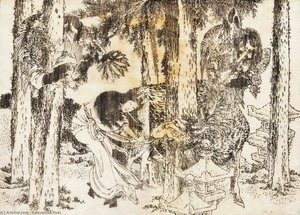
This captivating woodblock print by Katsushika Hokusai portrays a woman performing a solemn cursing ritual ceremony within a dense pine forest, accompanied by samurai figures. The meticulous detail captures the spiritual essence of Ukiyo-e art, reflecting beliefs about nature and shamanic practices prevalent in Edo period Japan. Observe the symbolism of the boar and the serene atmosphere created t
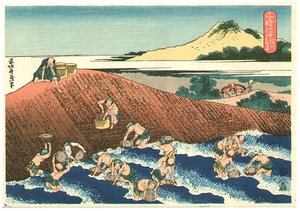
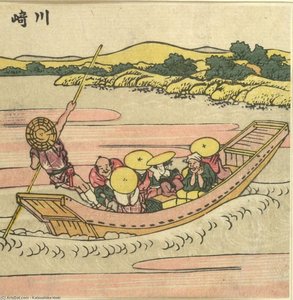
Katsushika Hokusai's ‘Tama River in Musashi Province,’ from his celebrated Thirty-Six Views of Mount Fuji series, exemplifies Edo Period artistry. This captivating woodblock print depicts travelers on a ferry crossing Tama River, featuring prominent umbrellas and distant Mount Fuji—a testament to Hokusai’s skill and enduring influence.
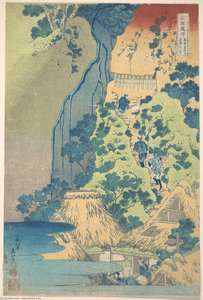
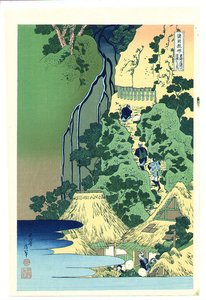
This stunning woodblock print depicts Kiyo Waterfall nestled within the Tokaido mountain range. Featuring a prominent Buddhist shrine and an elephant amidst lush foliage, Hokusai’s artwork embodies Japanese landscape artistry and reflects his influence on Impressionist painters like Monet. Experience the serene beauty of Katsushika Hokusai's 'Kiyotaki Kannon Waterfall,' a masterpiece from his ico
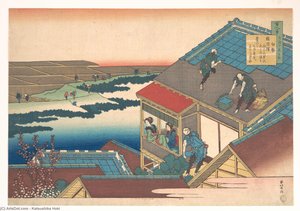
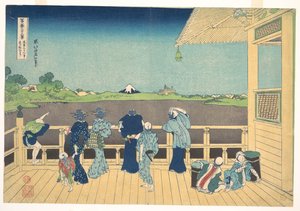
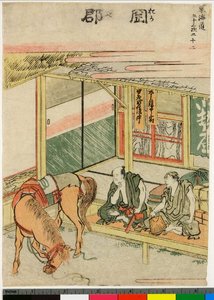
This stunning Ukiyo-e print depicts a temple complex overlooking water, capturing the grandeur of Japanese landscape art during the Edo period. Featuring Hokusai’s signature and intricate details, it exemplifies his artistic prowess. Experience the serene beauty of Katsushika Hokusai’s ‘Sazai Hall,’ part of his iconic 'Thirty-Six Views of Mount Fuji' series. Admire its masterful composition and v
Katsushika Ōi (c. 1800 – c. 1866) was a Japanese ukiyo-e artist and daughter of Hokusai, renowned for her exceptional skill in painting beautiful women alongside her father's mentorship. She collaborated closely with him, producing notable works like 'Kinuta or Beauty Fulling Cloth in the Moonlight,' 'Yoshiwara Night Scene,' and 'Mount Fuji through a Bamboo Forest.' Ōi’s dedication to art extended
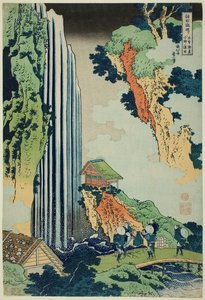
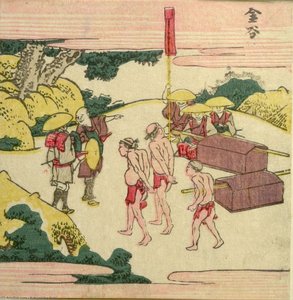
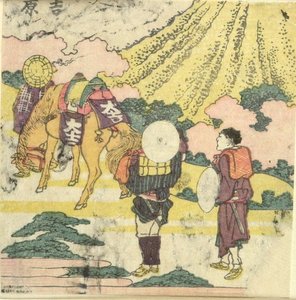
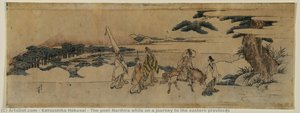
This exquisite ukiyo-e print showcases three figures riding horses along the Tokaido highway, framed by umbrellas and a backpack. Created during Hokusai's prolific Edo period, it embodies adventure and artistic mastery.
Explore Katsushika Ōi's captivating bijin-ga paintings—a talented daughter of Hokusai who skillfully captured beauty and grace in her artistic creations, showcasing a remarkable legacy within Japanese art history.
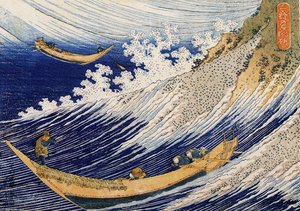
Futako Shrine (二子神社, Futako jinja), located in Takatsu-ku, Kawasaki, is a Shinto shrine in Kanagawa prefecture, Japan. It was established in 1641 and was called "Shinmeisha". It was renamed "Futako Shrine" in the Meiji Era, after the area in which it is located. ‘The Great Wave off Kanagawa’ is arguably Hokusai's most recognizable work. Printed as part of *Thirty-Six Views of Mount Fuji*, it capt
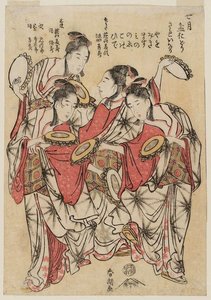
Katsushika Hokusai’s ‘The Bon Festival Dance,’ created around 1793, exemplifies his masterful use of color and composition in ukiyo-e prints. This artwork depicts five women engaged in a traditional Bon dance before an audience, showcasing intricate costumes and expressive movements. Influenced by Impressionism, Hokusai's work continues to inspire artists globally. Further research reveals details
Katsushika Ōi (1800–1866), daughter of Katsushika Hokusai, was a prolific Japanese ukiyo-e artist known for her exquisite paintings of beautiful women and her invaluable contribution to her father’s creative process. Her works include celebrated scenes depicting serene landscapes and captivating portraits, reflecting the artistic spirit of Edo Japan. Explore Katsushika Ōi's captivating bijin-ga p